
We experienced a very different adventure during April 26 on Explore’s Discover Belize small group tour – a vast range of different activities, including awe-inspiring Mayan temples, monkeys, iguanas, birds, marine life and beautiful scenery.
Having written this post, I have realised quite how much we did in the fortnight, so sorry this is another long post! You might find these links useful.
- Day 1 – Travel to the US
- Day 2 – Travel to Belize
- Day 3 – Belize City, Altun Ha and Crooked Tree Wildlife Reserve
- Day 4 – Bird Watching and Lamanai
- Day 5 – Howler Monkeys and Placencia
- Day 6 – Monkey River, Manatees and Snorkelling
- Day 7 – Cockscomb Basin Jaguar Sanctuary and San Ignacio
- Day 8 – Xunantunich
- Day 9 – Botanical Gardens and Canoeing
- Day 10 – Tikal in Guatemala
- Day 11 – Visit to Flores
- Day 12 – Travel to Caye Caulker
- Day 13 – Snorkelling
- Day 14 – End of Tour
Day 1 – Travel to the US
Belize is a fantastic place to visit, but let’s be honest, it is a bit of a pain to get to from the UK, as it involves an overnight stay in the US. Don’t let this put you off – it is 100% worth going, and the travel is part of the holiday.
We decided to fly into Dallas because we had heard it was one of the US airports with shorter immigration queues. The rumours were correct, and after a fairly standard 10-hour flight, we were through immigration in less than 10 minutes
However, when we checked in at Heathrow, the agent told us we would need to pick up our checked luggage in Dallas and recheck it at the baggage drop-off area immediately outside customs.
On the flight, there was an announcement that international transit passengers didn’t need to pick up their luggage.
We checked with 3 different members of staff at Dallas airport, who confirmed we should pick up our luggage. We thought this was because our Belize flight was leaving the next day from a different terminal.
Over an hour after clearing immigration, all the bags had been delivered – no sign of our suitcases. The fourth person we asked confirmed that all international transit bags are transferred automatically!
We then had to ring for a transfer to our hotel. It was all a bit chaotic as all the hotels used the same transfer pick-up point, but eventually (45 minutes later) our transfer bus arrived.
Once we got to the Fairfield by Marriott Inn & Suites, we had been travelling for around 23 hours, so we were pleased to fall into bed in a clean, quiet room. If you are planning to do the same layover, it might be worth exploring how efficient the pick-up service is from one of the many other hotels in the area.
Notes about luggage in the US
As we discovered, checked luggage is usually transferred automatically on international flights in Dallas (if booked on a single ticket).
However, this doesn’t happen at all US airports, and clearly, the agents at Heathrow aren’t sure what happens.
I couldn’t find a definitive answer before leaving home, but you might find more up- to-date information as things change.
Day 2 – Travel to Belize
Breakfast at the hotel was basic – make your own waffles, with some rather tired-looking bagels as well as bacon, sausage, etc.
The trip back to the airport went much more smoothly, and customs and immigration had no queue at all.
The 3-hour flight to Belize was fine, and we were met by an Explore representative and taken to the Golden Bay hotel in Belize City.
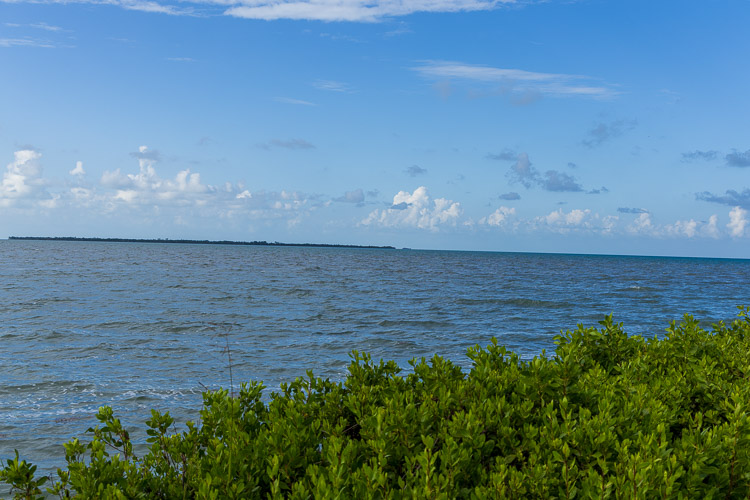
We had a couple of hours before the tour started, so we walked around the marina for our first glance (for a few years) of the Caribbean Sea.
At 6 pm, we met the rest of our group (16 plus our leader, Justin) and started to get to know each other over dinner.
Day 3 – Belize City, Altun Ha and Transfer to Crooked Tree Wildlife Reserve
Belize and Belize City
Belize, formerly the British colony of British Honduras, was renamed in 1973 and achieved full independence on 21 September 1981. English is the official language, used in government, education and written media and is understood by most people. However, Creole is the most commonly spoken language in the country.
Belize City is small (less than 90,000 residents) and feels very Caribbean, with no skyscrapers. This may be because it is no longer the capital of Belize – due to a series of hurricanes, the government moved the nation’s business to Belmopan, 52 miles away.
The city was quite empty when we were there, but I’m sure it gets very busy when the cruise ships are in. Many tourist shops and restaurants only open when the cruise ships are in (they get about 30 a month), with tenders used to transport passengers from the ships to the city.
It is a low-lying delta city severely affected by floods from the sea and the river, as well as floods caused by direct extreme rainfall. During the weekend we were there, it rained quite a bit, and we could see how easily the roads were flooding – the drainage must have been pretty bad, but the water table is so high.
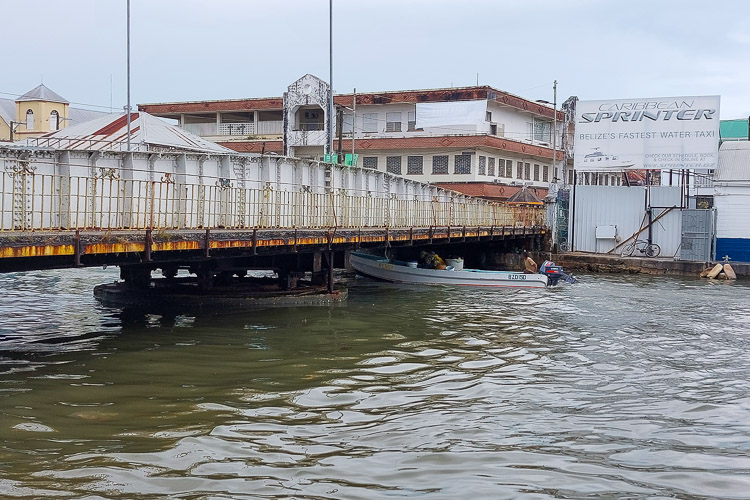
After the first of many Belizean breakfasts (refried beans, eggs, and fried jacks (deep-fried dough)), Justin took the group for an hour’s walk around the city (as an add-on to the ‘official’ itinerary). Belize City’s colonial past is still apparent in a few of the buildings we walked past. The main point of interest is the swing bridge, the oldest in Central America (constructed in 1922, with installation finished in 1923) and one of the few manually operated swing bridges in the world. It also featured in the 1980 film, ‘The Dogs of War’.
Unfortunately, it hasn’t swung for around 20 years, but funding has been approved to replace it with a modern bridge, though no time frame has been announced. It seems a shame to replace such a historic monument, but I guess it no longer serves its purpose.
Back to the hotel to check out and board our bus. We first drove to a bakery, a fruit stall, and a supermarket to pick up food for lunch. I always like looking around local supermarkets when abroad to get a feel for a place. Perhaps not surprisingly, this supermarket had a lot of imported food (from the US and UK), and the prices were pretty high – on a par with the UK.
Altun Ha
Altun Ha is the closest Maya site to Belize City, and is easily accessible to cruise ship visitors, being located about an hour from the city. Fortunately, it was very quiet when we were there!
The Maya inhabited Altun Ha from 250BC to AD 1000. The site reached its peak between AD 400 and AD 900, when its population was approximately 10,000.
Two main temples have been excavated along with plazas and other structures.
After a delicious picnic lunch of tortilla chips with a spicy sauce, fruit (bananas, papaya and pineapple) and a slice of banana loaf, Justin gave us a guided tour of the site.
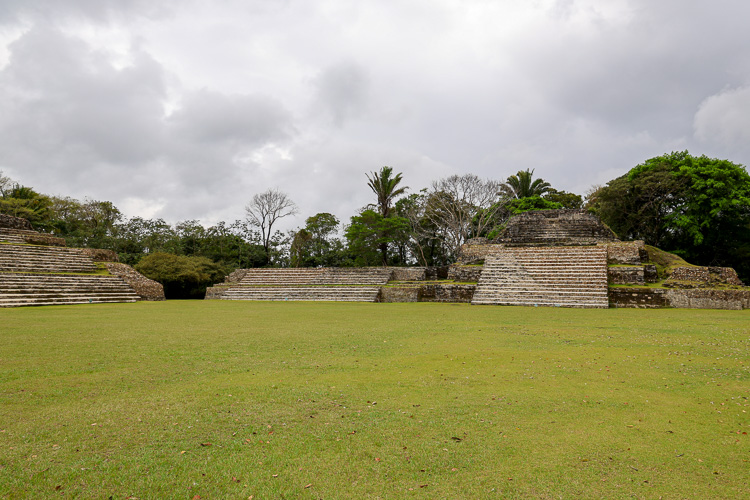
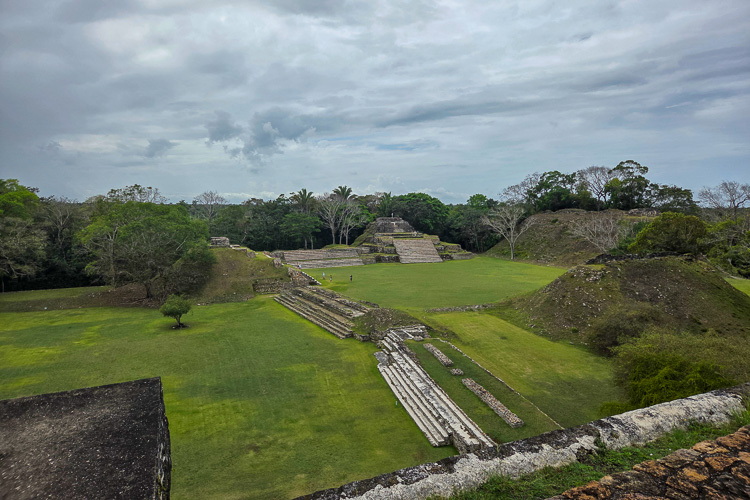
Justin suggested that the flat green areas in the pictures would have been made of limestone, painted white, and used as a trade market. I’m not sure how likely it is that the floor was made of limestone, but even so, the market would have been an impressive sight. A barter system was used to trade salt and fish (the sea was so close) with goods from other areas of Belize. Chert, jade, cacao, obsidian, animal fur and feathers were all used in trade.
We climbed the temple in the image above to get a view over the site.
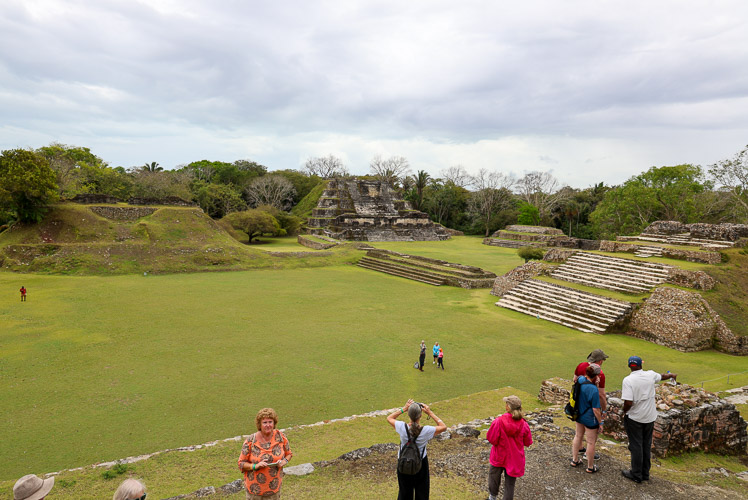
The second temple we visited, the Temple of the Masonary Altars, is the best-known temple on the site and appears on the Belkin Beer logo.
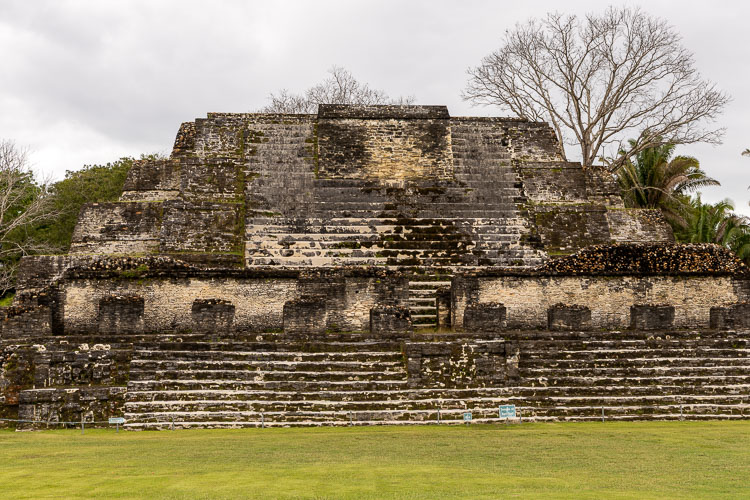
The temple is 53 feet high, and climbing it gave some indication of how the rulers of the city must have felt – near to the god and far above their followers.
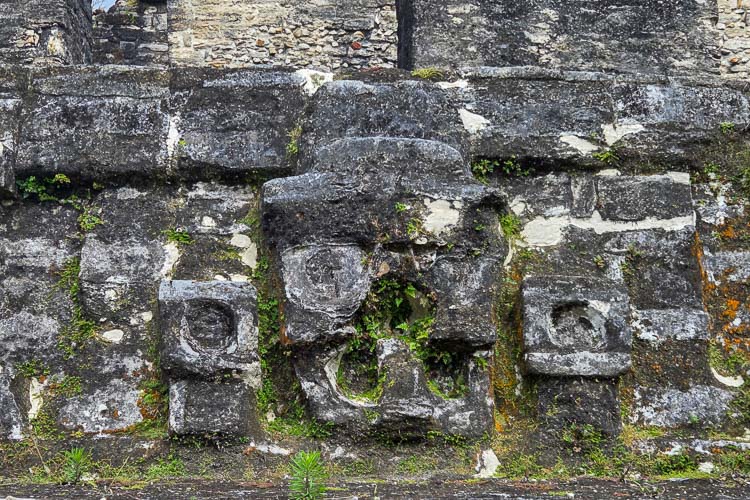
The temple had the carving of a God – probably the Sun God on the front.
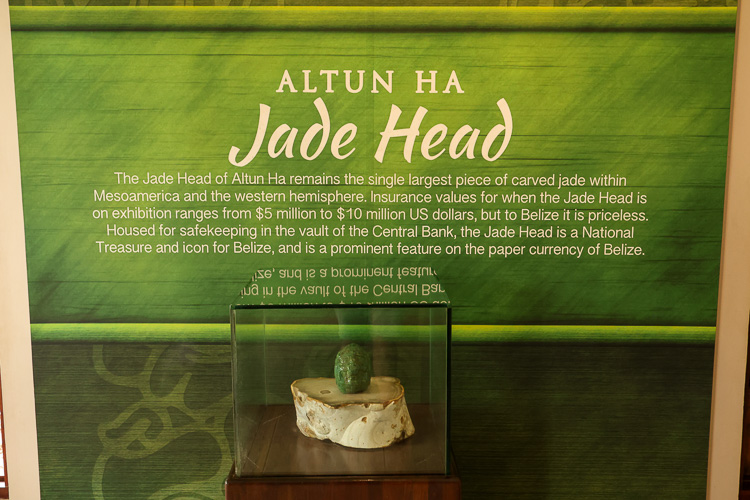
A Jade Head, possibly depicting the Sun God, was found in one of the tombs discovered within the temple. The Jade Head, 14.9cm high, is considered the crown jewel of Belize and is kept in the Central Bank of Belize.
I really enjoyed our visit to Altun Ha, and it sparked my interest in learning more about the Mayas in the days ahead.
From here, we drove about an hour to Crooked Tree Wildlife Sanctuary.
The lagoons and marshes of Crooked Tree Sanctuary are a protected area covering over 6,600 hectares, home to thousands of birds. In 1998, it was declared a Ramsar site. The lagoons can expand to a mile wide in the rainy season and sometimes completely dry up in the dry season.
We were staying at Bird’s Eye View Lodge, which is on the bank of the Crooked Tree Lagoon. Following a very nice buffet dinner of chicken, fish, split peas with rice, coleslaw and cucumber salad, we turned in for the night, looking forward to what the next day would bring.
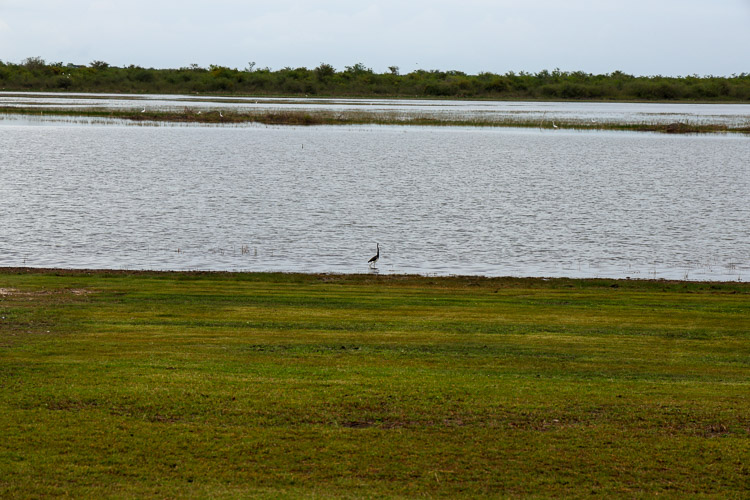
Day 4 – Bird Watching and Lamanai
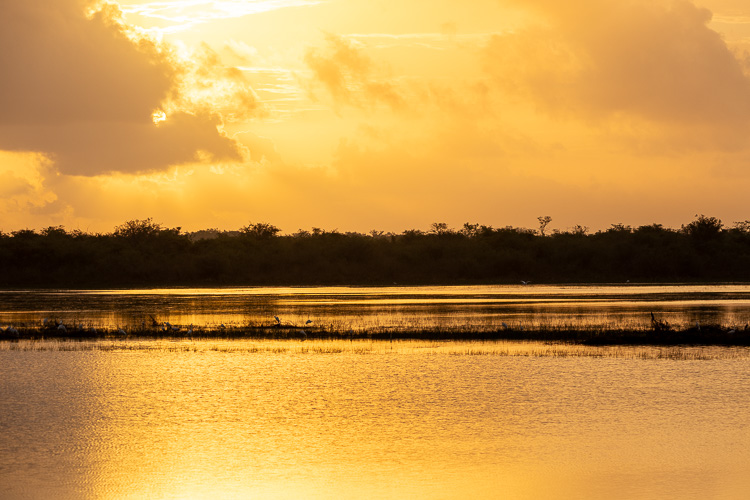
Up at sunrise to explore the lagoon by boat. It was incredible to think that in a few months (we visited at the start of the dry season), you would only be able to explore on foot. The boat had decent shade, and the whole trip was on very calm water, so no issues.
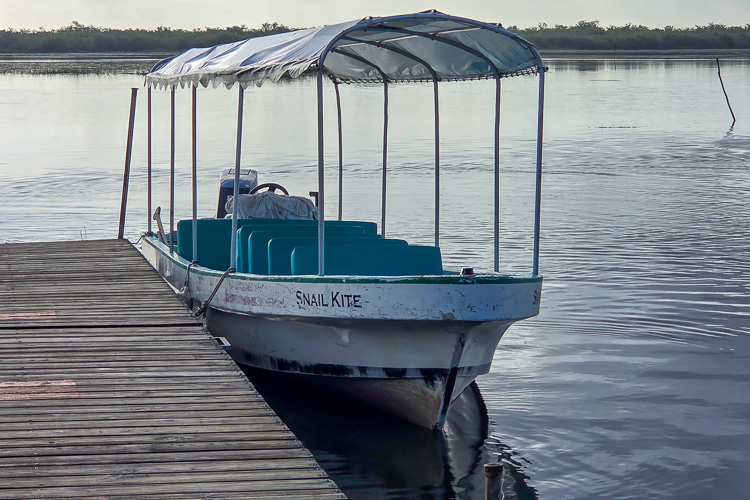
Honestly, this wasn’t an activity I was initially excited about – I’m not a birder- finding it difficult to identify them, but it turned out to be one of the highlights of the whole trip!
Just the sheer number of birds was impressive; the guides were excellent; and to top it off, we saw the rare Jabiru stork, the tallest flying bird in the Americas, standing 1.5 metres tall with a wingspan of up to 2.7 metres.
The sight of all the birds on the water will stay with me for a long time.
The Jaribu Stork was suitably impressive, the Roseate Spoonbill was beautiful, and I just loved the Gangs of Wood Storks who strode purposefully through the water like a bunch of gang members.
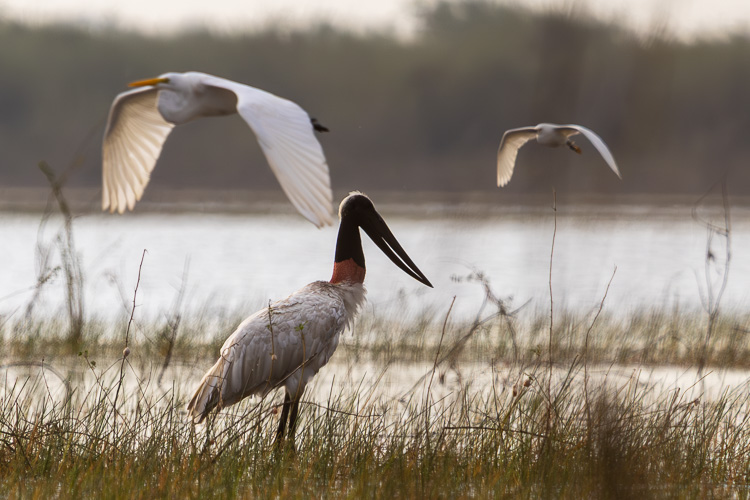
Jaribu Stork
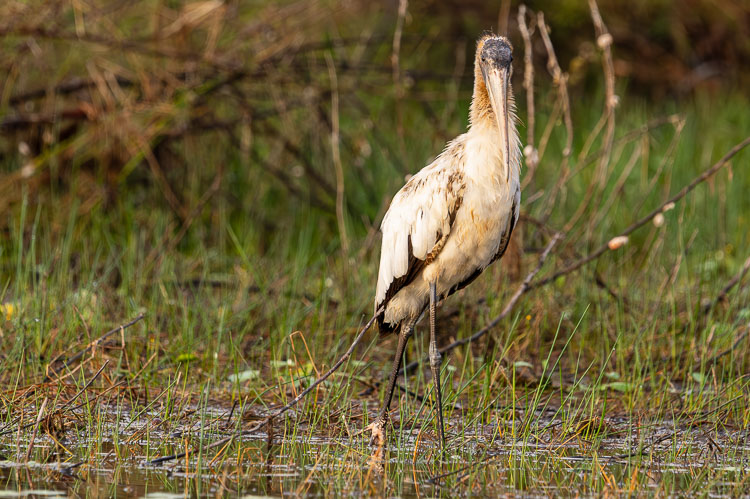
Woodstork
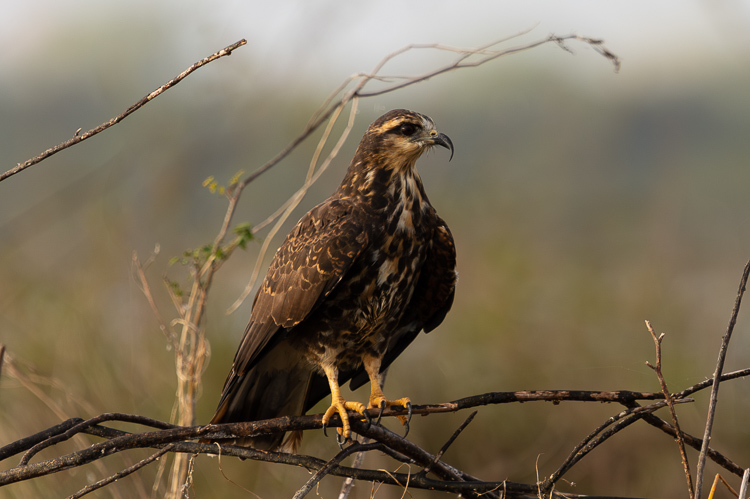
Snail Kite
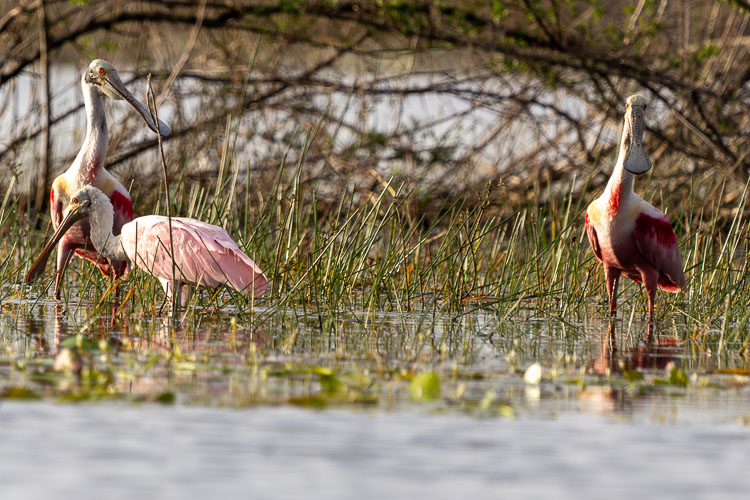
Roseate Spoonbill
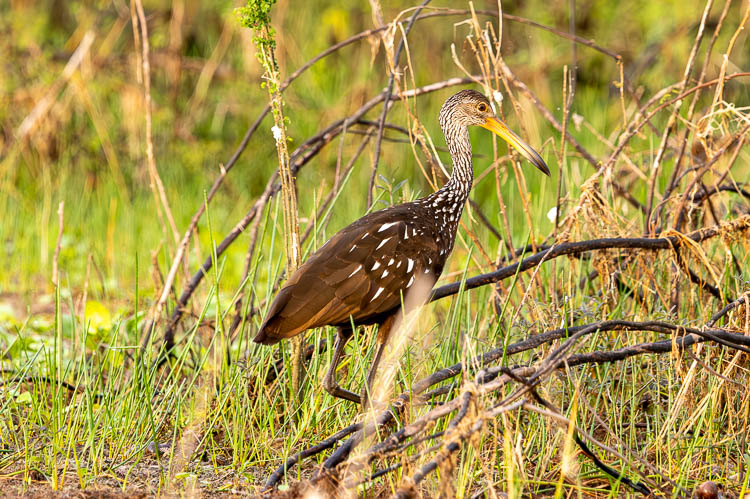
Limpkin
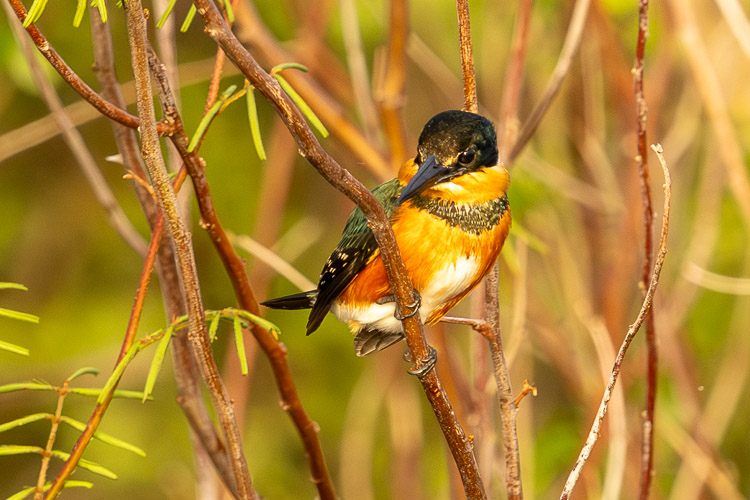
American Pygmy Kingfisher
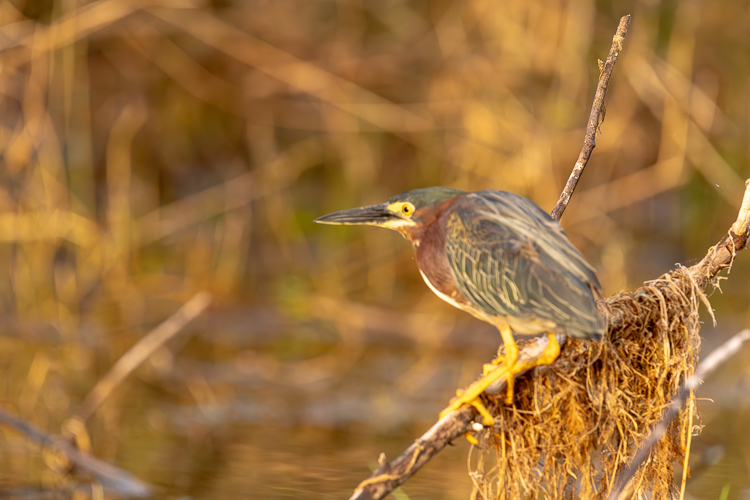
Green Heron
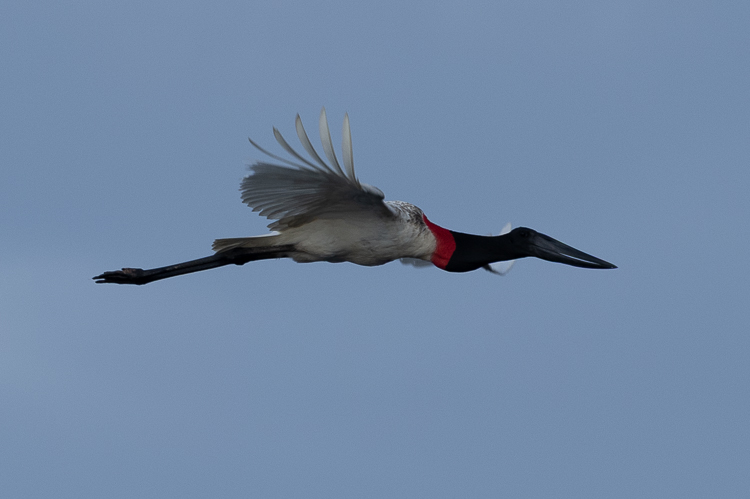
Jabiru Stork Flying
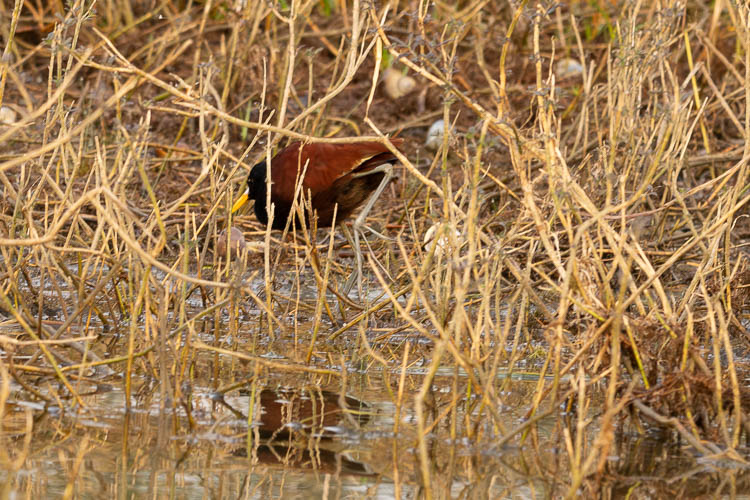
Northern Jacana
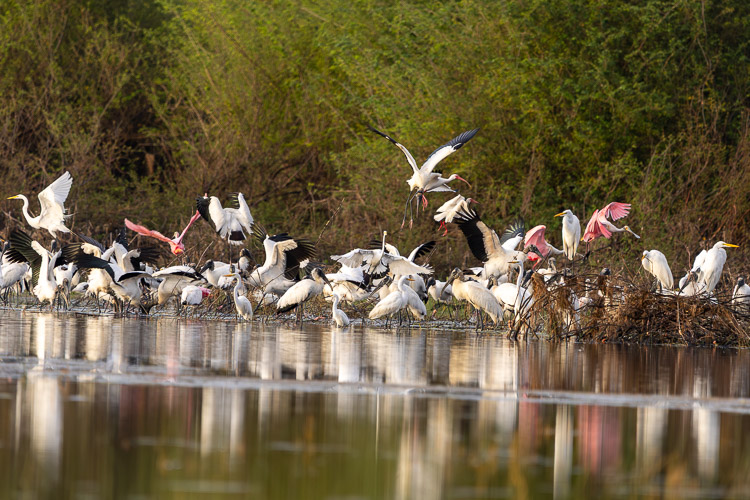
Roseate Spoonbill and Woodstorks
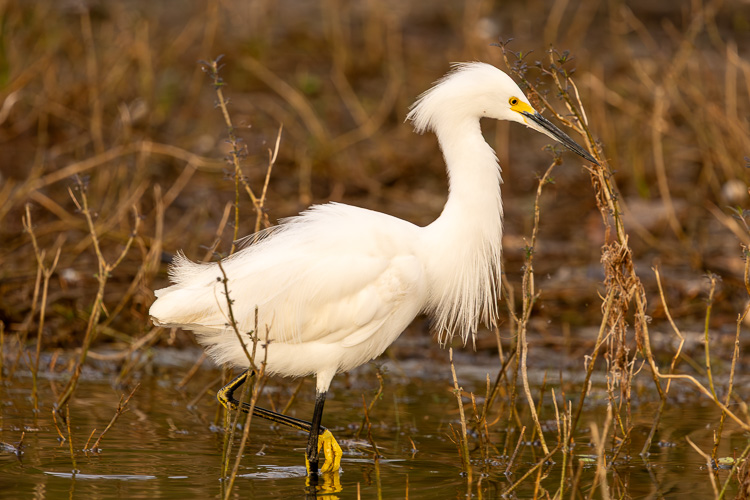
Snowy Egret
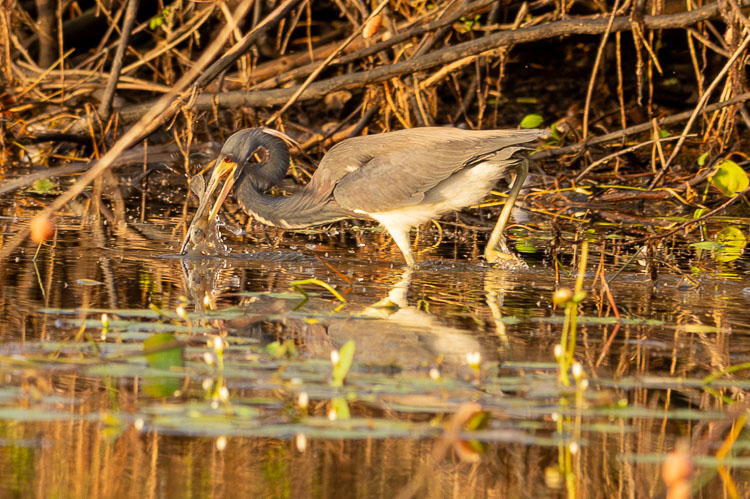
Tri-Coloured Heron
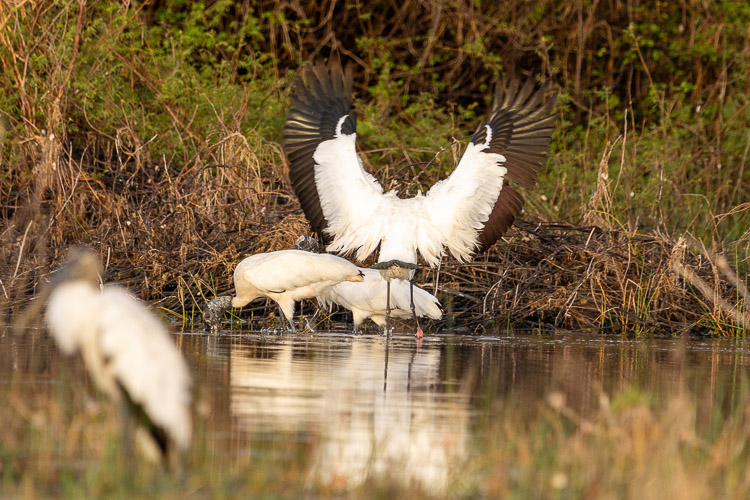
Woodstork Wings
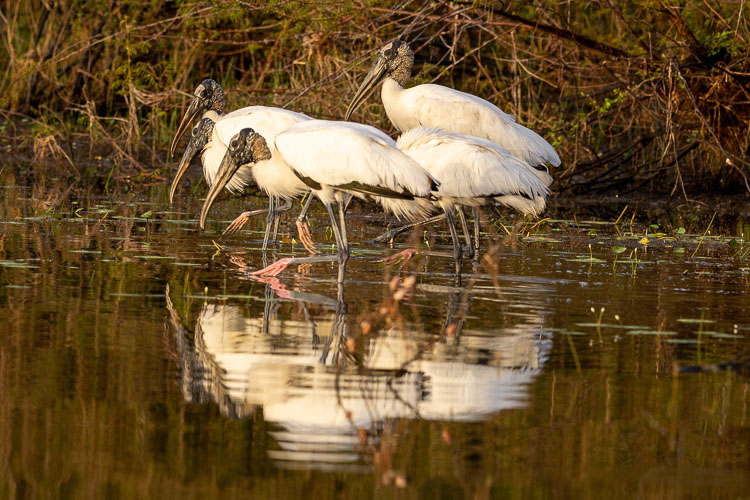
Woodstorks Gang
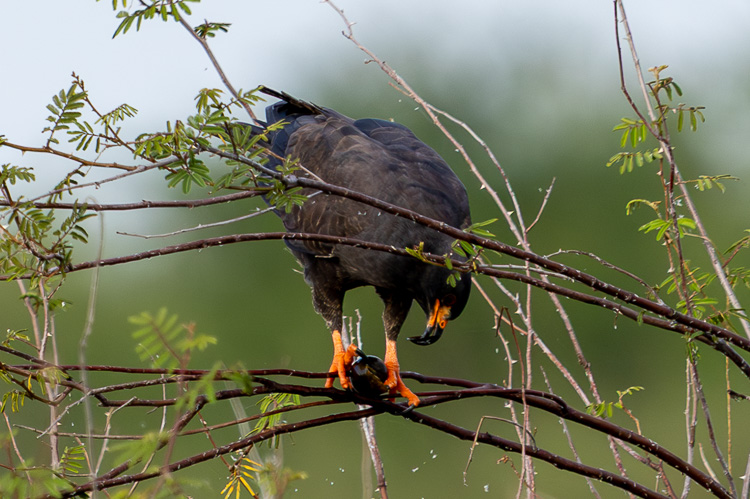
Snail Kite
What a wonderful start to the day! After around 1.5 hours, we returned to the hotel for breakfast.
Next up was a 1-hour drive to the start of a different boat trip – this time up through the jungle to Lamanai, another Mayan ruin.
It was actually the boat trip that Anita and her father took in Series 3, episode 1 of Celebrity Race Around the World. Not surprisingly, our boat was much busier than theirs, with the 16 of us, 12 or so people from an Explore family tour that was running at the same time, plus 4 or 5 members of the general public who had turned up for a trip! A little too crowded to be honest – but still calm.
During the hour’s ride up the river, the guide shared any interesting wildlife he spotted, including birds, a baby crocodile and some tiny bats asleep on a log.
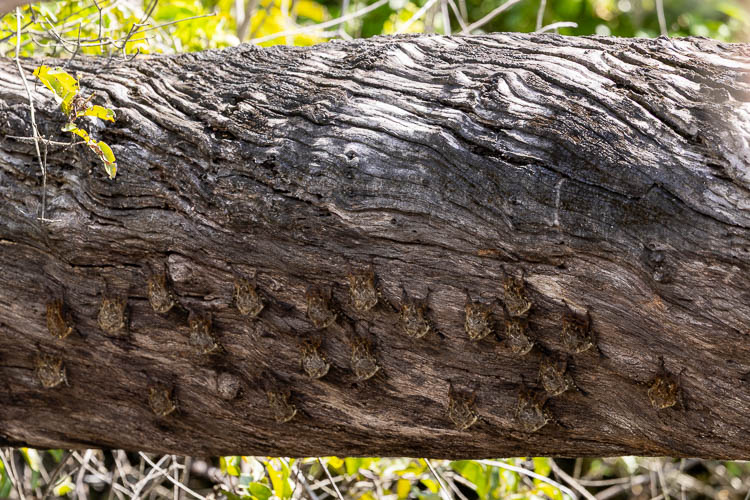
And then we caught our first sight of Lamanai through the trees.
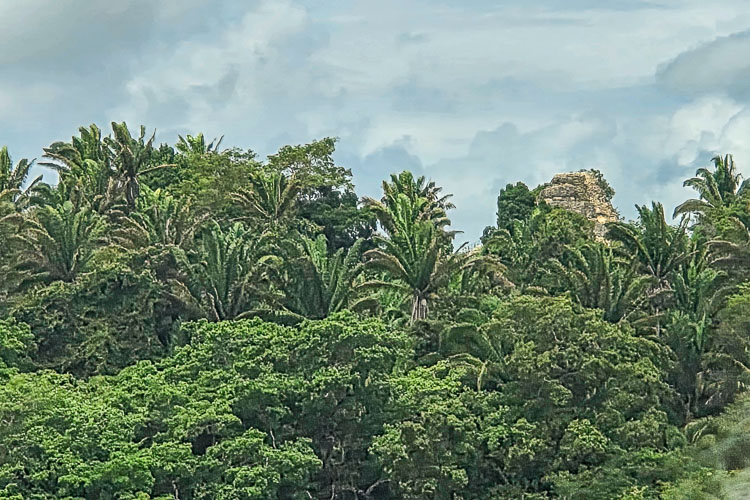
Lamanai
History
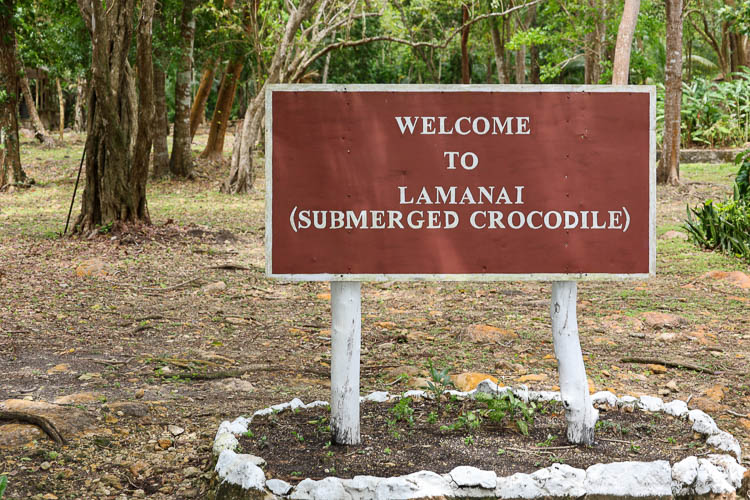
Lamanai (or submerged crocodile) dates back to 1500 BC. It is thought to have been a major centre for copper production and trade as well as religious ceremonies. Covering approximately 950 acres and containing an estimated 700 structures, Lamanai is one of Belize’s largest archaeological reserves, though only around 5% of the structures have been excavated.
Unlike other places we visited, Lamanai was continually occupied for over 3,000 years, with the earliest evidence of human activity dating from around 1500 BC. Between AD 200 and AD 900, the settlement grew as an agricultural, craft and trading centre within the Maya world.
Unlike many other Maya centres, Lamanai did not collapse; instead, it adapted by engaging in trade with various communities and expanding its production to include copper artefacts until around AD 1400.
Lamanai was recorded on a Spanish church list in 1582; however, its Maya inhabitants later resisted Spanish control, with a revolt between 1638 and 1641 that ultimately led to the town’s reported abandonment.
Despite the reported abandonment, Lamanai appears to have remained occupied by Maya people until around 1700.
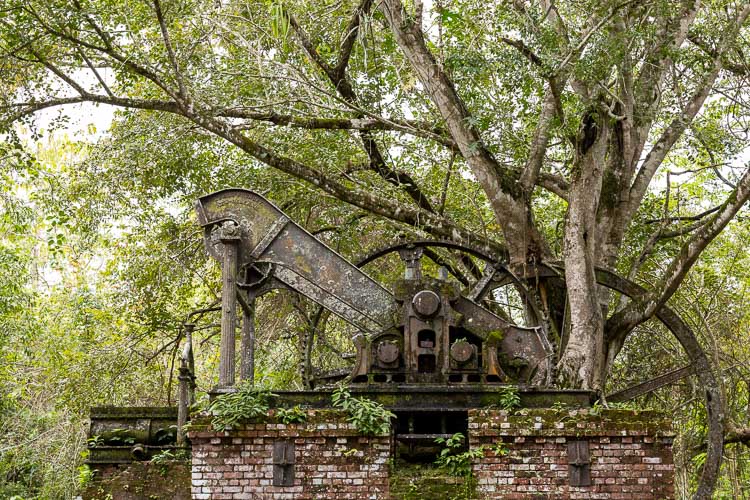
Between 1837 and 1868, the British attempted, unsuccessfully, to establish a commercial sugar mill at the site.
An amateur archaeologist described the Maya ruins in 1917, but most of the excavations were carried out between 1974 and 1986.
Our Visit
On landing at the dock, we were first taken to the remains of the sugar mill created by the British. It was poignant to see how nature was gradually reclaiming the machinery.
After lunch of rice and peas (beans), chicken and fruit, which the guides brought with us on the boat, we started our guided visit to the Maya temples of Lamanai.
Jaguar Temple
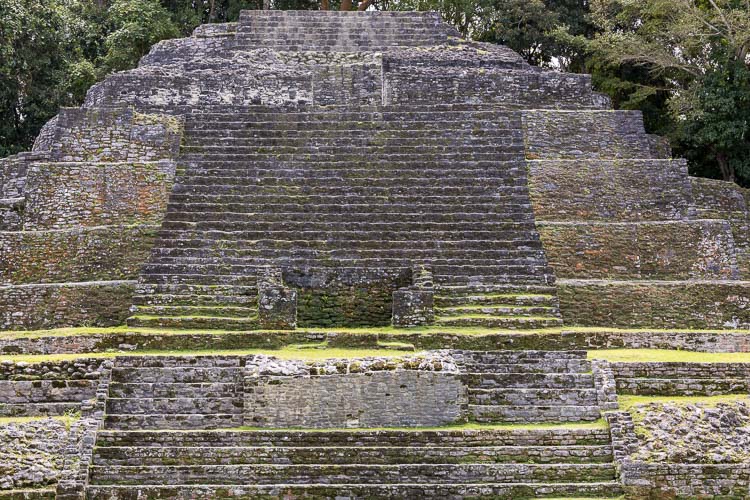
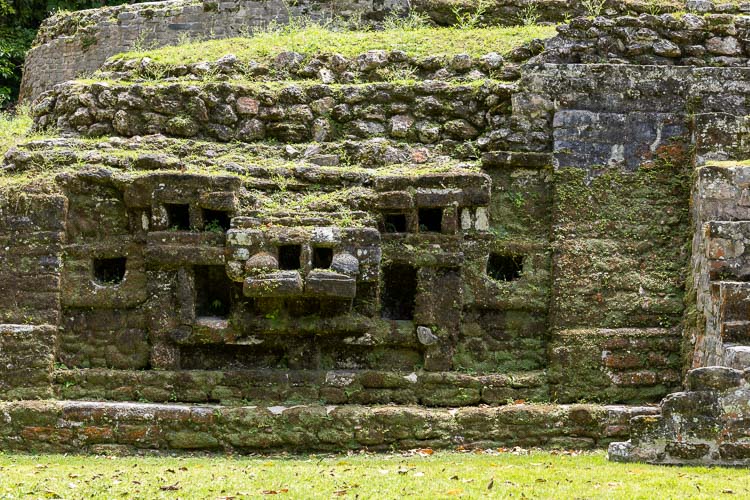
The Jaguar Temple, so-called because of two jaguar masks on its base, was one of the last major pyramid structures, initially constructed between 500 AD and 600 AD, with major work carried out during the 8th century.
One of the many interesting things we learned about the Maya temples was how successive rulers often built over existing pyramids, creating larger and more impressive structures. This has meant archaeologists have been able to see different building styles over the years. In some cases, there have been 4 or even 6 buildings built on top of each other.
Monkeys
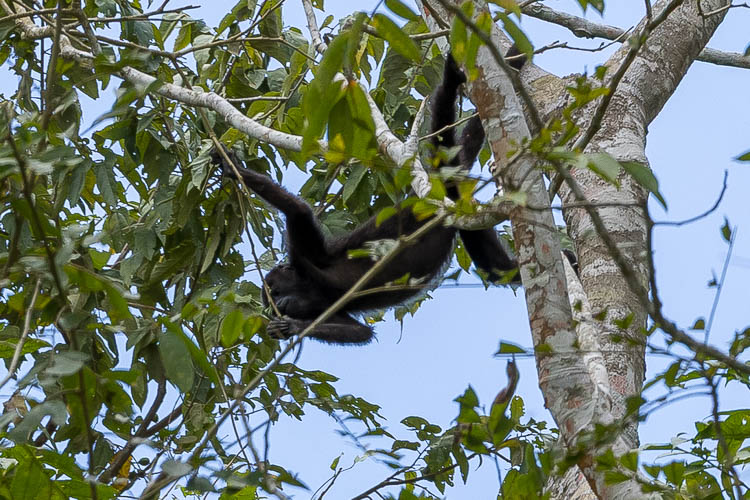
Of course, being in the jungle and enjoying wildlife, the whole group was distracted by the sight of our first howler monkeys among the ruins! These were quite high up – we were to see them much closer later in the trip!
Ball Court
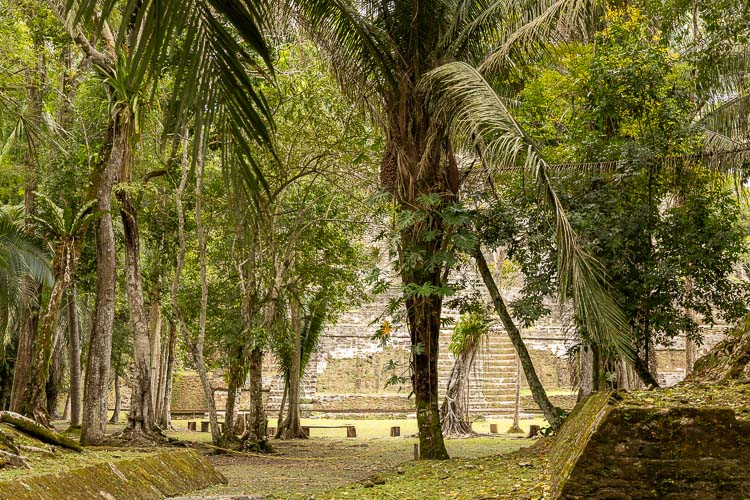
This was the first Maya ball court we had seen. Our guide explained that the game was played with a heavy rubber ball and teams of two to six players used their hips, elbows and knees to keep the ball from hitting the ground. Archaeologists believe there was a target or hoop used in the game, but are not sure how.
Our guide told us that the winner of the game was traditionally sacrificed as it was considered a great honour. However, Dr Diane Davies has suggested that this is largely a myth, except in rare cases where a ball game was used to settle disputes instead of warfare between cities.
High Temple
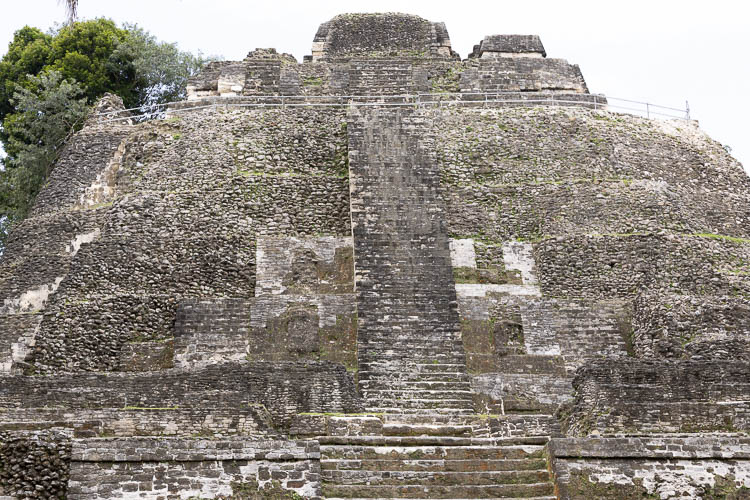
The High Temple, at 33 metres high, is the one we had seen from the river.
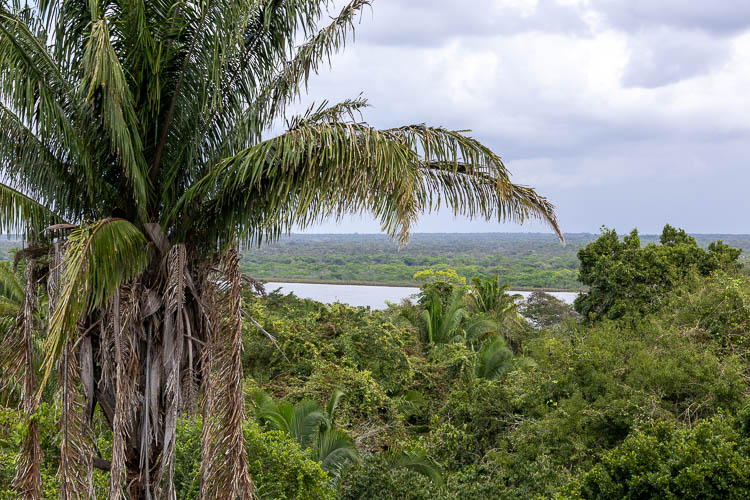
An impressive temple in its own right, climbing the wooden staircase winding around the back of the pyramid gives an incredible view across the jungle. Eerily the jungle was full of the sounds of howler monkeys – which sounded a lot like lions roaring in the distance.
Masked Temple
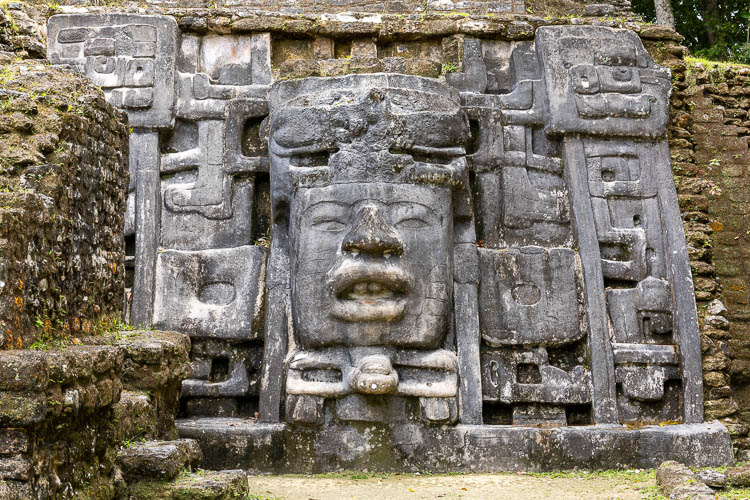
The final temple we visited in Lamanai is known as the Mask Temple. Although a smaller temple, it has very impressive limestone masks on each side. Construction originally started around 200 BC, with modifications continuing until around 1300 AD.
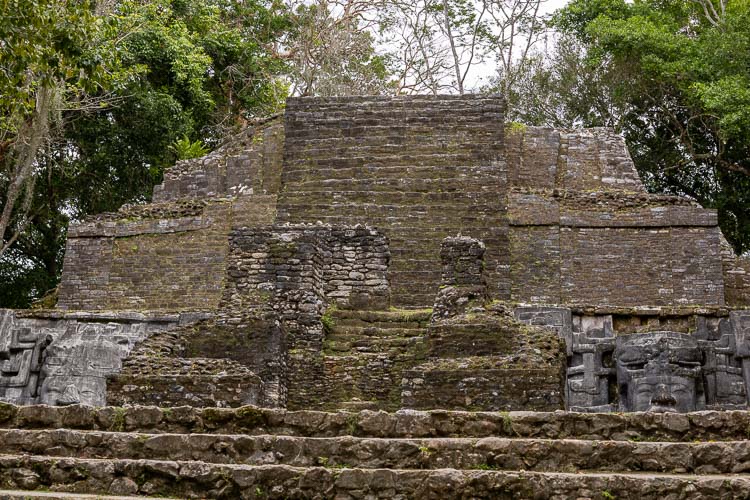
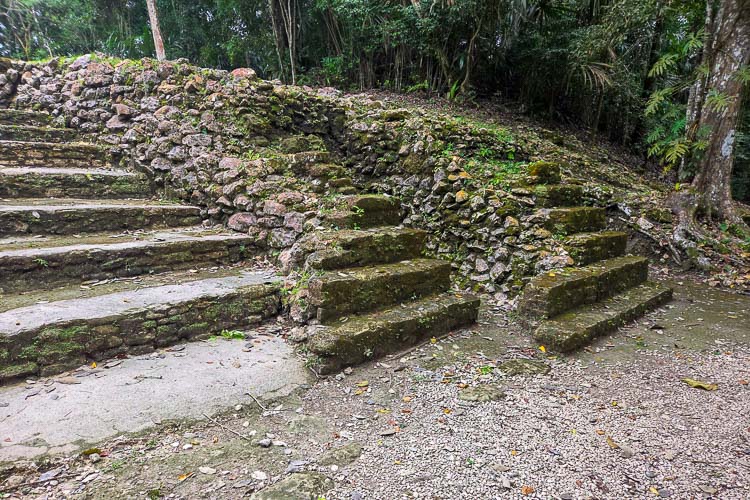
This temple was also interesting, as you could clearly see how new temples had been built on old ones.
The masks are 3.9 meters tall and represent an ancient king wearing a crocodile headdress. Normally, the masks on the temples are of the gods, but this king decided to represent himself as a god. They are also unusual as they are carved from limestone rather than moulded stucco, which was more common for large masks during this period. They have now been preserved with a fibre glass covering.
I really enjoyed our visit to Lamanai – the guide was an expert at bringing it to life.
Following the boat ride back to the bus, Jason took us to an ice cream shop in Orange Walk, a nearby town, which was certainly needed after a long, hot day.
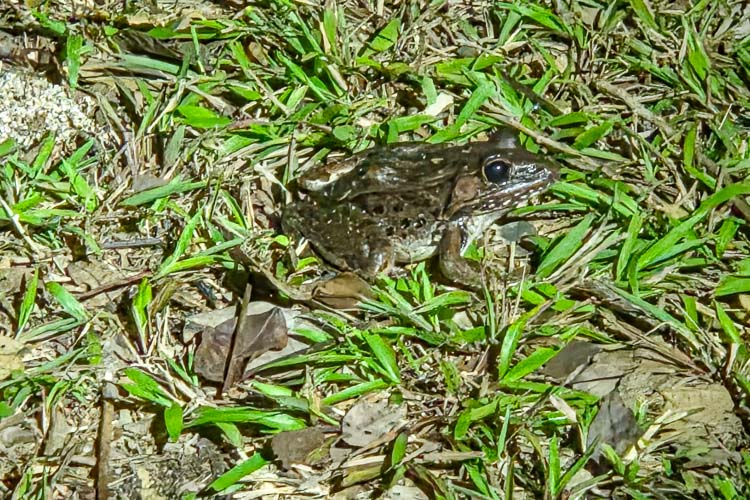
But that still wasn’t the end of the day’s excitement! After dinner, Jason took us on a guided night walk around Crooked Tree. We didn’t see as much as we had hoped, but this leopard frog posed nicely and was a great end to a busy day.
Day 5 – Howler Monkeys and Placencia
After an activity-packed day yesterday, it was a bit of a relief that today was mainly a travel day as we drove 3.5 hours to the beach resort of Placencia. I say mainly because after an hour, we stopped at the Community Baboon Sanctuary – not to see baboons but howler monkeys! ‘Howler monkey’ is ‘baboon’ in the local Creole Dialect.
The Community Baboon Sanctuary (CBS), established in 1985, is integrated into the community with 170 landholders and seven area villages that voluntarily sign up to protect the howler monkeys. The villagers have never hunted howler monkeys for food, and have always been able to live alongside them.
CBS has helped the howler population increase 500%, with the total population in the 5,179 hectares of protected land of around 5,000 monkeys.
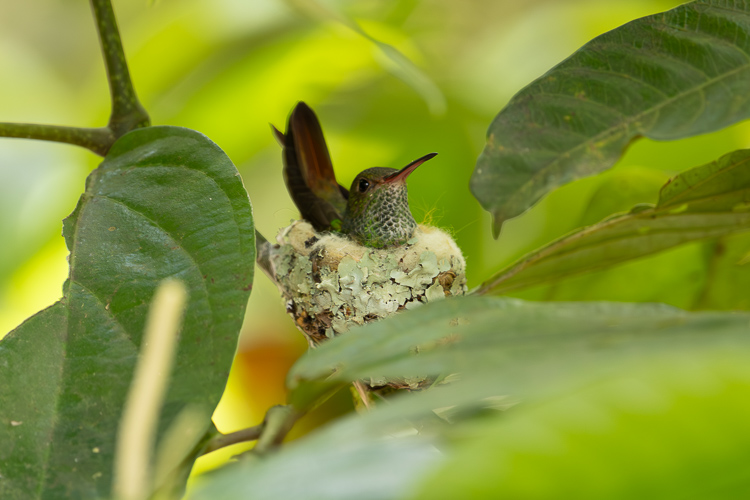
Upon arriving at the visitor centre, we set off on a guided walk through the jungle, excited that we would soon be seeing the monkeys. However, our first wildlife spot was a beautiful tiny hummingbird sitting on its nest.
When we arrived at the edge of the jungle, our guide started to imitate the howler monkey call to encourage them to come closer – it was very Dr Doolittle-like, and we weren’t expecting it to work. Surprisingly, after 15 minutes, a group of howler monkeys arrived and played in the trees around us. I can’t believe how close we got – or what an amazing relationship our guide had with the monkeys (he did say it had taken years to create it).
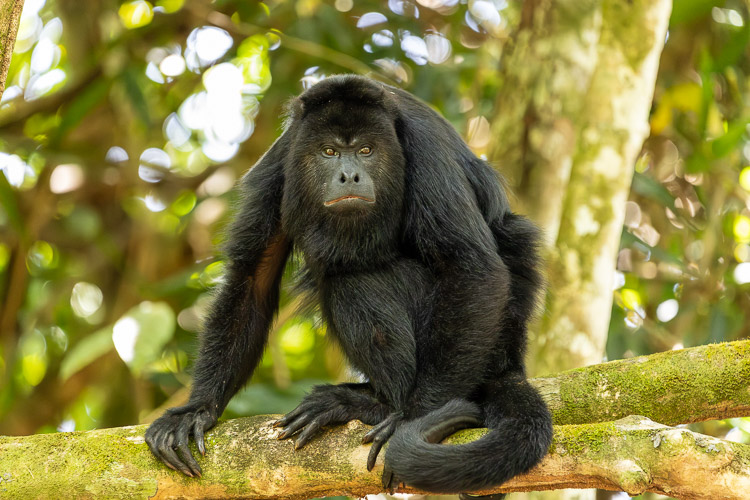
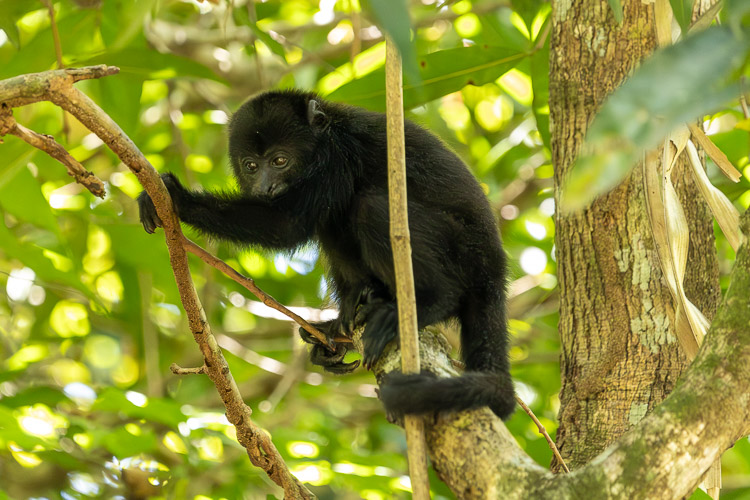
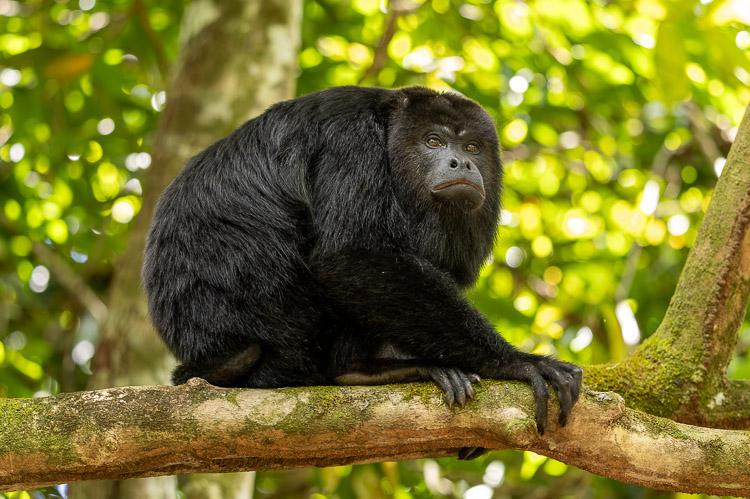
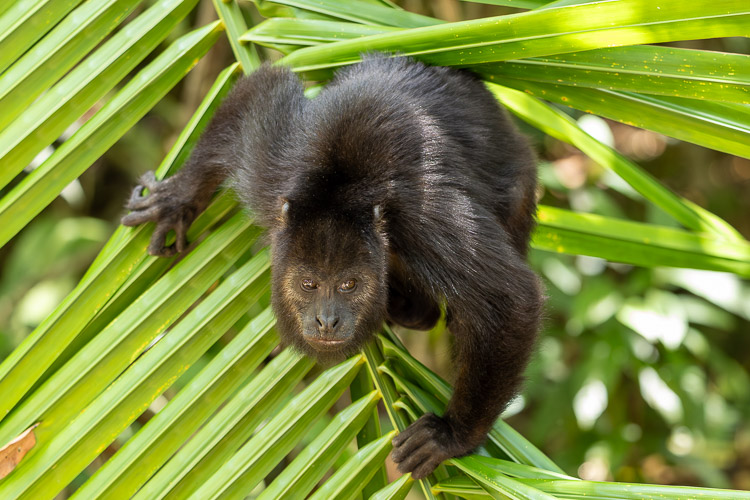
I was a little concerned about the number of visitors in this small area, but the monkeys really weren’t bothered, and the guides were keeping a close watch.
I’m not sure who was most surprised – me or the howler monkey!
All too soon, our visit was over. I’d highly recommend a trip here if you are passing.
For us, it was back on the bus, and, with a stop for lunch, we drove on to Placencia.
Placencia is at the end of a narrow 16-mile-long peninsula in Southern Belize. At times, driving along the peninsula, you can see the Caribbean Sea at the edge of one side of the road and the Placencia lagoon at the edge of the other.
Some beautiful properties have been built along the peninsula, mainly purchased by North Americans as second homes. We didn’t have the opportunity to explore the potential issues of erosion ruining these beautiful houses or the local people being priced out.
Placencia itself used to be a fishing village, but is now a thriving tourist destination with a long stretch of golden sand and calm Caribbean waters.
Personally, beaches don’t really do it for me, and I preferred the vibe at Caye Caulker, but we were in Placencia over Easter when some restaurants were closed, so I may not be being fair.
Our group stayed at Alan’s Paradise Hotel – it was clean, but the rooms were quite small and hot. There may be better alternatives in the area.
Once we had checked in, we explored the town and beach before going to Wendy’s for a good meal.
Day 6 – Monkey River, Mantees and Snorkelling
Today was a free day on our itinerary. The suggested optional activities were
- A day relaxing on the beach (no cost)
- A full-day snorkelling to Laughing Bird Caye ($115 US pp card or cash)
- A full-day trip including wildlife spotting on Monkey River, manatee spotting and snorkelling ($130 US pp cash only)
When preparing for the holiday, we had fully intended to take the Laughing Bird snorkelling trip, as this was the only one available in our trip notes. However, Justin sang the praises of the Monkey River trip so we (and most of our group) decided to give it a go – we weren’t disappointed.
The trip involved travelling by boat (it was becoming an unexpected theme of the holiday), south to Monkey River Town. The Caribbean Sea remained calm, so fortunately, I had no issues even though it was a small boat.
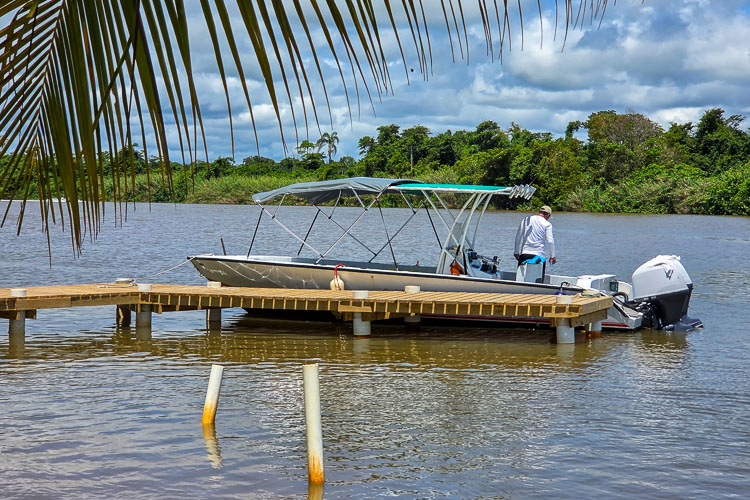
Once we reached Monkey River Town, we continued up Monkey River, and the guide pointed out any wildlife he spotted. We saw a howler monkey with baby, several birds, a crocodile, iguanas and a Jesus Lizard.
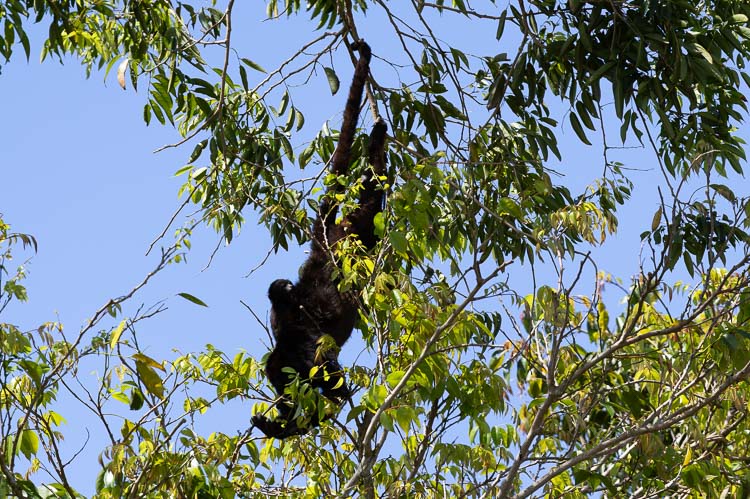
Howler Monkey and Baby
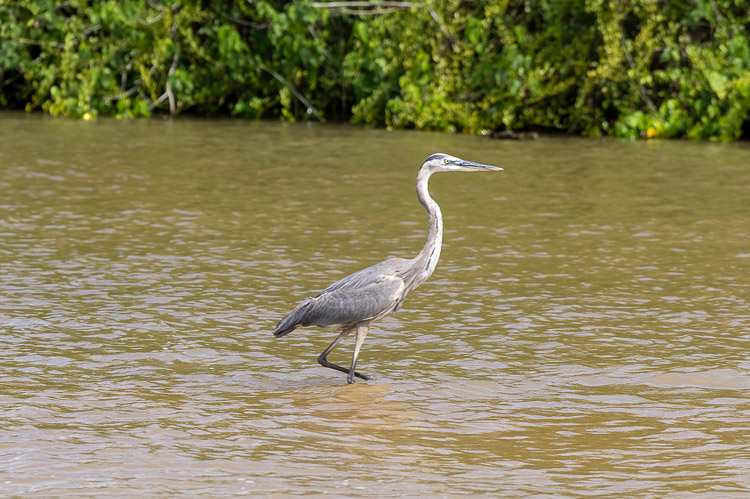
Great Blue Heron
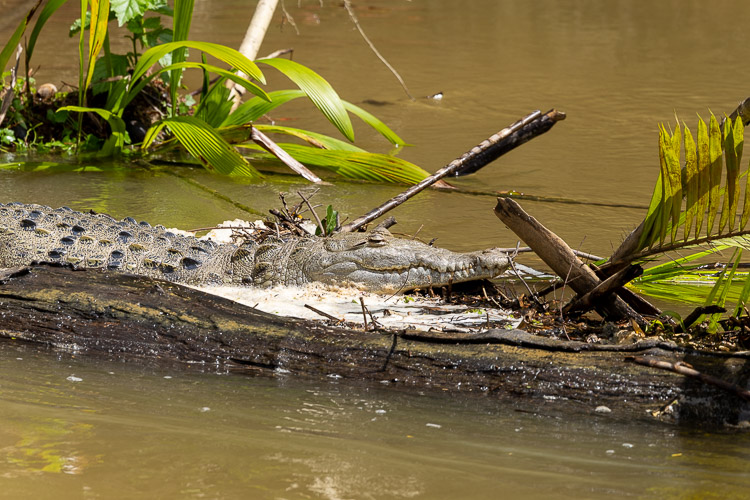
Crocodile
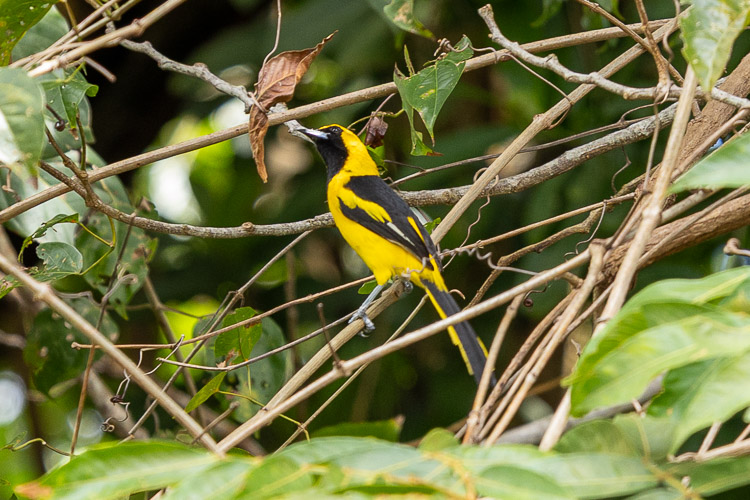
Yellow-tailed Oriole
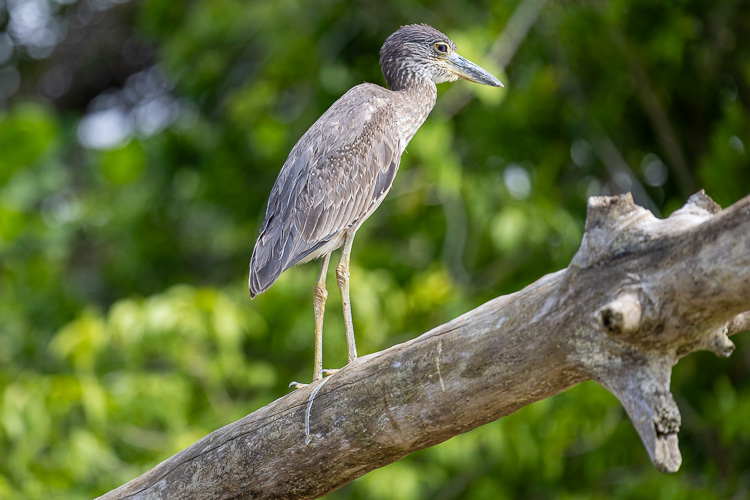
Night Heron
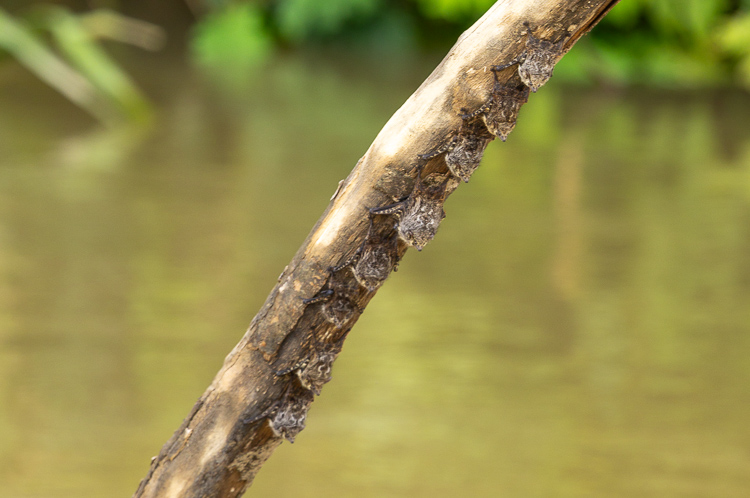
Bats
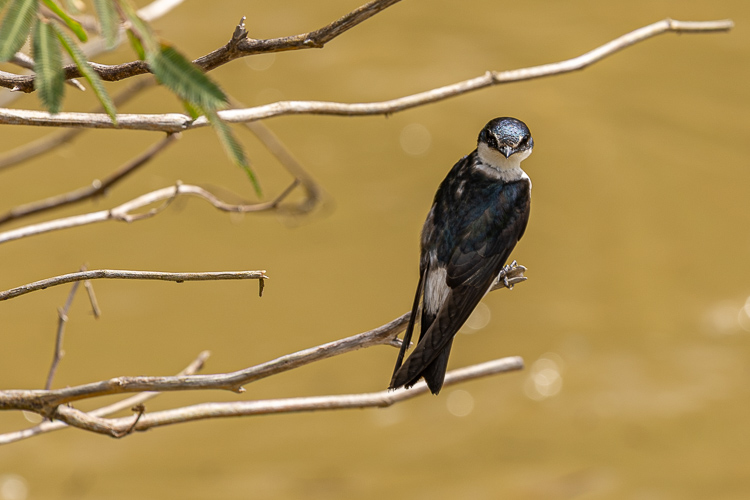
White-winged Swallow
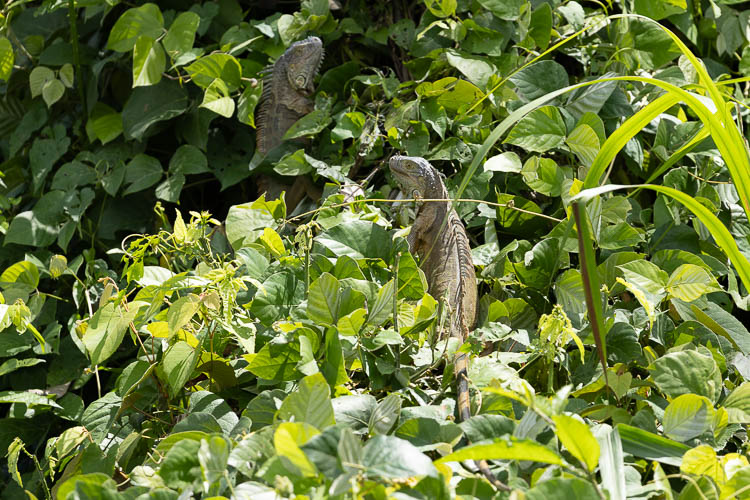
Iguana
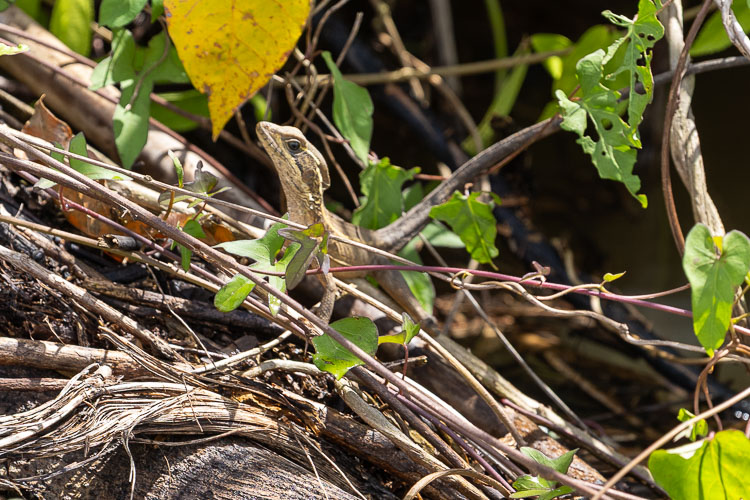
Jesus Lizard
Returning to Monkey River Town, we were treated to a tasty lunch and admired the pelicans.
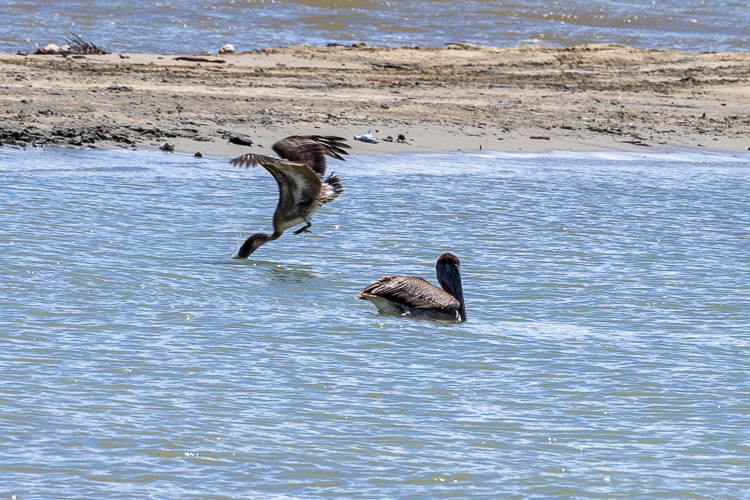
It was soon time to return to the boat for the next activity of the day – manatee spotting…. I’d taken a seasickness tablet by this point, but it remained calm and boy was it worth it. I hadn’t really expected to see manatees, and initially it was really difficult to spot them – “look at the brown spot in the water”. But then.. Wow… A manatee surfaced a couple of times right by the boat – what a privilege to see these majestic creatures.
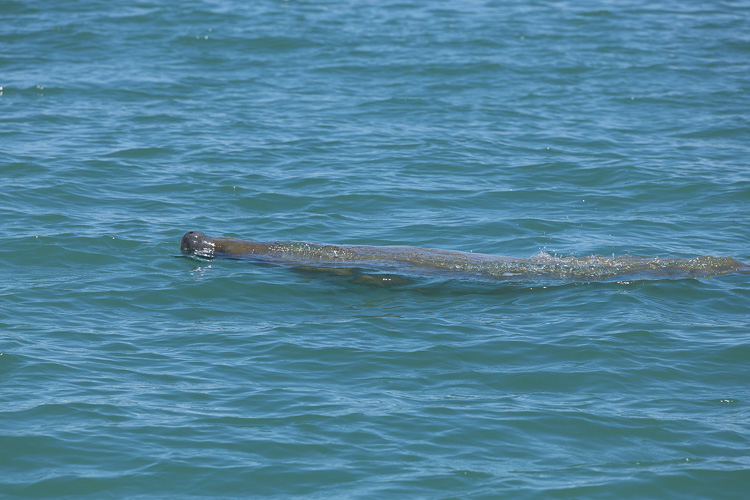
Leaving these gentle giants behind, we moved to a different area for snorkelling. I’d worn my swim stuff under my clothes for the day, but there had been an opportunity to change after lunch at Monkey River.
The crew distributed flippers and masks, ensuring they fitted correctly and explained the best way to prevent the masks from misting up. Once I’d jumped in the water (a pleasant temperature), my mask/snorkel didn’t appear to be working, so they were very patient, first trying to improve the fit and then to replace it. I was impressed with how the crew looked after those members of the group who were a little nervous of the activity.
We were split into groups of 8, and one of the crew members swam with each group to identify the coral and fish we were seeing.
We enjoyed the snorkelling, but I was surprised that we didn’t see bigger, brighter fish. Not to worry – that would all change once we reached Caye Caulker.
I’m really pleased that we opted for the Monkey River trip – the range of activities and knowledge of the guides was great, and seeing a manatee was unforgettable.
That evening, we ate at Wendy’s again as other restaurants were booked or closed for Easter.
Day 7 – Cockscomb Basin Jaguar Sanctuary; San Ignacio
Calm down, we didn’t see jaguars!
Leaving Placencia early, we drove for about an hour to the entrance to the Cockscomb Basin Jaguar Sanctuary, a 400-square-kilometre area established in 1986 as the first protected area for the jaguar.
Once we had turned off the main road to travel through the jungle to the parking area (an additional 45-minute drive), Jason started to spot wildlife!
The best spot was our first toucan of the holiday.
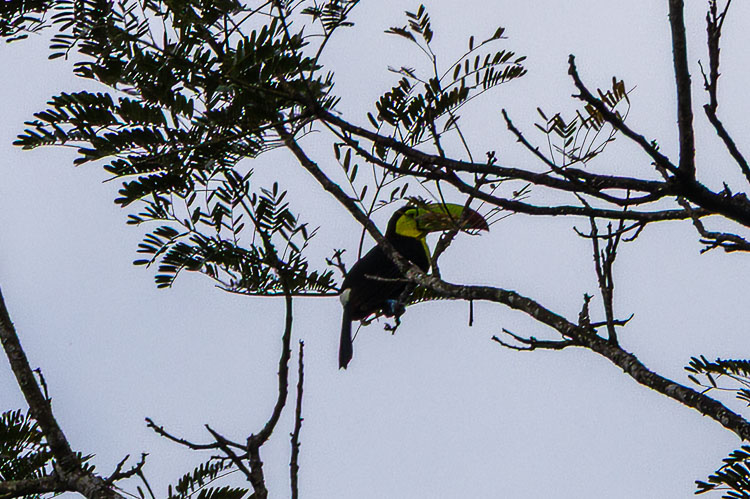
After a delicious warm breakfast burrito which we picked up on the way in to the park, we started our hour’s walk to Ben’s Bluff. The first half of the walk was flat or up a gentle slope, the second half (which some of the group chose not to do) was pretty steep but on well-worn paths – walking trainers were fine, there was no need for the additional support given by walking boots and it wasn’t nearly as challenging as the Gorilla trek we did last year.
It was a beautiful view from the top – you could see the Maya mountain range and Victoria Peak (Belize’s second highest peak) across the jungle.
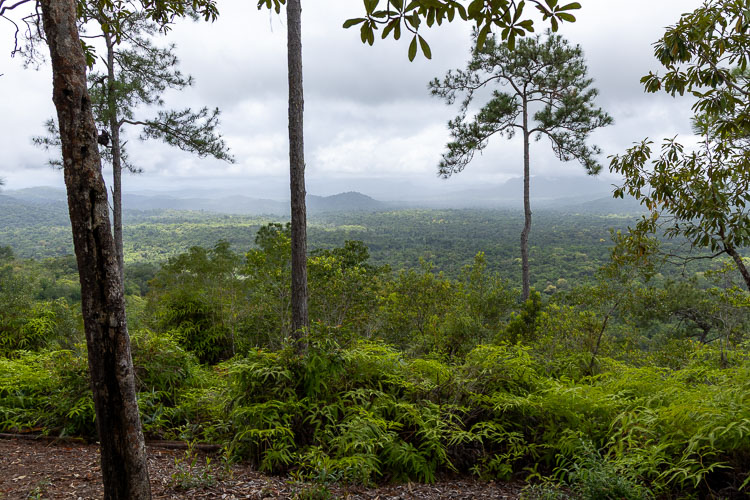
On the way down, we stopped off at a waterfall, and some of the group went for a swim.
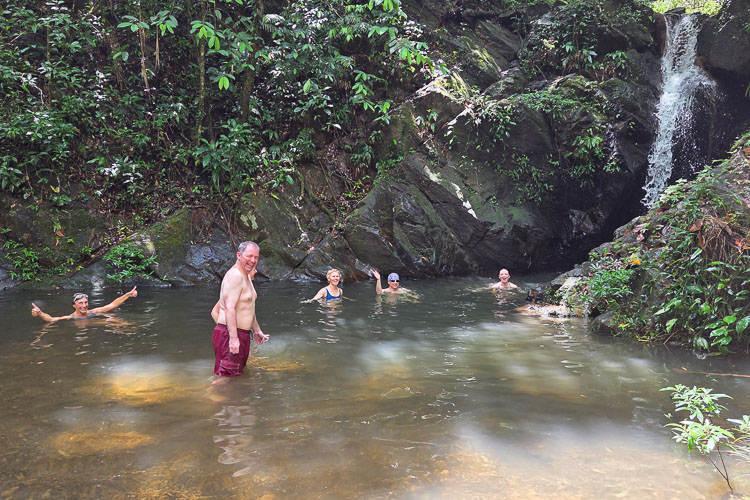
I chose not to swim, and I’m quite glad I didn’t, as a tiny blood-sucking fly decided my exposed skin was tasty and I got covered in bites. Fortunately, they weren’t as itchy as they looked – but I still had the marks over three weeks later!
However, we still got as wet as if we had gone swimming as the heavens opened on the walk back to the van, so just as well we were wearing swimming costumes under our clothes.
Back in the van and out to the main road. As it was Easter Sunday, no restaurants were open, but Justin had persuaded the cafe that gave us the breakfast burritos to open for lunch too – just for us.
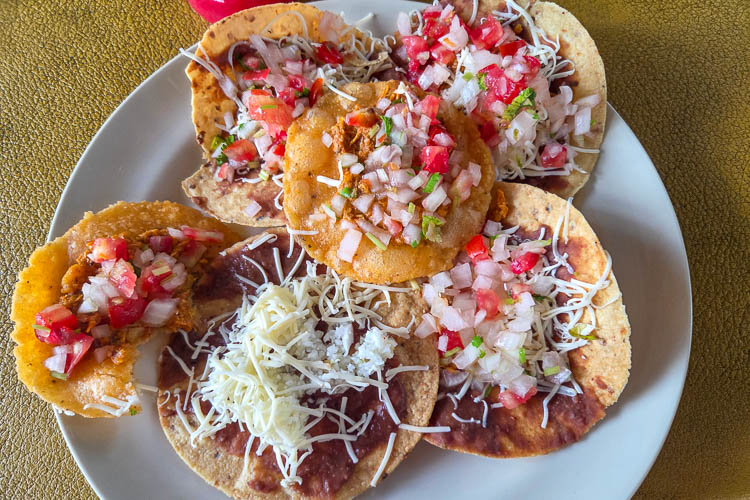
What a find – this little snack bar served delicious made-to-order panades, garnaches or salbutes (each was $1 Belizean, about 37p each).
I’d highly recommend stopping at the cafe in addition to the sanctuary if you are in the area.
Our next stop on the way to San Ignacio was the Blue Hole. Not the Great Blue Hole in the middle of the Caribbean Sea, which by all accounts is an amazing diving location, but the inland Blue Hole, about two hours from San Ignacio.
This blue hole is a freshwater sinkhole in St. Herman’s Blue Hole National Park. It wasn’t so blue when we were there – apparently the recent rain had changed its colour – but it was worth a quick dip on the way past.
There are clean toilets to change within the park, and access to the Hole is a short walk down some steps.
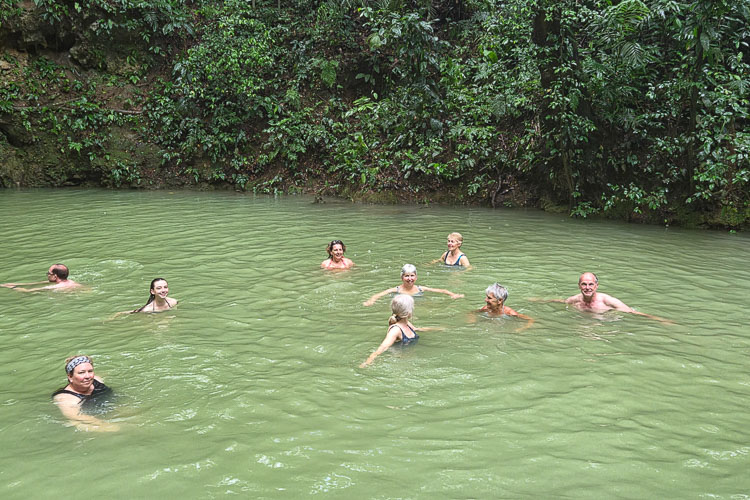
I’m not sure it would be worth a day trip from San Ignacio on its own, but it was a nice place to break our journey.
Finally, we reached Midas Belize, our hotel for the next few nights. It was very comfortable with individual lodges and a good-sized (if busy) swimming pool.
Day 8 – Xunantunich
After a 30-minute bus ride and a hand-winched ferry, we reached our third Maya site, the most impressive yet.
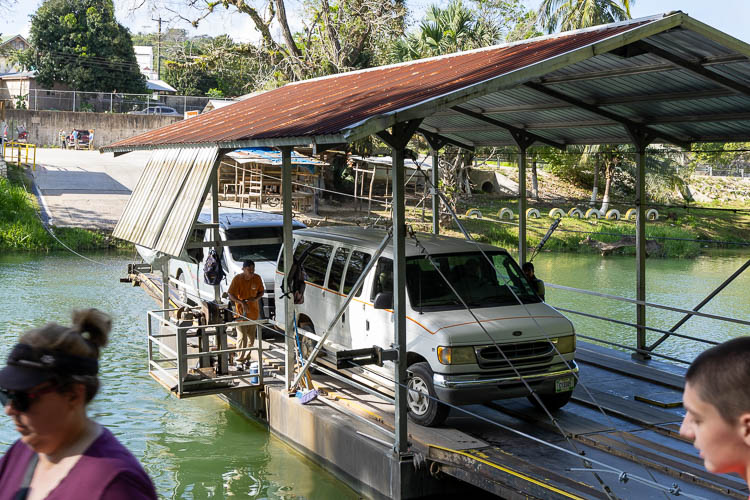
Xunantunich was a civic ceremonial centre from around 700 to 900 AD. The main part of the city consists of six plazas with over 26 temples and palaces spread over one square mile.
Before exploring the temples, we saw the first spider monkeys of our trip.
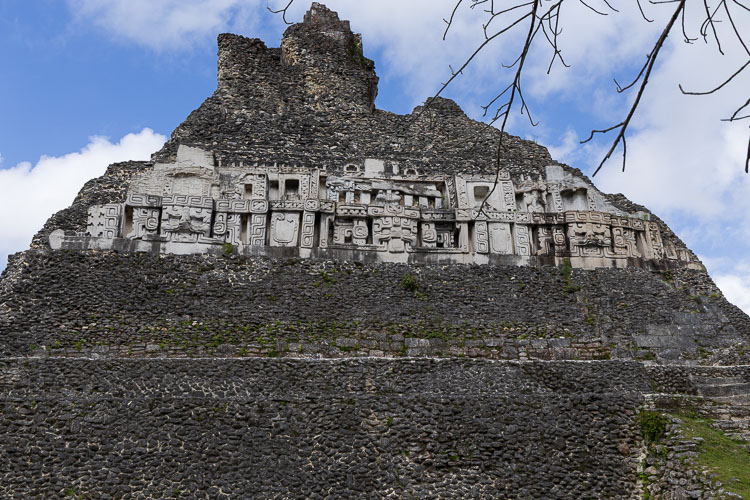
The main attraction at Xunantunich is El Castillo, Belize’s second-tallest Maya structure at 40 metres.
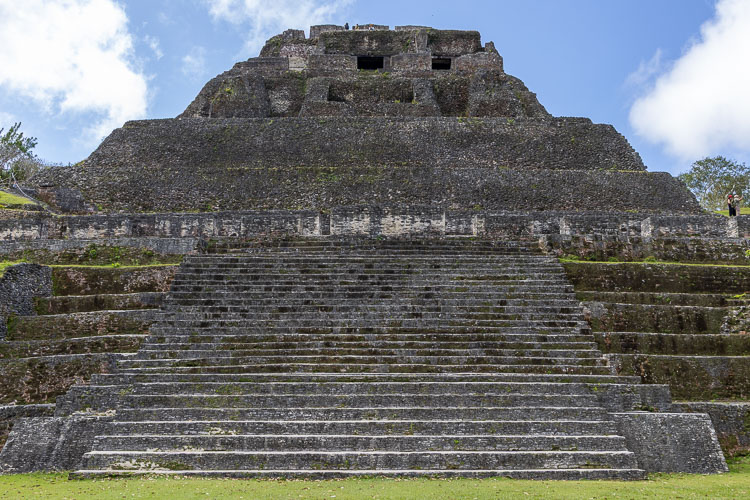
As we climbed to the top, amazing sculptured friezes were revealed on the East side.
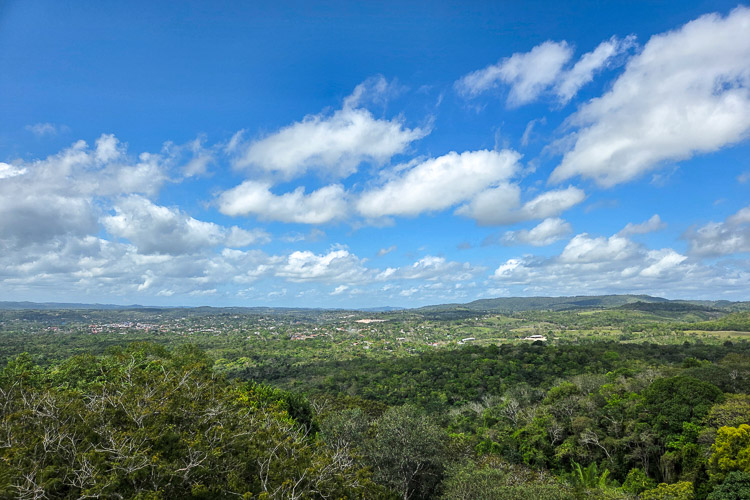
The views from the top (quite a steep climb and no fencing around the top platform, so be careful if you have a problem with heights) were extraordinary – over the jungle…
…. and over the rest of the site.
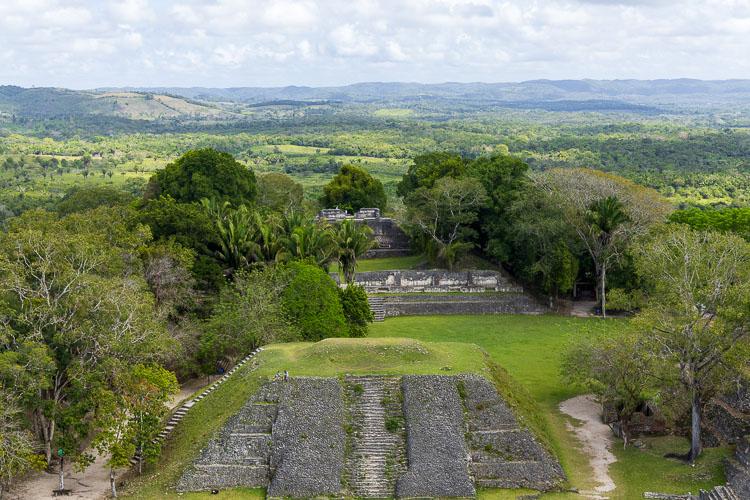
After El Castillo, we walked around some of the other structures on the site. The whole place felt bigger and more impressive than the other Maya sites we had visited so far.
Once we had finished, we returned to San Ignacio and had a look around the market before going to Hode’s Place for a very tasty lunch.
The afternoon was free from organised activities. Jason suggested:
- A visit to Cahal Pech archaeological site, the oldest known Maya site in Belize
- A visit to a butterfly farm
- A visit to an iguana conservation project
- Rest at the hotel
Some of our group went to Cahal Pech, which they said was very interesting.
We decided to visit the iguana conservation project and got a lift from our tour driver. It would have been about a 30-minute walk (uphill) or a 5- 10-minute taxi ride.
It was unexpected to be dropped at a luxury hotel, but the hotel began the Green Iguana Conservation Project in 1996 and has created an educational exhibit within the property. It costs $11 US to join a tour that starts on the hour from 8 am to 4 pm.
Our guide explained that the green iguana population in Belize is threatened, partly because they are a local delicacy. (It is worth noting they are labelled as ‘least concern’ by IUCN)
We were taken to the iguana hut and shown iguanas that were used to being handled. These iguanas are bred, with the eggs taken to the nursery to hatch and reach adulthood, before being released back into the wild.
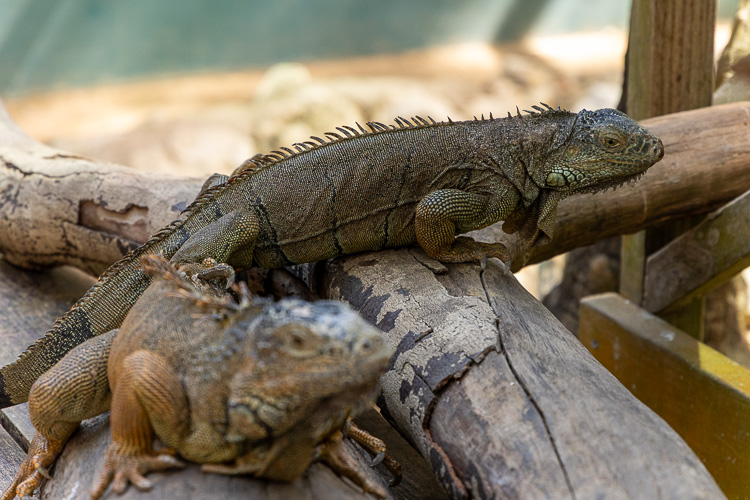
Having had the opportunity to hold the adult iguanas, we were taken to see (and hold) the babies – straight from ‘Death in Paradise’!
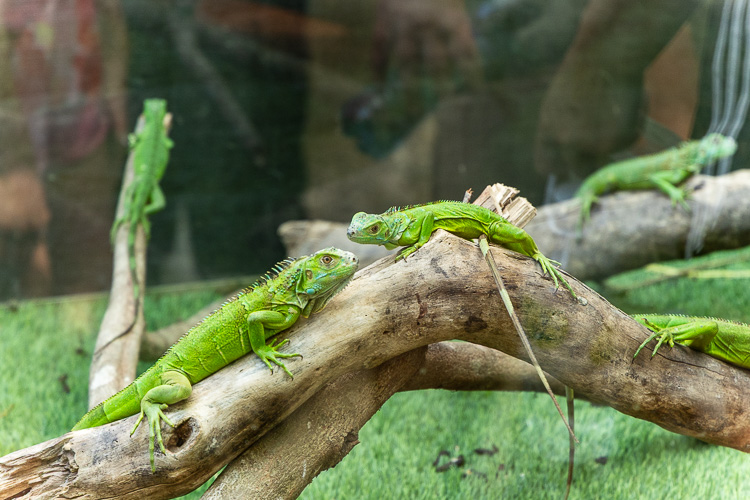
It was an interesting visit and a good way to spend an hour before walking down the hill back to the hotel.
Day 9 – Botanical Gardens and Canoeing
This was also marked as an optional day on the tour; activities offered were the same as the afternoon of Day 8, or we could visit the Belize Botanic Gardens, with an optional canoe trip back to San Ignacio.
We joined the Botanic Gardens trip, about a 25-minute drive away. Some of the group did the Cahal Pech visit, and one lady organised her own tubing-in-caves tour.
The guide who showed us around the gardens was very good, pointing out interesting plants and explaining how different plants are used for herbal medicine.
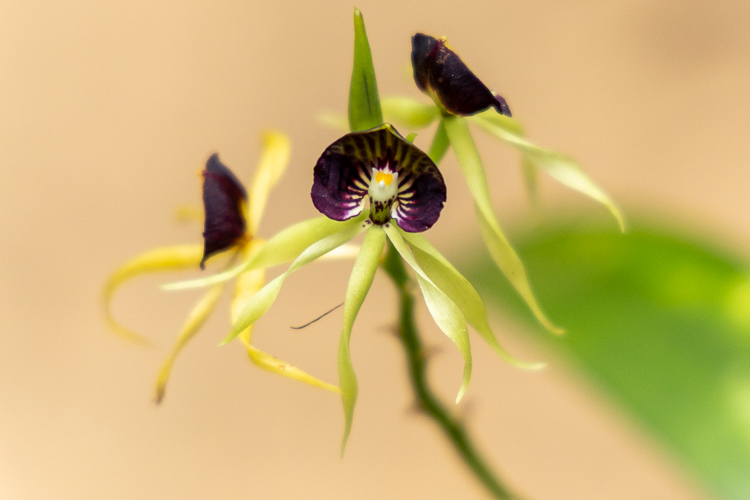
Black Orchid - National Flower of Belize
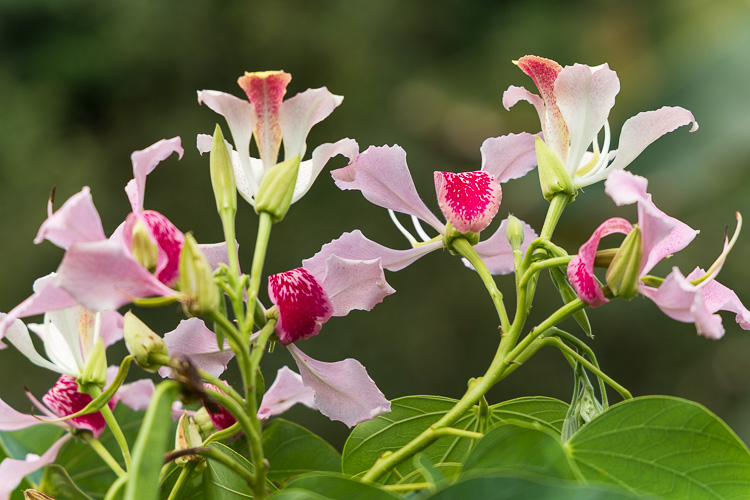
Orchid Tree
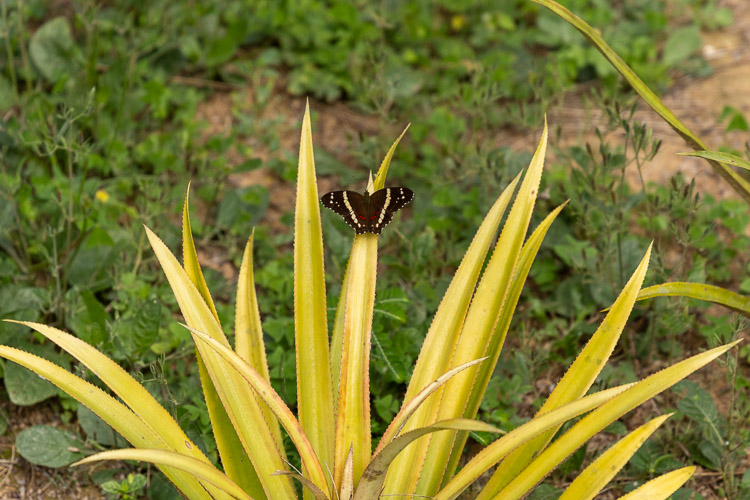
Banded Peacock Butterfly
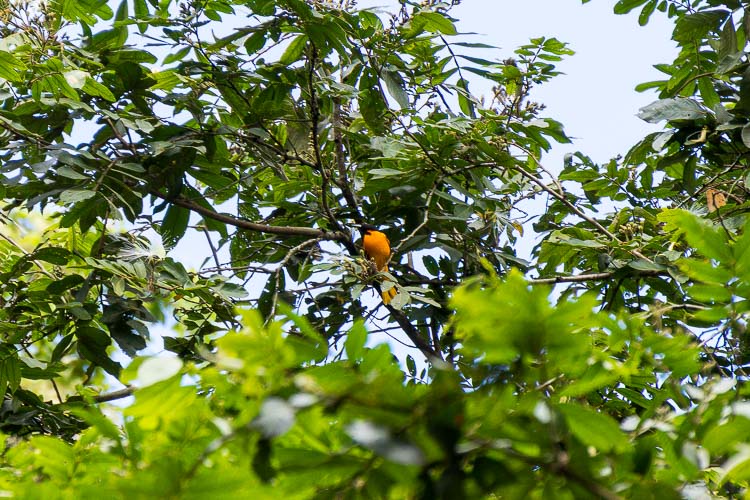
Bullock's Oriole
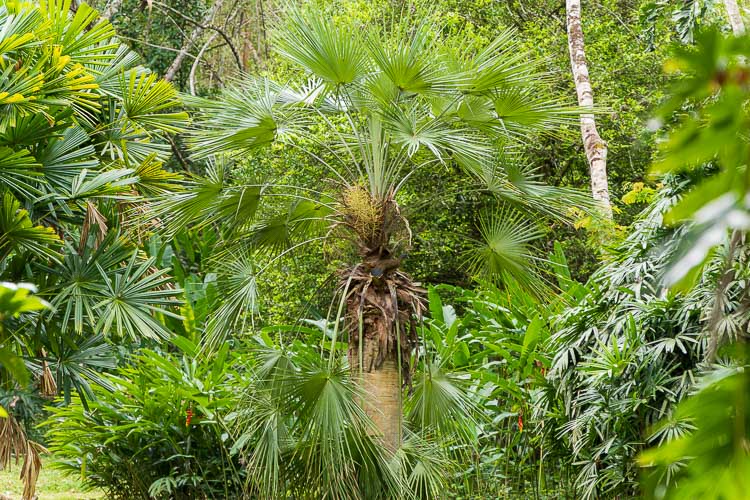
Windmill Palm
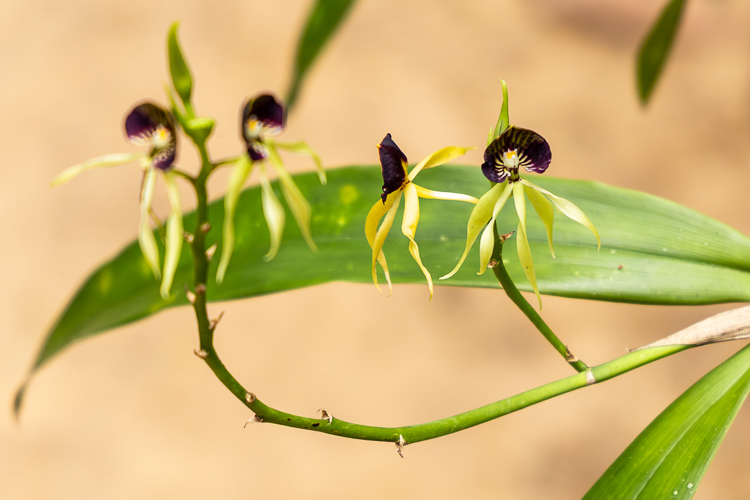
Group of Black Orchids
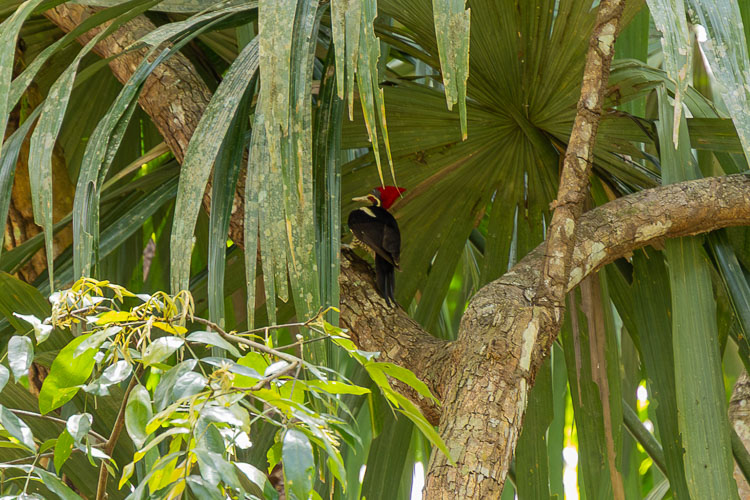
Woodpecker
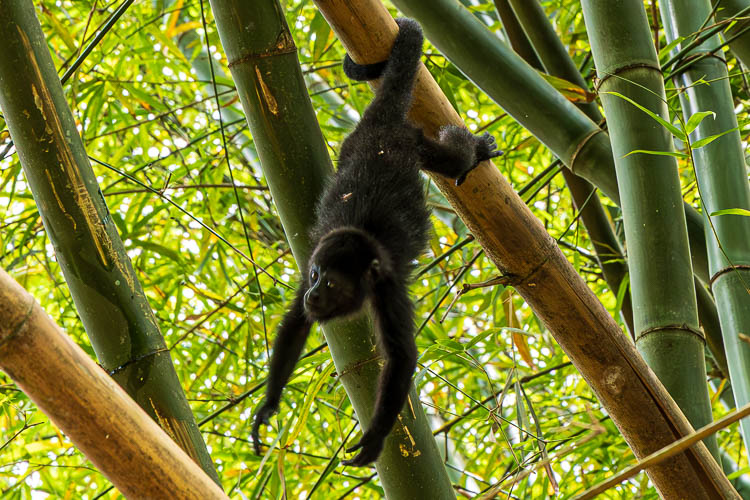
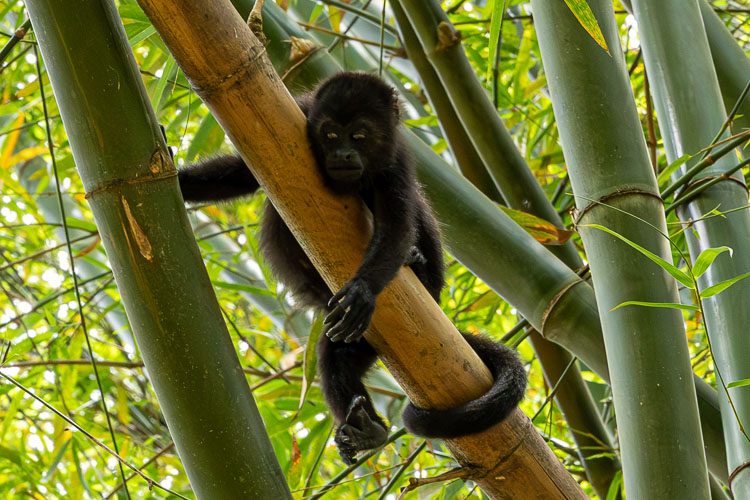
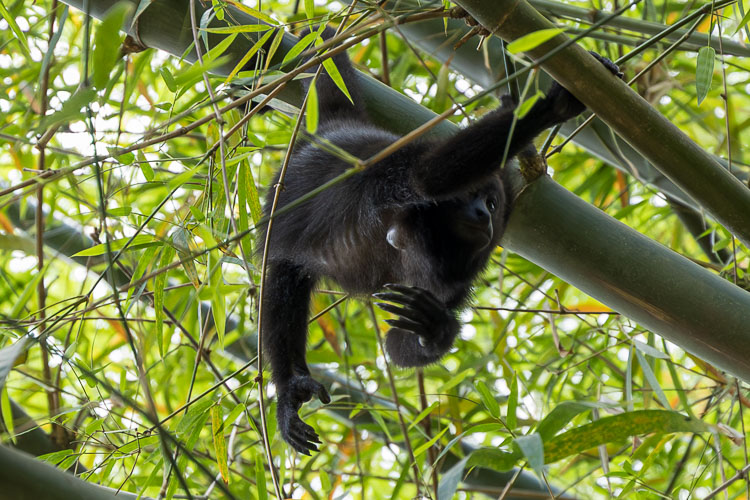
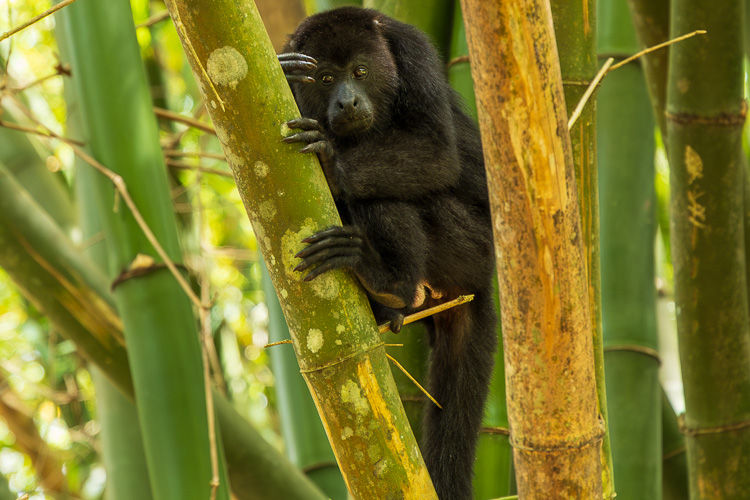
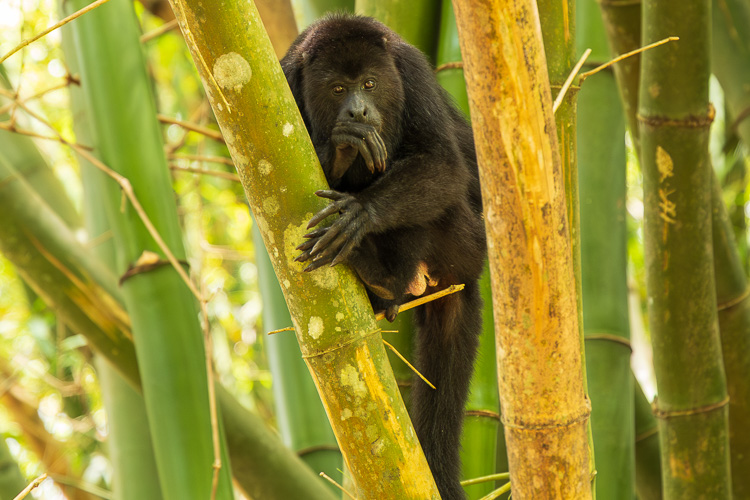
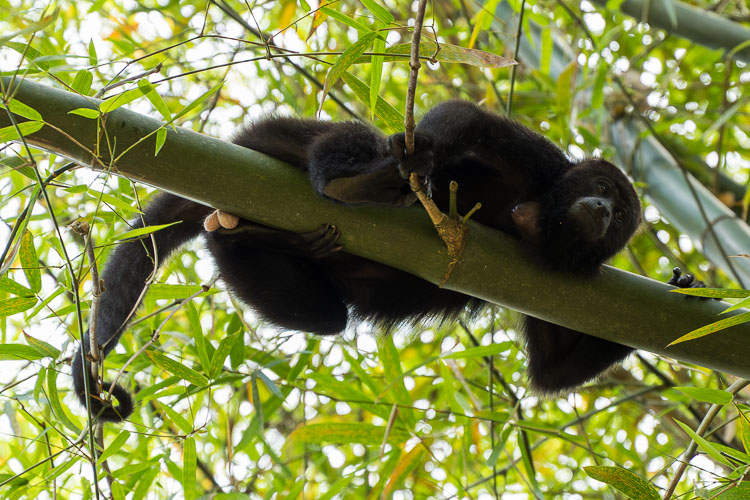
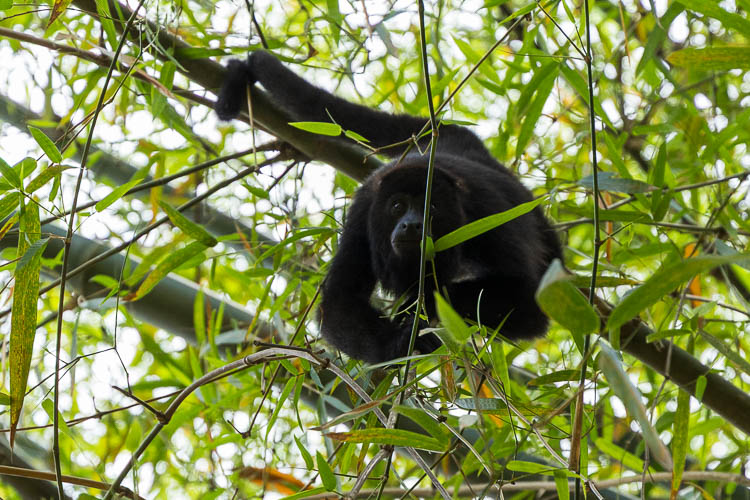
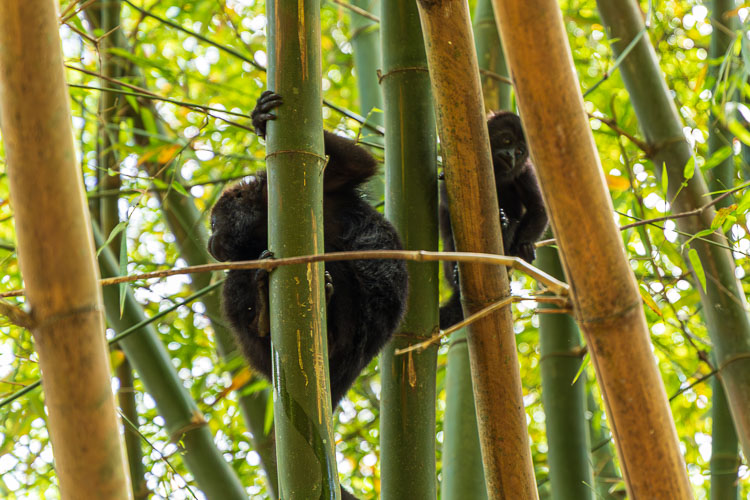
One section of the gardens had a resident troop of howler monkeys!
The visit included a sandwich lunch, and then we got changed into swimming gear for the canoe trip. Unsure of the canoe stability, not wanting to get sunburnt and aware there would be opportunities to swim, I chose to wear swim leggings and a rash vest over my swimming costume; others wore a standard T-shirt and shorts. I also wore my water shoes, which were perfect for paddling in the river while both swimming and getting in and out of the canoe. We put our phones/cameras in a dry bag. Fortunately, we were able to put our clothes and other valuables back in the bus to meet us at the pick-up point.
We walked the short distance downhill to the river to pick up the canoes (provided by a separate company, not the Botanic Gardens) and put on lifejackets. The canoes could sit two or three people and had two single-paddle oars.
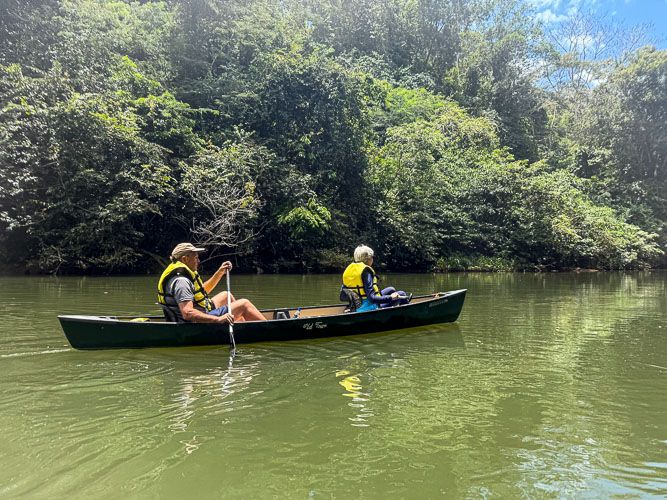
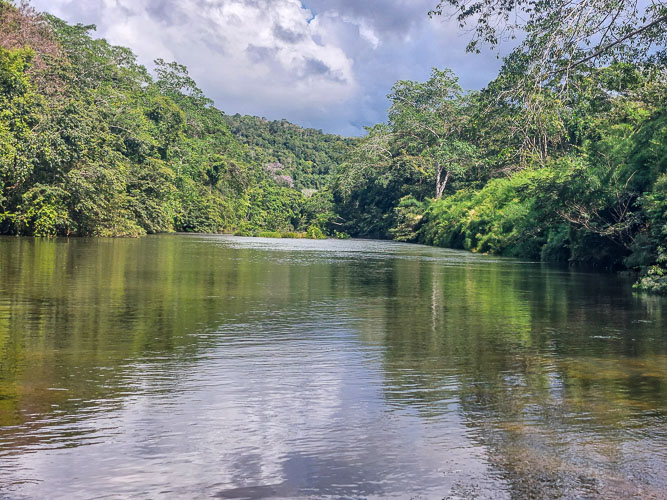
We had a gentle, picturesque 3-hour float down the river, crossing a few very small, gentle ‘rapids’ (slightly bubbly water caused by stones in the river) with the occasional need to paddle to keep the canoe on track. We stopped twice to swim, though that came with added jeopardy after we saw a venomous snake crossing the water!
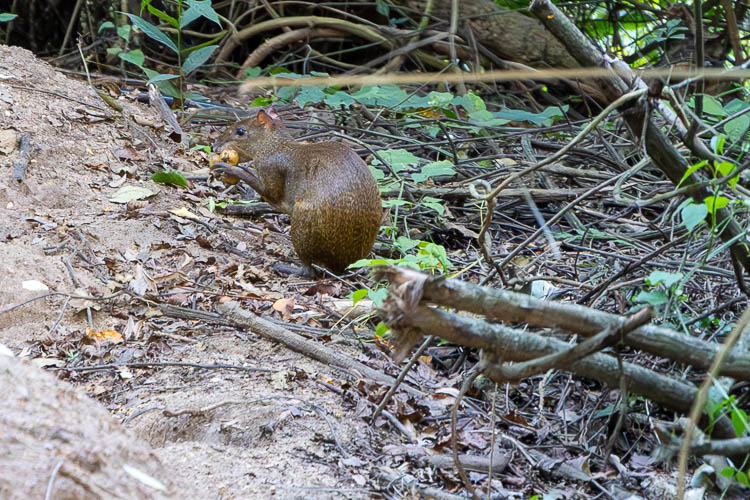
Once we reached San Ignacio, it was a short bus ride back to the hotel. Before dinner, we went for a walk around the grounds and came across an agouti.
Day 10 – Tikal in Guatemala
A short 30-minute drive took us to the straightforward Guatemala border crossing and then onto a different bus heading toward Tikal, arriving at the comfortable Jungle Lodge Tikal around 2.5 hours later (with a comfort break).
After lunch at the hotel, we set off on our guided exploration of Tikal.
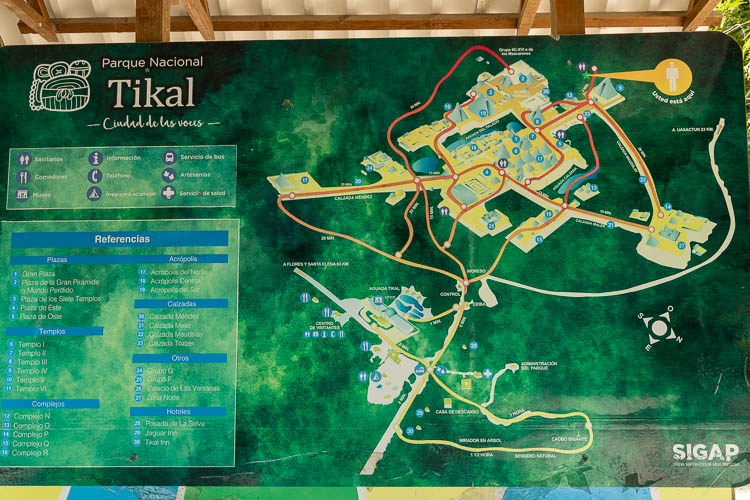
Tikal was initially settled around 600BC and was abandoned around 890 AD. The ceremonial centre once covered 16 square kilometres and has incredible temples, palaces and public squares. Rediscovered in 1848, only 15% of it has been excavated, but laser technology has been used to identify many structures still hidden in the jungle. It is thought that 50,000 to 100,000 people lived in the city at its height. As part of Tikal National Park, it was declared a UNESCO World Heritage Site in 1979.
Our guide took us around many of the main structures in the complex, which was significantly bigger than the Maya sites we had seen to date. It really brought home how remarkable the Maya were, with knowledge of mathematics, astronomy and agriculture as well as writing and art.
Complex Q
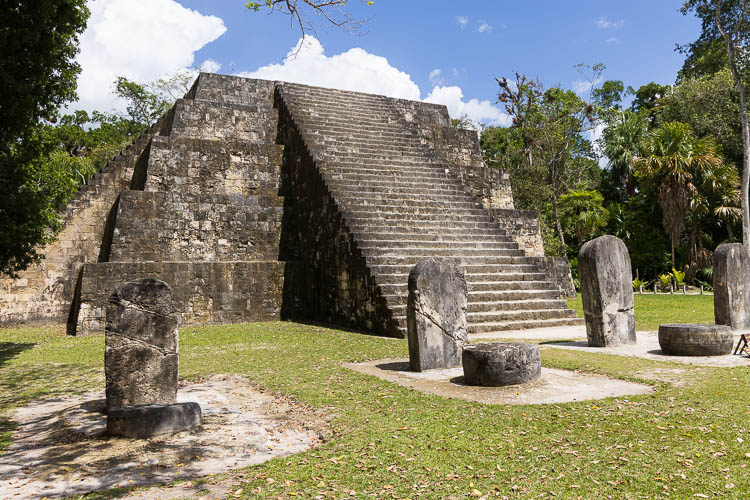
The first temple we saw was the restored eastern pyramid of Group Q, the largest “twin-pyramid complex” in Tikal constructed around 771 AD. The term “twin-pyramid complex,” first introduced in 1956 by Edwin M. Shook to describe this distinctive architectural pattern found in several Maya sites, refers to a layout in which matching pyramids were built on the eastern and western sides of a small plaza, with a building with nine doorways on the southern side and a small enclosure to the north.
There are upright limestone slabs (stelae) paired with round altars in front of the Eastern pyramid. These may have been ceremonial or used for timekeeping.
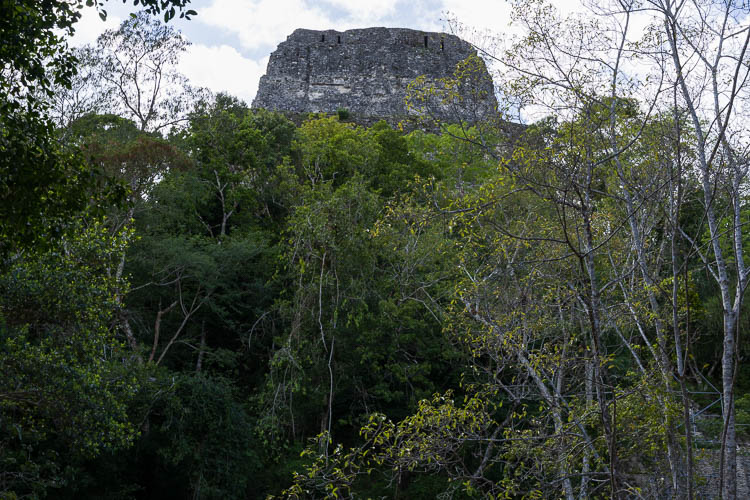
Temple IV
Walking further into the jungle, we saw the tallest structure, Temple IV, peaking through the trees. Built in 741 AD and 70 metres tall, it is believed to commemorate Yik’in Chan K’awill, a powerful ruler of Tikal.
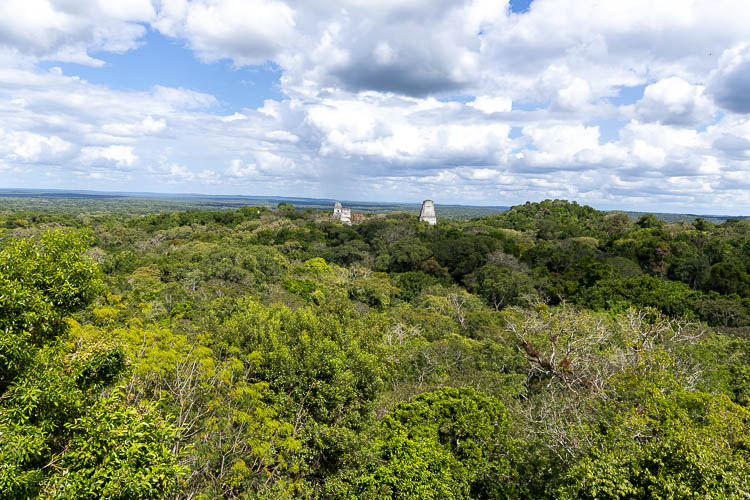
Climbing to the top via a very safe wooden staircase, you are rewarded with an amazing panoramic view of the jungle, with the tops of other temples peeking through the canopy. If you think you recognise the view, you may have seen it in the film ‘Star Wars: A New Hope’.
This is the temple you climb for the Tikal sunrise tour. I’d imagine walking through the forest in the dark, listening to the wildlife wake up, would be a pretty impressive experience, but whether you actually see the sunrise can be unpredictable due to clouds and/or rain.
Lost World Complex (Mundo Perdido)
The Mundo Perdido complex is the largest pyramid complex, originally dating from 500 BC, though the pyramids were rebuilt several times during the Maya period
This temple, the Talud-Tablero temple, is notable for being built in a different style from the others at Tikal, possibly showing influence of another civilisation.
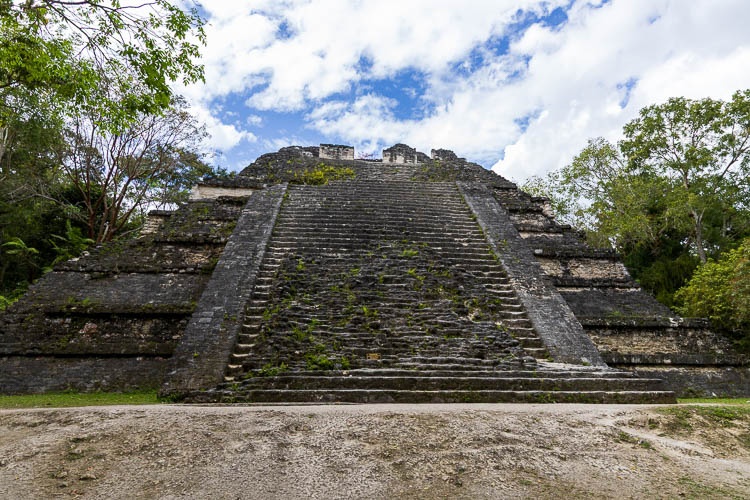
Within this complex, the Lost World Pyramid (also known as the Great Pyramid) can be climbed using a wooden staircase. The pyramid we see is the fifth version (finished in 250 AD), but it was originally constructed around 600 BC.
Historians believe the flat summit of this pyramid was used to observe the sun’s position. From the top, we enjoyed spectacular views of the Tikal structures, including Temple IV in the distance.
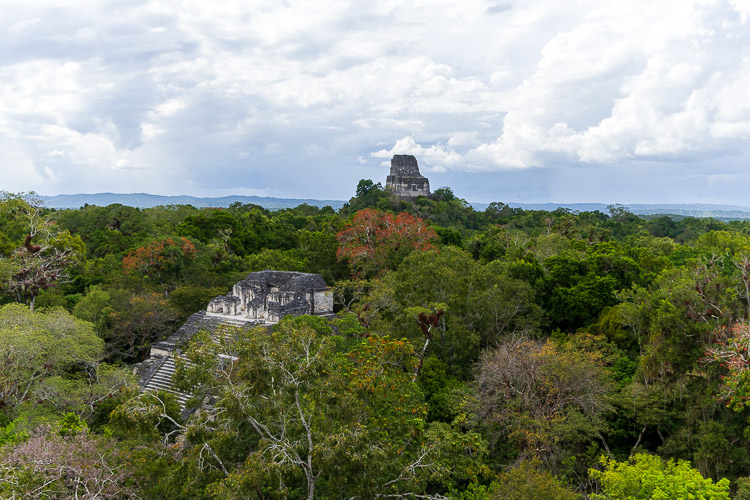
Temple V
This pyramid is in a quiet area of the jungle, and is very impressive at 57 metres tall. It has undergone extensive refurbishment, but was originally built about AD 700 as a tomb for an unidentified ruler.
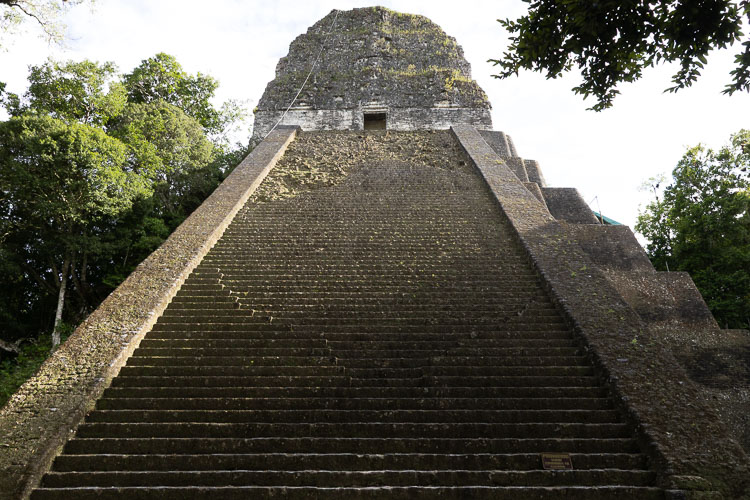
The Grand Plaza
We finally arrived at the Great Plaza, the ceremonial and symbolic centre of the ancient city, where civic, ritual, and commemorative activities were held. It contains the following structures:
The Central Acropolis and North Acropolis
On the North and South of the plaza stand two complexes. In the South, the Central Acropolis consists of an intricate maze of interconnected palaces, courtyards, and rooms that served the administrative and residential needs of the elite. In the North, several small temples, some built on earlier structures, formed the city’s funerary and ceremonial space.
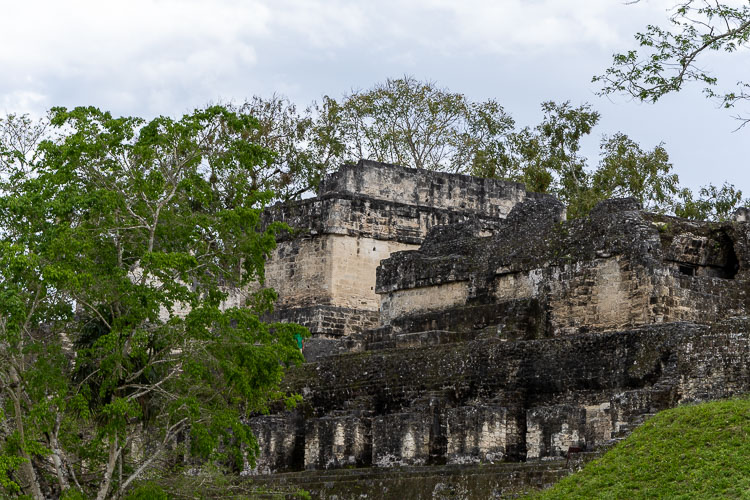
Temple of the Great Jaguar (Temple I)
Built around 732 AD, probably as the tomb of Jasaw Chan K’awill, one of Tikal’s greatest rulers, it is 47 metres high and rises in nine stepped levels, likely to be symbolic of the nine levels of the underworld. The top of the steep staircase was a ceremonial chamber.
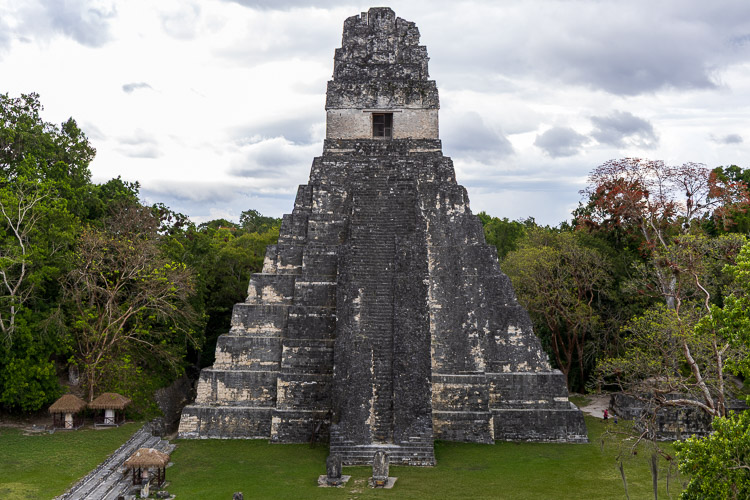
Temple of the Masks (Temple II)
Directly opposite the Temple of the Great Jaguar in the Grand Plaza, the 38-metre-tall Temple of the Masks is believed to have been dedicated to the wife of Jasaw Chan K’awill, though no tomb has been found.
This temple has a wooden staircase at the back for an easy climb to excellent views over the plaza.
Of course, Tikal’s jungle setting meant we encountered wildlife alongside the impressive ruins, including a toucan, coatis, and spider monkeys.
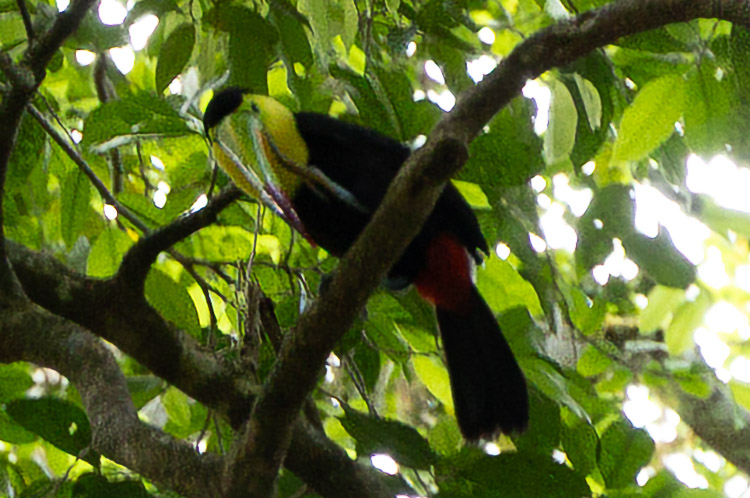
Toucan
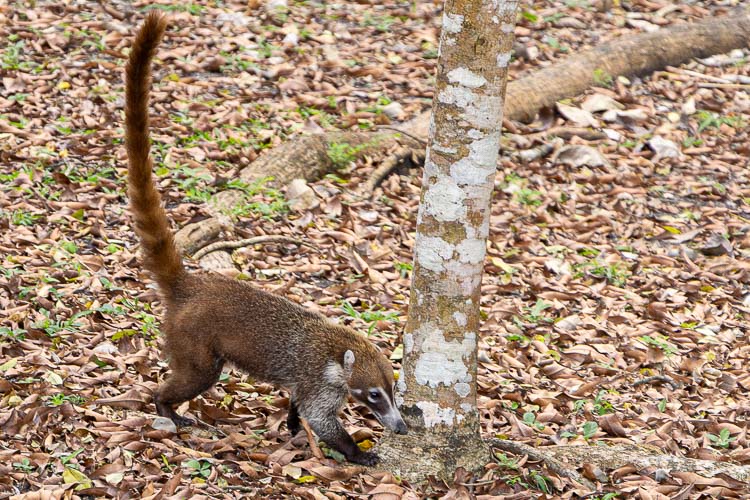
Coati
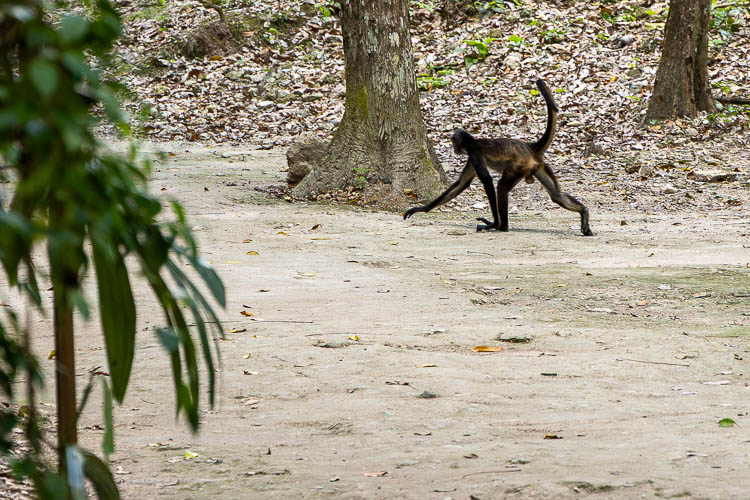
Spider Monkey
Tikal was just an amazing place to visit, every bit as impressive as Machu Picchu, which we visited a few years ago. It has certainly piqued my interest in finding out more about the Maya people.
Throughout our visit, we could hear the howler monkeys roaring, which I managed to capture on our way out.
Right at the exit, a male ocellated turkey posed for a photo.
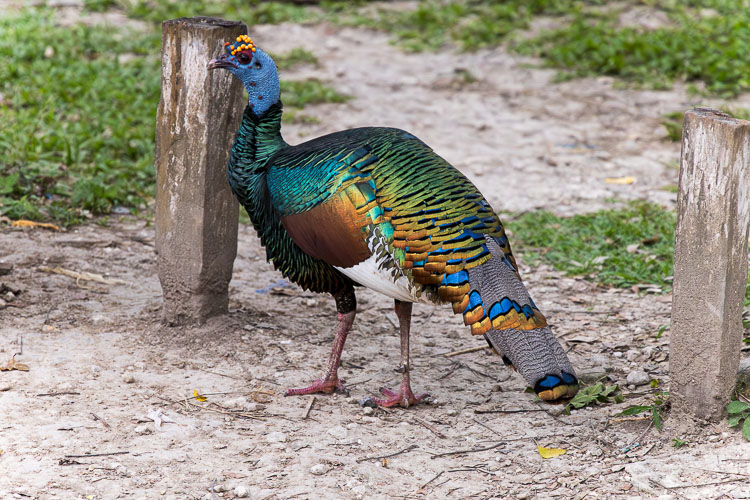
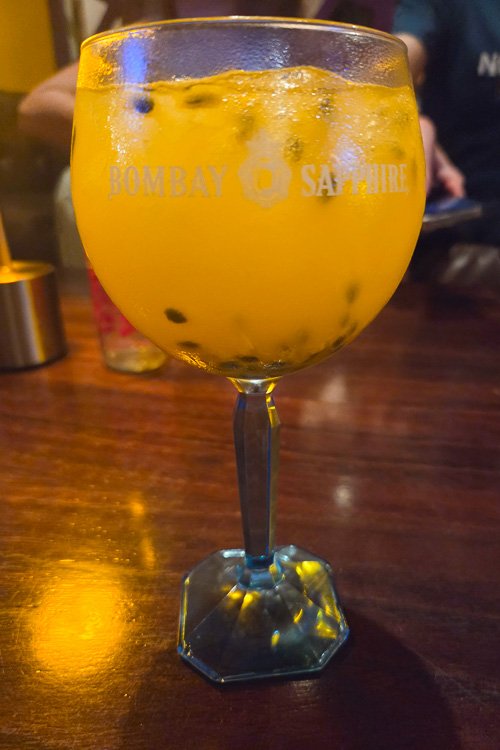
This was a truly fantastic day, nicely topped off by a passionfruit gin and tonic.
Day 11 – Visit to Flores
After a night interrupted around 2 a.m. by the roaring of howler monkeys, we set off on the 1.5-hour day trip to Flores.
This was an optional excursion on the tour, with the alternatives being another visit to Tikal or relaxing at the lodge. Although we were tempted to return to Tikal, several people in our group had spoken highly of Flores, so we decided to explore somewhere new instead.
We visited Isla de Flores, the historic old town situated on a small island in Lake Petén Itzá and linked to the mainland by a short causeway. The town holds an important place in history as the last independent Maya city to fall to the Spanish in 1697. During the conquest, the original temples were destroyed, and the Spanish rebuilt the settlement as a colonial town.
The trip included a boat ride on the lake looking for wildlife. We saw a few birds, but the view of the town was more impressive.
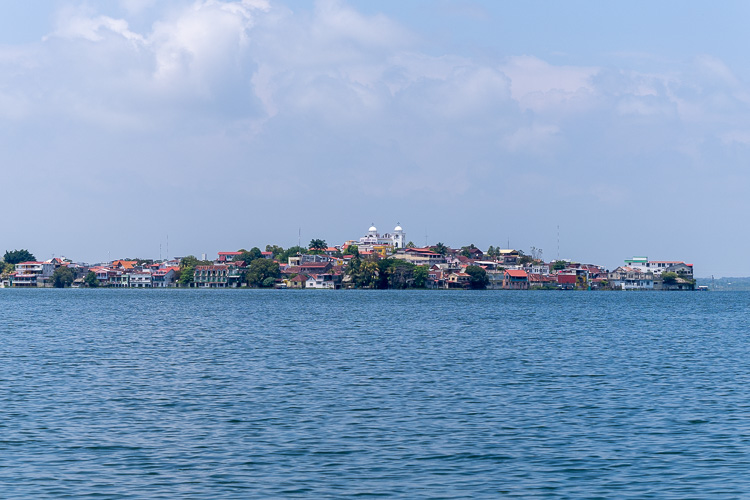
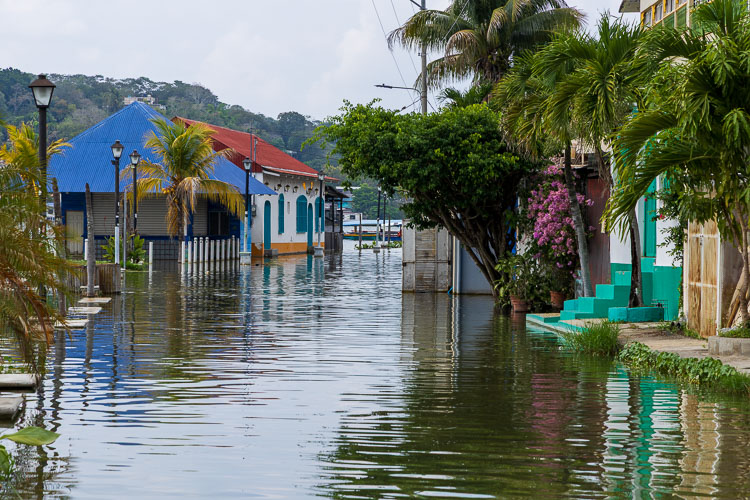
The town was pleasant to walk around with a large church at the top of the central hill surrounded by colourful buildings, but it was quite touristy. For me, the lasting impact was seeing the flooded promenade, which runs around the island perimeter, even though we were in the ‘dry’ season. I think this is a common sight, but it must be difficult for residents.
Day 12 – Travel to Caye Caulker
After another fascinating night listening to the howler monkeys, it was time to return to Belize City to catch the ferry to the last destination of our holiday – Caye Caulker.
It took about 6 hours to arrive at the ferry terminal in Belize City, including breaks and the border crossing.
At the terminal, suitcases are exchanged for a numbered ticket as they are loaded into the hull of the boat, so make sure to keep valuables with you. The ferry crossing is between 45 mins and 1 hour, depending on stops and weather conditions. Our ferry stopped at a private island on the way, delivering dog food amongst other things!
We were fortunate to have a smooth crossing, but I have seen reports of it being very rough, so I took tablets just in case.
Arriving in Caye Caulker, our luggage was delivered to the Coral View Hotel and Resort, our home for the next few days.
When they load the suitcases onto the boat, they put all the luggage on a trolley and raise the handles on some suitcases to form a barrier so the luggage can’t slip off. Unfortunately, the handle on our suitcase bent during this process, meaning it couldn’t be lowered. Of course, this wouldn’t work for the plane. The ferry staff told us to return the suitcase to the port and pick it up the next day. We weren’t convinced it would be fixed, but, to be fair, when we picked it up the next day, it was basically OK. I suspect this might be a fairly common occurrence.
After this added excitement, we walked around Caye Caulker to get our bearings ready for the next few days.
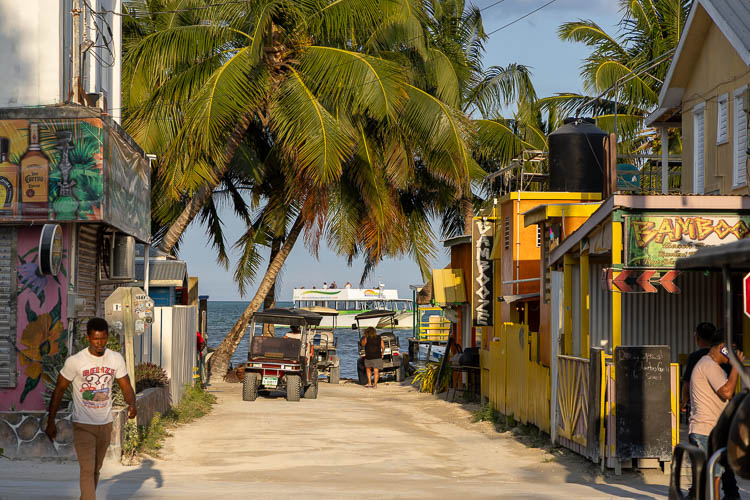
Caye Caulker is a small island, 5 miles long and less than 1 mile wide. A narrow channel known as The Split divides the island into two. Most of the population of 4,000 inhabitants and tourists live in Caye Caulker village, which is roughly 1.5 miles long on the South of the island.
Top things to do on the island include:
- The Split – a swimming spot, beach bars and sunset watching (a great place to hang out)
- Belize Barrier Reef and Marine Reserve – an amazing place to snorkel and scuba dive, just a mile from the island (see more here and here)
- Iguana Reef – to see wild stingrays and tarpon (see more in this post)
- Great Blue Hole – a massive underwater sinkhole can be seen by air, or you can dive it (we didn’t do this)
- Cycling around the whole island (see more in this post)
There are also a few tourist shops and lots of places to eat and drink. I really liked the vibe in Caye Caulker – much more so than Placencia.
After a drink at Sip N’ Dip, we ate a great dinner of pasta at Pasa Per Caso.
Day 13 – Snorkelling
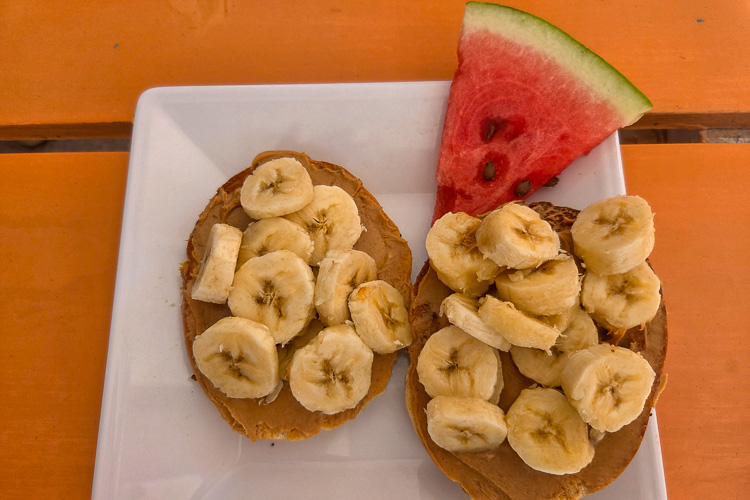
After a delicious breakfast at Amor y Cafe (I had a bagel with peanut butter and banana), ….
…. we had a choice of optional activities on the tour:
- Half-day snorkelling tour by motorboat
- Full-day snorkelling tour by catamaran
- Scuba diving tour
- Relax around Caye Caulker
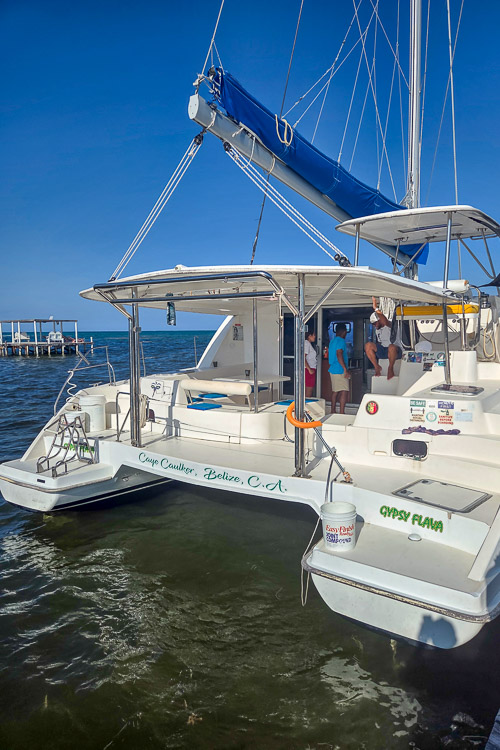
Along with many of our group, we chose to do the full-day snorkelling tour (cost $110 US pp, cash only) and were so pleased we did. Our tour leader arranged the tour with Carlos Snorkelling Tours, a family business that operates a very comfortable catamaran holding up to 25 people.
Once we registered, we were taken down to the dock, our shoes were put into a central bag, and we boarded. There were two main areas of shade, with an additional area available on the roof once the sail was raised – plenty for everybody.
The Belize Barrier Reef, a UNESCO World Heritage Site since 1996, is a 300-kilometre-long section of the 900-kilometre reef between Cancun and Honduras. It sits about 1 mile directly across a shallow lagoon from Caye Caulker.
Our day trip from 9 am to 3 pm took us to two protected marine reserves: the 61-square-mile Caye Caulker Marine Reserve near Caye Caulker and the 161-square-mile Hol Chan Marine Reserve closer to San Pedro in the north.
Coral Gardens
After 40 minutes, we arrived (with the aid of the catamaran engine) at Coral Gardens, our first snorkelling site within the Caye Caulker Marine Reserve. As the boat approached the reef, the crew handed out flippers, snorkels and masks, carefully checking that everything fit comfortably. I felt the gear was of better quality than we used while snorkelling in Placencia. Once the boat was anchored, we slipped into the water either via the ladder or by sliding off the back.
We were all asked to check our snorkels and then split into 3 groups, each with our own guide. Floats were available if required, and the guides seemed to take note of who needed assistance in the water.
The water at Coral Gardens was very calm, warm and not too deep – around 2-3 meters. It is known as a good area for beginner snorkellers. Our guide pointed out corals and a variety of fish.
We snorkelled for around 45 mins and saw loads, including a variety of coral, nurse sharks, various fish and even a turtle.
Shark Ray Alley
Arriving at our second stop, Shark Ray Alley, which is part of the Hol Chan Marine Reserve, nurse sharks immediately approached the boat.
Feeding the sharks in Shark Ray Alley was historically started by local fishermen cleaning their catch and has become a tourist attraction.
I wasn’t entirely comfortable with the feeding, but the Hol Chan Marine Reserve website states, “the feeding of sharks within Shark Ray Alley is allowed by tour guides from within the boat”.
While the sharks were being fed, we were encouraged to get into the water to experience them close up. Nurse sharks, which can grow up to 14 feet long, are normally harmless to humans, but they will bite in self-defence if bothered.
Being in the sea with the sharks and the large fish was an experience I won’t forget in a hurry.
Hol Chan Channel
After a delicious lunch of chicken, rice and peas and coleslaw on the boat, we moved on to the final stop- Hol Chan Channel.
We stopped at the edge of the coral reef – you could see the breakers on the far side of the reef. The area has been a marine protected area since 1987. ‘Hol Chan’ is Mayan for ‘little channel’, which refers to a break in the reef, 22 metres wide and 27 metres deep. Apparently, manatees are sometimes seen in the channel – Carlos told us it was too early in the season, but we did hear of some boats being lucky enough to see (and swim) with manatees in this area.
Just like Coral Gardens, we all got into the water and then split into groups of 8 to explore the coral. We had stopped further from the coral than at Coral Gardens, so more swimming was required. As a relatively strong swimmer, I was fine, but I can imagine weaker swimmers might find this more difficult. However, the guides appeared to have noticed the ability of the individuals in their group and were ready to help if necessary.
During the 45 minutes in the water, we were lucky enough to see a variety of fish and coral, including sergeant major fish, turtles (really close), a shoal of grey snapper, a sleeping nurse shark, some eagle rays (with one burying itself in the sand), and a variety of parrot fish.
After a fantastic snorkelling experience, we were happy to lie back and enjoy rum punch and a gentle sail (no engine) back to Caye Caulker.
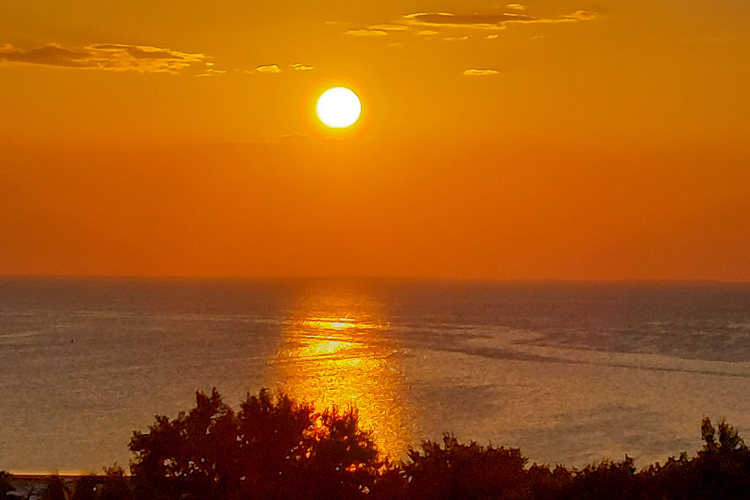
As if that wasn’t enough, the day came to an end on the top of our hotel, watching an incredible sunset.
Day 14 – End of Tour
Officially, today was the end of our tour, and many of the group were on the early ferry back to Belize airport and home. There was no need to spend a night in the US on the way home – just a 3-hour layover in Dallas.
We had decided to stay for another couple of nights, and I’m so glad we did. There was so much more to do in Caye Caulker, outlined in this post.
I really enjoyed the fortnight we spent in Belize. This tour allowed us to experience a huge variety of activities without needing to organise our own transport.
Yes, Belize is difficult to get to, but it is well worth making the effort. Not only is it full of amazing sites, but the people are so friendly.