
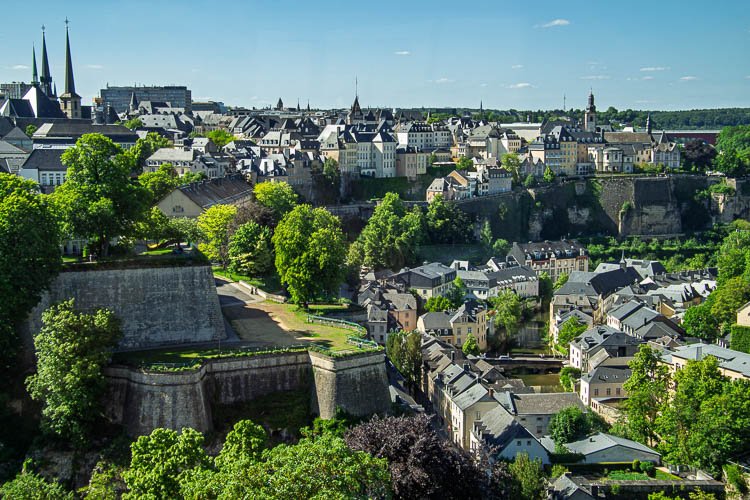
In May, we spent a glorious 5 days in Luxembourg. Why Luxembourg for a city break? It wasn’t on my radar until I saw it featured in a Times travel article on affordable city breaks, and after more research, the variety of things to do appealed to me.
So we booked a flight and hotel for 4 nights with BA Holidays for just under £1000. We treated ourselves to a 5-star hotel (as it was on sale), just to see what the difference was.
About Luxembourg
Luxembourg, the country, covers 998 square miles and is surrounded by Germany, France and Belgium. It is about 51 miles long and 35 miles wide, with a population of around 692,400, 136,000 of whom live in Luxembourg City. The population in Luxembourg City is made up of around 69% foreigners.
The City has many European bodies including the Court of Justice of the European Union, the European Court of Auditors, the Secretariat of the European Parliament and the European Investment Bank.
According to the International Monetary Fund, Luxembourg is one of the richest countries in the world by Gross Domestic Product (GDP) per capita. This is a result of its banking and investment management sector, its low-tax environment for multinational companies and a highly skilled and specialised workforce.
Residents benefit from heavily subsidised healthcare and education as well as free transportation throughout the country; however, there are housing shortages and high property costs.
German, French and Luxembourgish are all official languages, with Luxembourgish (originally derived from German) the national language and spoken by locals. French is used in administration, the legal system and the workplace. German is used in education and media. Fortunately, many of the population also speak English, so I didn’t need to revive my very basic school-level French!
Day 1 – Luxembourg City (Thursday)
Our flight left Heathrow (our nearest airport) at 8:25 am, so it was an early start leaving home. However, this meant that we cleared immigration (relatively quickly), caught the 29 Bus and arrived at our hotel in Luxembourg City, Sofitel Luxembourg Le Grand Ducal, by 11 am. Being too early to check in, we left our bags and set out to explore the city.
Notes about transport
One of the factors that makes Luxembourg affordable is that all public transport throughout the country is free. There is a handy app, mobiliteit.lu, that lists exactly which mode of transport (bus, tram or train) to use to get from A to B – and includes walking directions (including transfer directions), transfer times, and up-to-date timings.
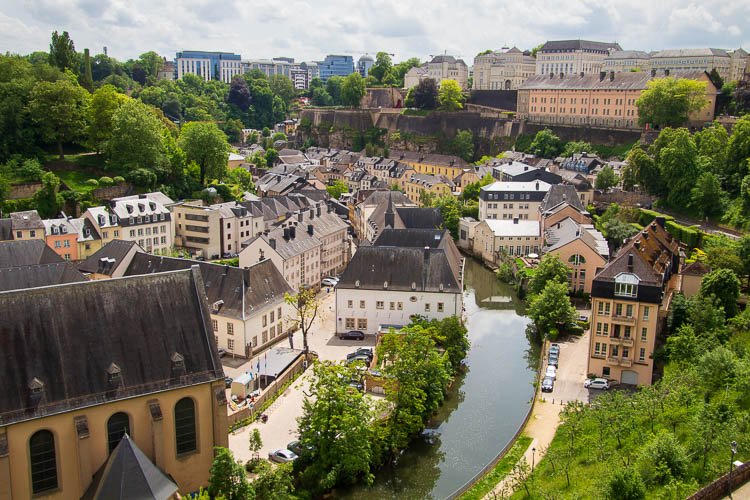
Our hotel was a 15-minute walk outside the Old City. The route took us across a bridge with a stunning view of the Old City atop a cliff and the picturesque riverside area known as Grund below.
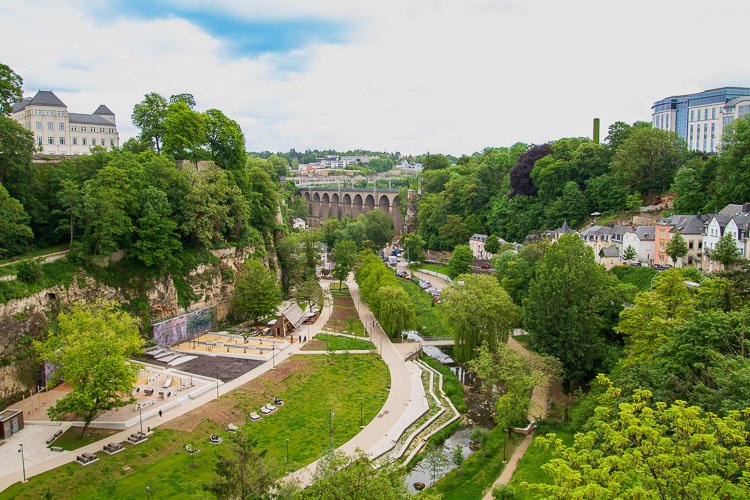
Our first stop (as is typical when we are on holiday) was at the Tourist Office in Place Guillaume II. Unlike many we have visited recently, this office had loads of information, including free paper leaflets, a rarity these days, and very helpful staff.
We received a couple of leaflets about walking tours, and decided to do the ‘City Promenade’ self-guided walk. This 3.4-mile walk took us past the main sights, including the Grand Ducal Palace (built in 1572), Saint Michael’s Church (built in 987), the oldest shrine in the city and Bock Promontory and Casemates.
The Bock Casemates (admission €11 pp) are a vast underground network of tunnels and galleries. Originally constructed in 1644, they were expanded around 40 years later and again during the 18th century. At their peak, the tunnels stretched for 23 km across multiple levels, with some galleries reaching heights of 40 metres.
In 1867, the casemates were reduced to 17km. The Bock Casemates, together with the nearby Pétrusse valley, served as a shelter during the two World Wars, with capacity to protect 35,000 people. In 1994, they were added to the UNESCO World Heritage Sites.
The casemates were interesting in their own right, with the additional attraction of magnificent views over Grand Duchess Charlotte Bridge and Fort Obergrünewald.
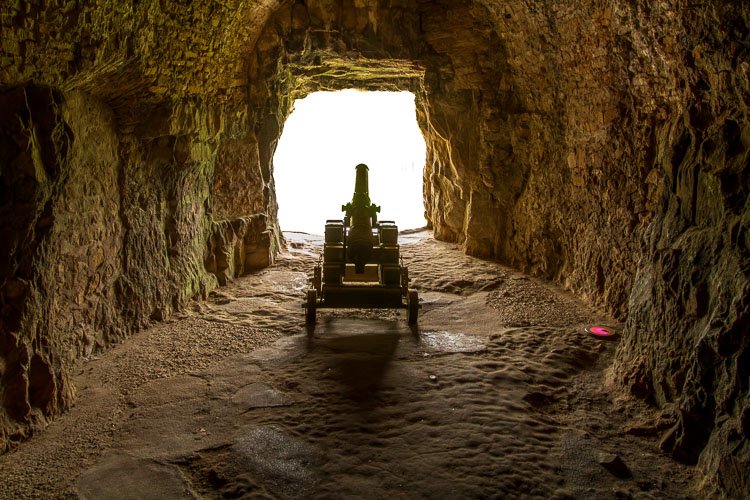
The casemates could have housed 50 cannons
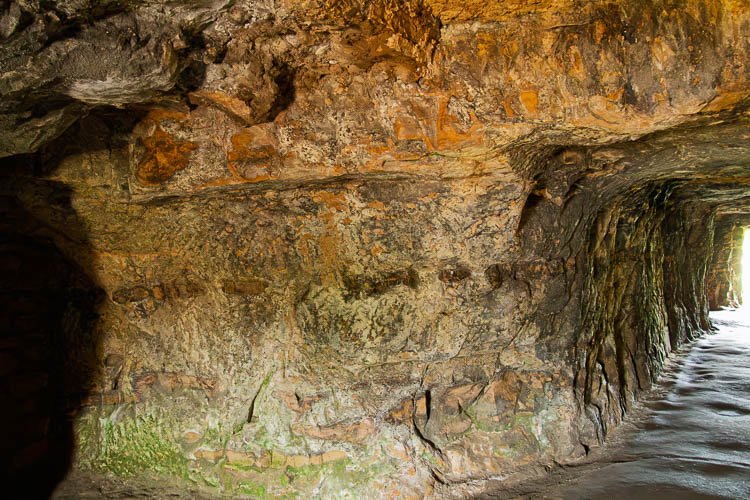
The walls of the Casemates
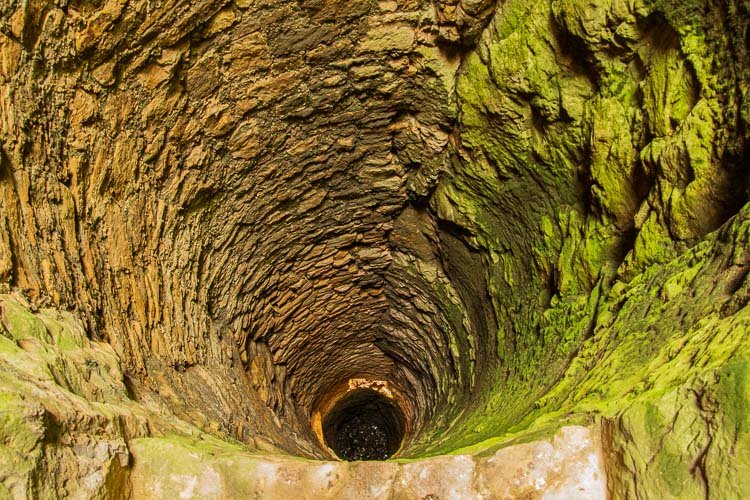
The castle well is 47 metres deep
We spent about 40 minutes looking around the Casemates before continuing our walk along the Chemin de la Corniche, the ‘most beautiful balcony of Europe’ (according to the Luxembourg writer Batty Weber). I’m not sure about the best in Europe, but it certainly had amazing views over the lower town of Grund.
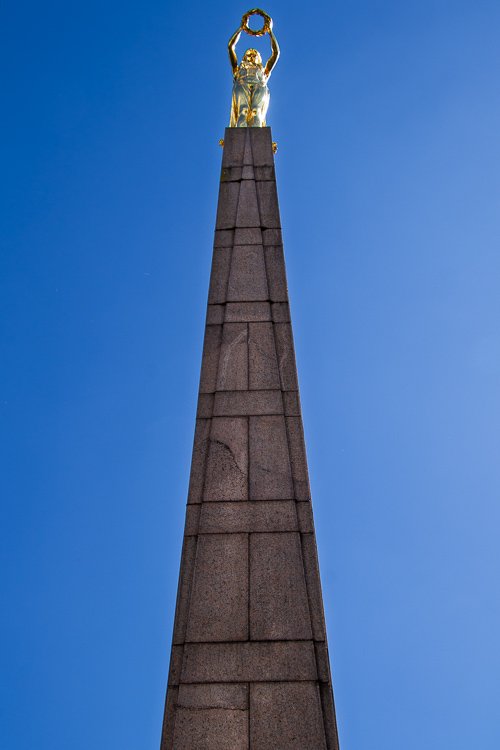
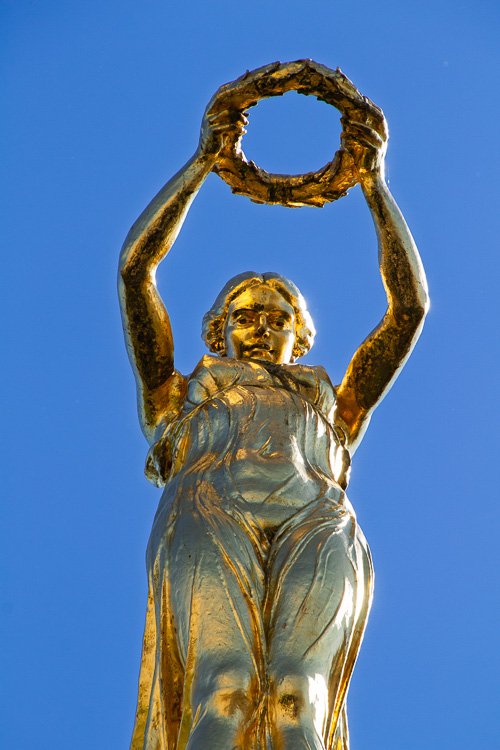
Continuing on the ‘City Promenade’ walk, we eventually came to the Place de la Constitution and the ‘Gëlle Fra’ (Golden Lady) Memorial, erected in 1923 in memory of the Luxembourgish soldiers who fell during World War I. These pictures are actually from our 2nd day when the sun came out.
After an early start to the day and a 2-hour walk, it was time to get lunch! We returned to the main square and sat in the patio of Maya Luxembourg for a basic but tasty wrap.
After some people watching, it was time to return to the hotel to check in and settle into our room. The room was very nice and quiet, a decent size with a window (though the view was the building work across the road), a large bed and a good shower. There was a notice indicating the water quality was not ideal for drinking, so extra free bottles of water were provided in the minibar.
Once we had settled in, we went for a drink in the roof bar – what a spectacular view.
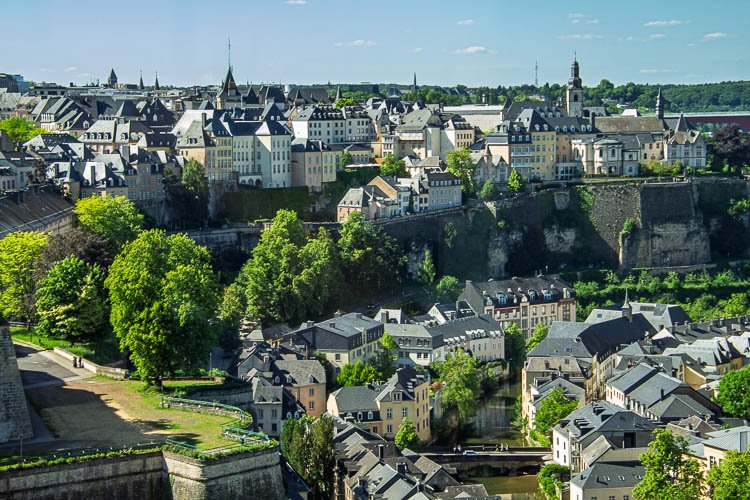
After a busy day, we decided to find somewhere close and quick for dinner. We found Souvlaki, an 8-minute walk away, a very popular, fast-food restaurant with dine-in and takeaway options. We chose a souvlaki meal and a souvlaki salad – both tasty and hit the brief. Perfect end to the day.
Day 2 – Luxembourg City (Friday)
Today, a beautiful sunny day, we decided to follow the second walking tour leaflet that we had picked up at the tourist office – the ‘Wenzel Circular Walk’, a 3.4-mile tour that is also well signposted.
Although this tour covered some of the sights we saw yesterday, it took us to new areas and enabled us to get better pictures of the views we had already seen, but now against a blue sky!
The tour started at Bock Promontory, which is described as ‘the cradle of the city’. This was the rock on which Siegfried, Count of the Ardennes, set up his castle in 963. Surrounded on three sides by the Arlette Valley, it was a strategic point to hold. Now, it offers views of the Arlette Valley and the Grand Duchess Charlotte Bridge. The bridge’s designers decided to paint it red so it would be visible even in foggy or obscure conditions.
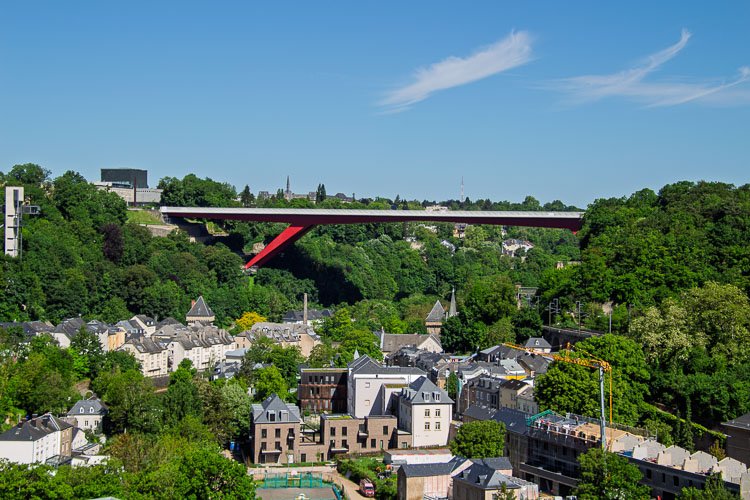
The walk took us down to the river…
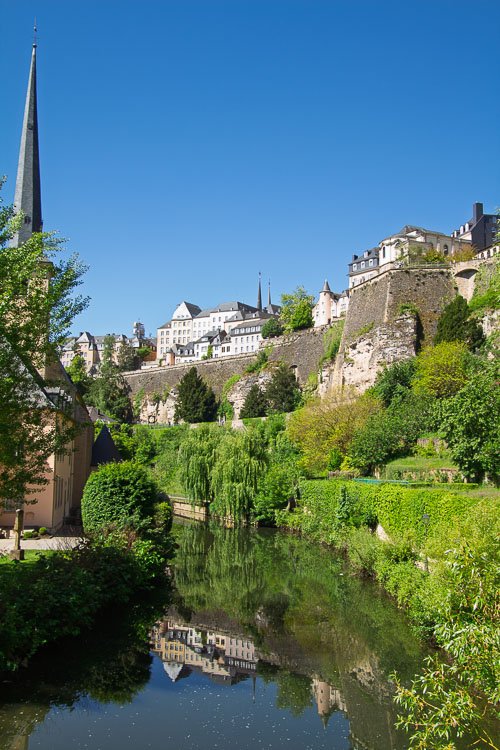
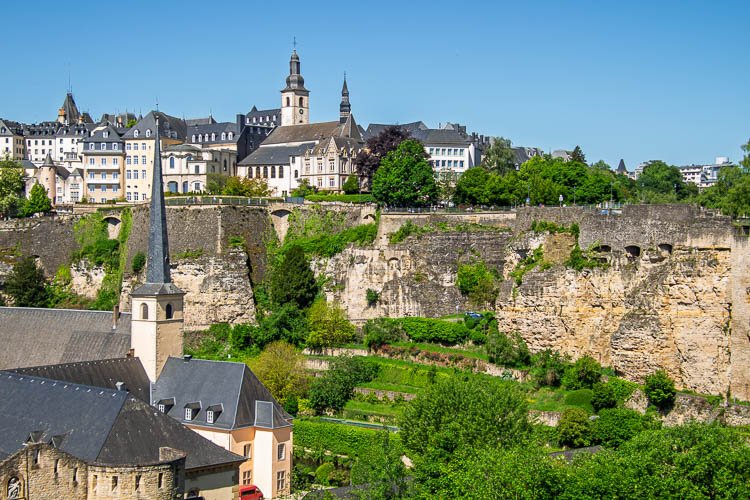
…. which allowed a view of the impressive city walls we had just come from,
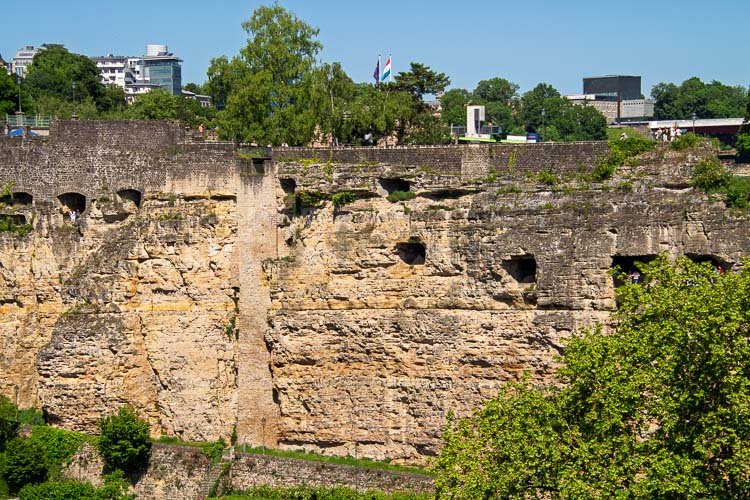
And a view of the old town.
Walking slightly uphill again, we reached the medieval towers of Rham Plateau,
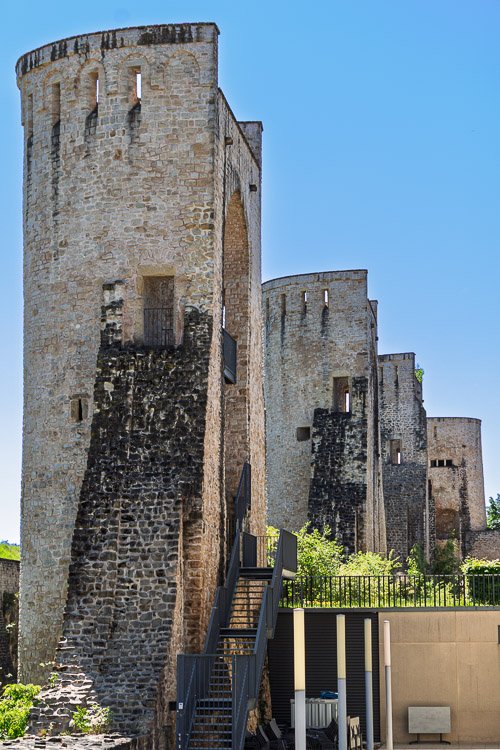
including Dinselpuert (Jacob Tower), where we saw an interesting film on how and why city walls were built in the medieval ages.
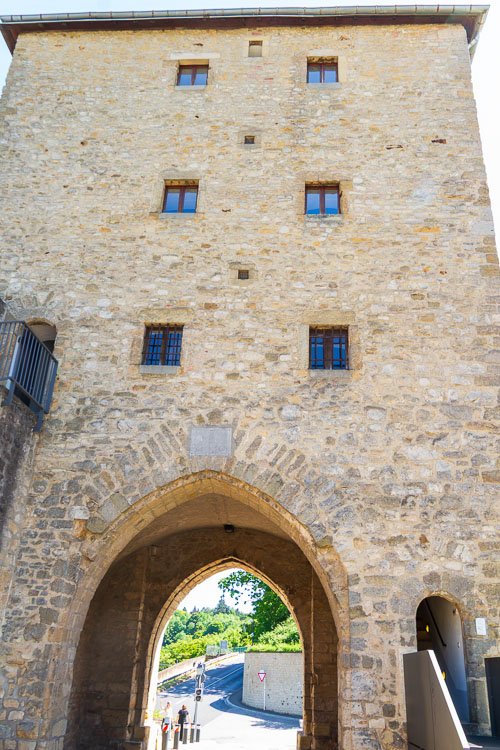
From here, we walked down the hill into Grund, a UNESCO World Heritage site since 1994. Grund is a very pretty, small neighbourhood of Luxembourg. I was surprised by how untouristy it was, with just a few restaurants and no tacky tourist shops. We stopped for lunch at La Grocerie, which served a limited but tasty range of puccia (Italian flatbread) sandwiches.
After lunch, we went to the Natural History Museum (entry €7 pp), located in Grund. The museum, a welcome break from the heat, was interesting and well laid out, with a thought-provoking temporary exhibition on our relationship with animals – ‘we eat some and pet others’.
Scott’s Pub, for a drink by the river, was our next stop, before we took the lift (much easier than walking) back up to the Old Town.
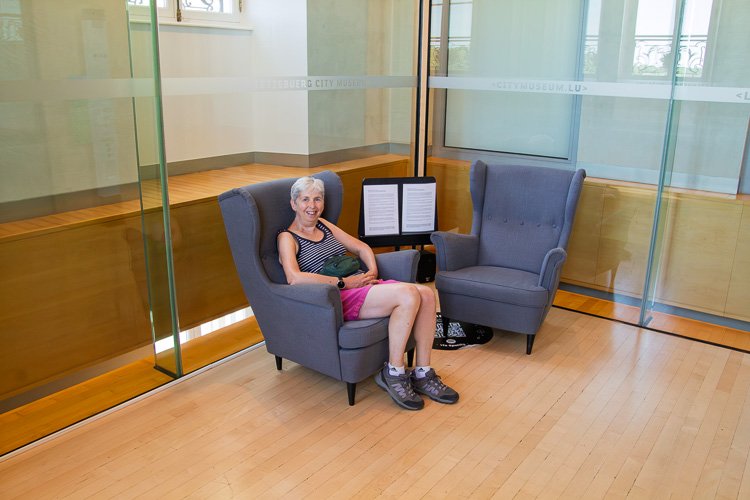
We spent an hour at the Luxembourg City Museum (entry €5 pp), which presented a good overview of Luxembourg’s history, including its relationship with other European countries. During the years it was under Spanish, French, Austrian and Dutch rule, before gaining independence (and being declared a neutral state) in 1867. It was a founding member of the European Union, the United Nations and NATO.
One of the unique (strange?) features of the museum is a room-sized panoramic lift, complete with chairs offering views of Grund on the upper levels and the rock foundations on the lower levels.
Returning to the main square, we passed the Grand Ducal Palace, where a small ‘changing of the guards’ was taking place. It seemed to coincide with the visit of a foreign delegation (not sure who), but we recognised Grand Duke Guillaume (the Head of State).
After returning to the hotel to freshen up, we walked back into old town for a drink at Ënnert de Steiler, the oldest bar in Luxembourg, serving drinks since 1842.
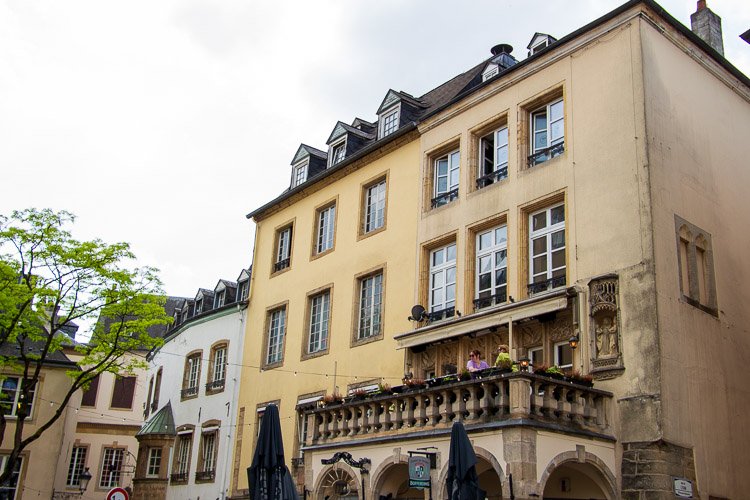
We popped into one of the nearby restaurants for a pizza to finish the day.
Day 3 – Vianden Castle (Saturday)
Today we decided to take advantage of the free transport and visit Vianden Castle.
Vianden is a beautiful restored medieval castle, originally built between the 11th and 14th centuries, standing high on the hillside.
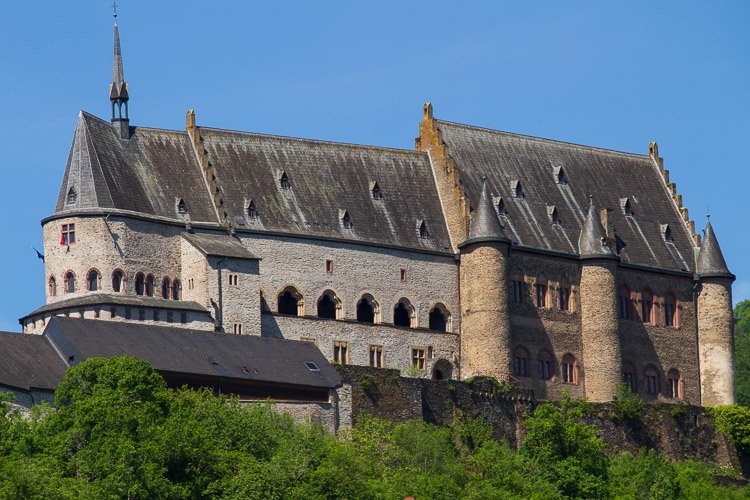
We used the Mobiliteit.lu app to get the best route based on timing and traffic, and picked up pastries for breakfast/lunch at Fischer (about an 11-minute fast walk from the transfer stop in Ettelbruck).
Our 90-minute route (2 buses as the trains weren’t working) took us through the newer part of Luxembourg City, past the European Parliament and financial district – it was interesting to see the stark contrast in building style.
Once we arrived in Vianden, we took the chairlift to enjoy the views, then walked down to the castle from there, instead of climbing the steep hill directly. The chairlift costs €6.50 pp for a single trip or €9.50 return, and rises from 220m to 440m. Be aware it is a chairlift – it isn’t enclosed, and it is continuously moving so you sit to get on and stand up to get off.
The small cafe at the top was closed for an event when we were there, but drinks were available from a pop-up stall. The views over the countryside and castle were well worth the trip.
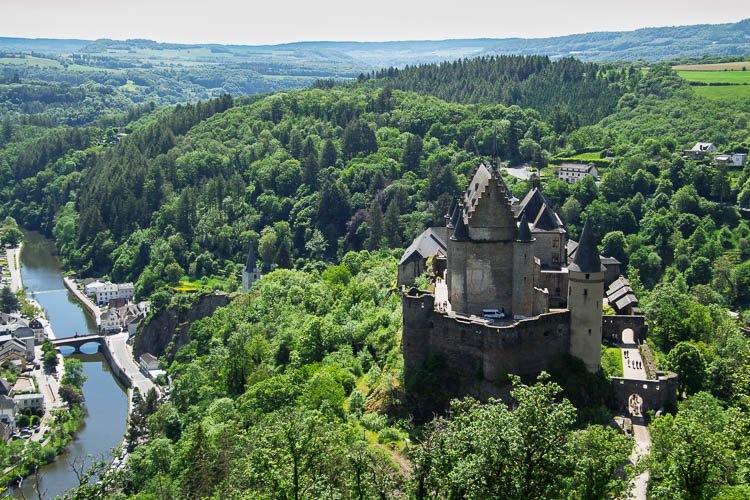
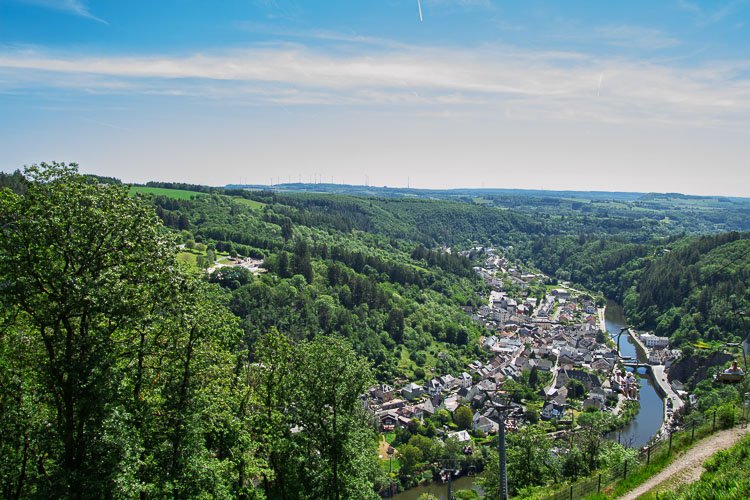
From there, it was a short 30-minute walk, mainly downhill, to the castle.
The castle entrance fee (€13 pp) included a QR code to an informative audio guide. The rooms and exhibits in the castle were interesting, but as you would expect. However, I hadn’t seen one of these chests with a complex lock mechanism before.
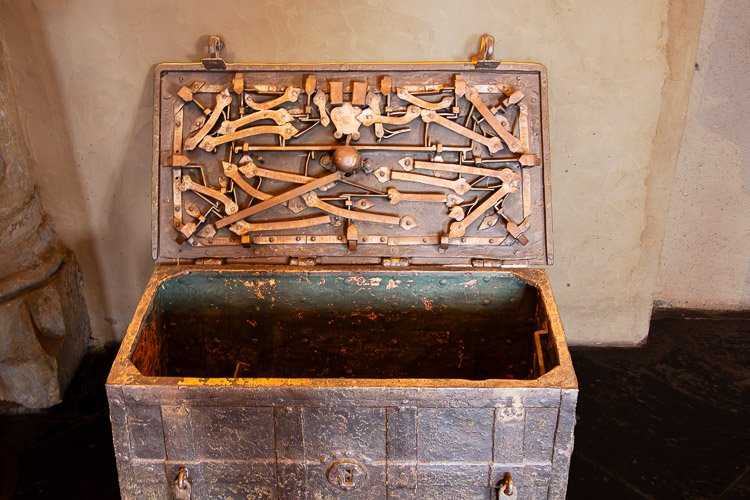
After an hour or so exploring, we walked down the hill to the pretty small town. The main attraction here was a museum dedicated to Victor Hugo (1802 – 1885), the author of ‘Les Misérables’ and ‘The Hunchback of Notre Dame’ (Excuse my ignorance, but I didn’t know these were novels before musicals).
The four-storey house Victor Hugo stayed in for two and a half months during one of his four trips to Vianden in 1871 has been turned into a museum (entry €6 pp) with a free audio guide. The museum, a UNESCO World Heritage Centre, has many exhibits detailing Hugo’s political and literary life. For us it was a little too detailed – we could have done with more of an overview, but it was still interesting and worth popping in.
Following the museum, we caught the bus to start our journey back to the City. We had booked dinner at ChinChin, a modern Chinese restaurant with a large outdoor seating area. The food was very tasty, and the service was good.
Day 4 – A walk in nature (Sunday)
After successfully navigating the public transport yesterday, we felt more confident about venturing into Luxembourg’s beautiful countryside. There is a wide range of well-marked hiking trails catering to different distances and difficulty levels. Looking for a new and enjoyable experience without being too strenuous, we chose to hike half of the E1 trail from Berdorf to Echtenach. We did it that way round as Echtenach sounded like a bigger town than Berdorf, so we thought the buses back to the City might be more frequent from Echtenach – particularly as it was a Sunday.
Using the mobile app again, we found the transport we needed for the trip to Berdorf – this time a tram and bus. We picked up food at the Supermarket in Berdorf and used the free toilet facilities in a nearby car park before starting the walk.
The trail between Berdorf is around 6,5 kilometres and took us just over two and a quarter hours. The pretty, fairly easy walk passed through incredible rock formations.
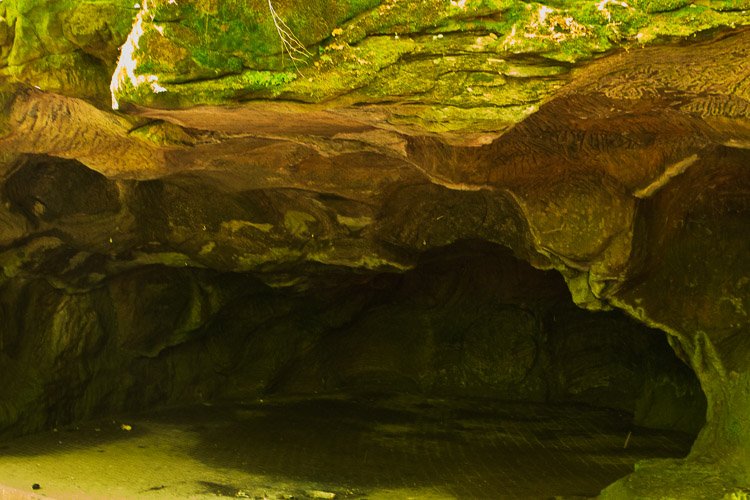
In the Middle Ages, the rocks were hollowed out to gain millstones
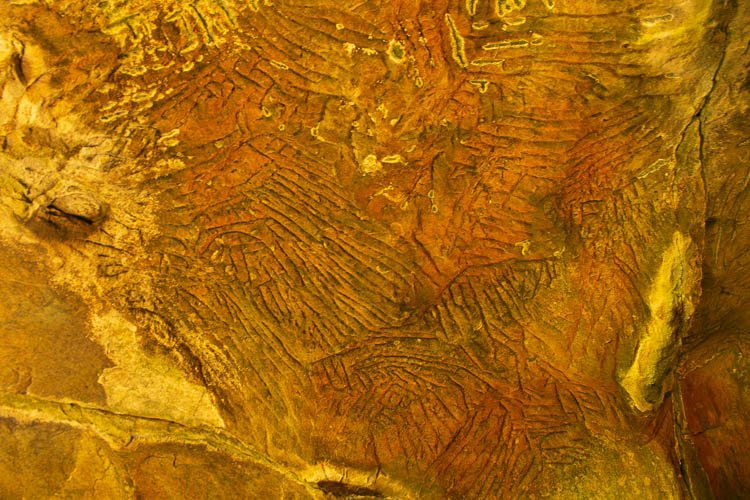
The marks show were millstones were extracted
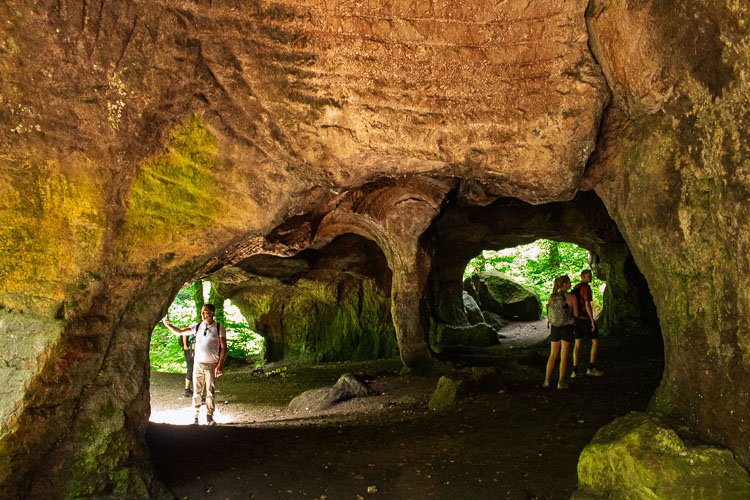
A human made cave from ancient times
Once we got to Echtenach, we had planned to spend some time exploring the village as we had heard it was very pretty. In reality, we found it busy and touristy, so we just had an ice cream and headed back on the bus.
Returning to the hotel, we found all the electricity was out (a localised issue). The room keys still worked, so we were able to get changed (and have showers) before going out again. I’m just pleased we hadn’t been caught in the lifts like some people – the fire brigade had been called to release them.
Dinner that night was at Bazaar – a very tasty Lebanese restaurant with a large outdoor area in the main plaza. We had the Mezze Addict, a good selection of meat and sides.
While crossing the bridge on the way back to the hotel, we saw a beautiful sunset.
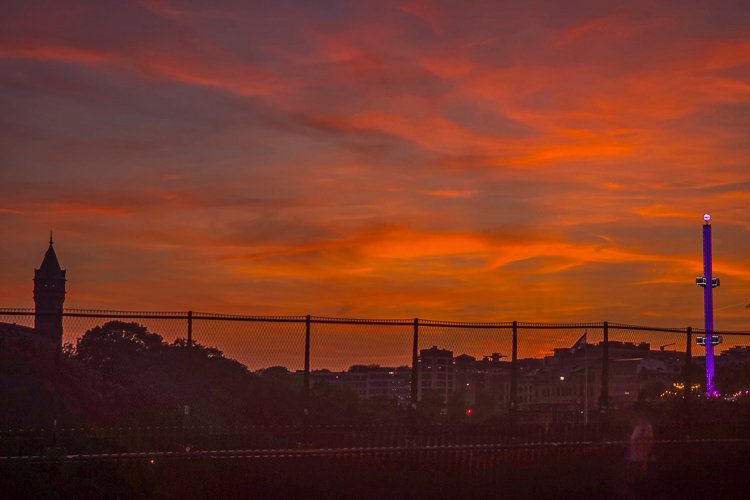
Although the electricity still wasn’t working in the lobby, it was in our room, so we had a good night’s sleep with air-conditioning.
Day 5 – Arlette River and Grund (Monday)
When checking out the next morning, the electricity was still out, and we were asked where we had stayed. Apparently most of the hotel guests had been moved to a different hotel – the receptionist was most surprised to learn we had air-conditioning all night!
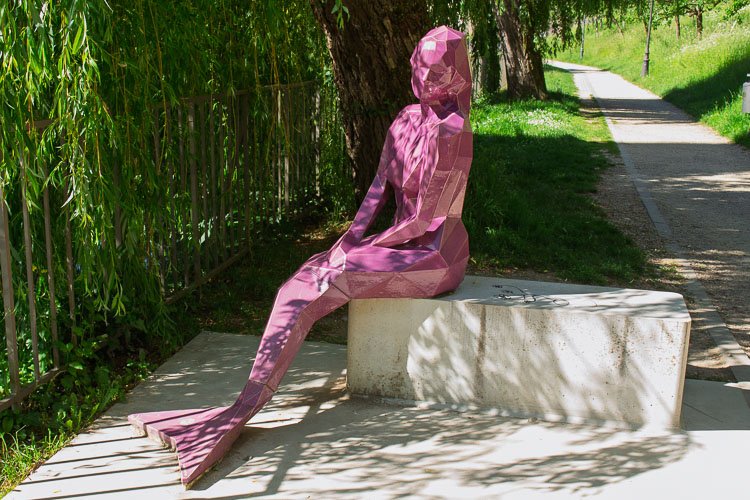
Our flight was booked for the afternoon, so we had a morning free to explore further. We walked along the Alzette River to see the Melusina statue and enjoy the peaceful riverside atmosphere of Luxembourg City.
Legend of Melusina
Count Siegfried met and fell in love with a beautiful princess along the banks of the Alzette and offered her his hand in marriage. Melusina agreed on one condition – every Saturday she wanted to be left alone in absolute privacy. Siegfried agreed, and they lived happily and had many children. However, one Saturday, Siegfried heard a noise when he walked past her room and looked through the keyhole. He saw Melusina taking a bath and discovered her secret – her bottom half was a fish tail. As her true nature had been revealed, Melusina disappeared into the river and was never seen again – though legend has it that she reappears once every seven years.
All too soon, it was time to catch the bus to the airport. We had a thoroughly enjoyable weekend. Luxembourg certainly lived up to the reputation of a good weekend break.
Was the 5-star hotel worth it? Well, we weren’t in the hotel very long, and it was very nice, but I don’t think it would have been worth paying extra had it not been on sale (and a little more than the 4-star).
Costs
In addition to the money spent on the flight and hotel, we spent around £700 on attractions, food and drink. Tap water is not served in restaurants, so drinks become more expensive.