
During February 26, we had a fantastic experience on the Exodus Chimps and Gorillas of Uganda group tour. I’ve always loved gorillas and other primates, and after a difficult few months personally, we decided to treat ourselves. After some research, we chose the Exodus tour as it was the only group tour that offered 2 days of both chimpanzee and gorilla trekking. We felt that while we were there, we might as well get as much value as possible out of the trip, acknowledging the additional cost of the trekking passes. (£800 per-person (pp) for gorillas and £275 pp for chimps) We focused on a group tour to keep the price down as much as possible.
Well, we weren’t disappointed! The whole tour was excellent, and the trekking was just amazing. I’m so glad that we chose the 2-day options and would go back in a heartbeat (if there weren’t a thousand other places to explore first  ).
).
In this post, I’ll outline the tour itinerary and what we learnt along the way. It has turned into quite a long post, so you might want to jump to the sections relevant to you.
- Day 1 – Arrival in Entebbe
- Day 2 – Travel to Kibale Forest
- Day 3 – Chimpanzees
- Day 4 – More Chimpanzees
- Notes about chimp trekking
- Day 5 – Travel to Buhoma, Bwindi Impenetrable Forest
- Day 6 – Community Activities in Buhoma
- Day 7 – Gorillas
- Day 8 – More Gorillas
- Day 9 – Travel to Lake Mboro
- Day 10 – Giraffes and Zebras
- Day 11- Travel to Entebbe via Mabamba Swamp
- Day 12 – Travel Home
- Essentials
Notes about Exodus
We were very happy with the service provided by Exodus both before and during the trip. Still, if you are considering something similar, it may be worth knowing that Exodus’s guides and services in Uganda are outsourced to Great Lakes Safaris. They offer group and individual tours in their own right and may be worth contacting to compare quotes.
Day 1 – Arrival in Entebbe
We flew from Heathrow to Entebbe on Qatar Airways via Doha. There were various options to get there – we chose that option based on flight times, both leaving and arriving.
We were picked up from the airport and driven 15 minutes to our very nice hotel, 2 Friends Hotel on the shore of Lake Victoria. After settling in and meeting some of the people in our tour group, we had the first of many lovely meals on the trip, tilapia fish with lemongrass wrapped in a banana leaf.
Day 2 – Travel to Kibale Forest
This day was all about rain and travel. There were 9 in our group, split between 2 trucks, each with a driver who doubled up as a tour leader. Leaving Entebbe, we had our first experience of how bad (non-existent) the roads in Uganda are as we skirted Kampala, using minor roads to avoid the traffic where possible. Although the major roads are tarmacked, the minor roads are just red dirt/murram with deep potholes – having an experienced driver is a real asset!
The drive to Turaco Treetops hotel in Kibale National Park took around 10 hours, including stops at Kayabwe to see the Equator, at Masaka for lunch, and regular comfort stops as needed.
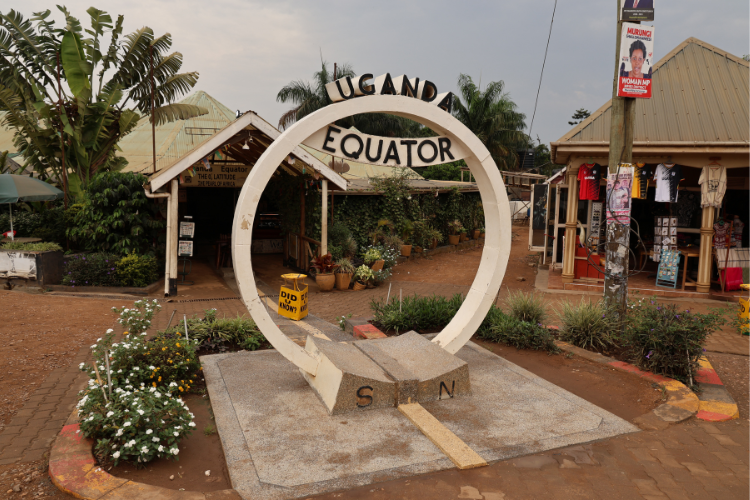
We stopped at the Equator visitor centre
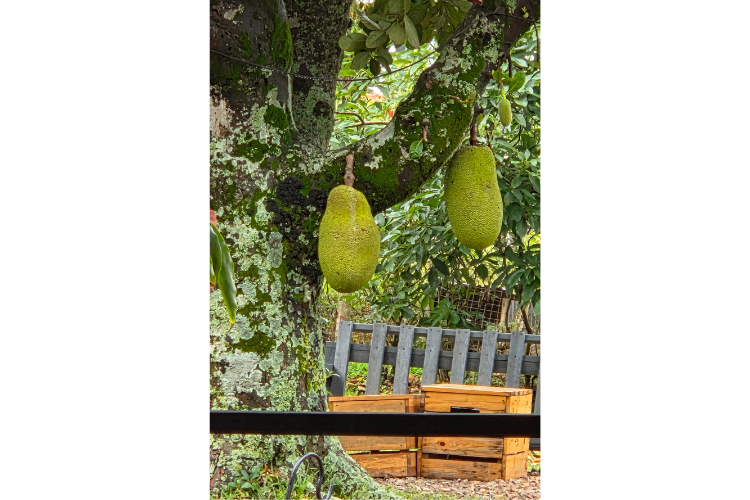
Jackfruit was growing at our lunch stop
Towards the end of the long journey, we drove through a dramatic tropical thunderstorm with vivid lightning flashes across the sky. The welcome from the Turaco Treetops hotel was much appreciated.
It was a lovely hotel with individual cabin-style rooms spread through the forest. The food was included in the price and was a choice of 2 appetisers, 2 main courses and 2 desserts for dinner, and 2 appetisers and 2 main courses for lunch. Personally, I thought the food was delicious – the best of the whole trip, and the staff were very helpful and friendly.
Tips for Turaco Treetops
- As is usual for these types of hotels, the wifi is only available in the central bar /restaurant area.
- Some of the rooms are quite a walk down a hill from the restaurant area – it is worth having a light when returning in the dark.
- A bird hide is available within the hotel area. We didn’t have time to see it, but some of the group said that it was worth a visit.
Day 3 – Chimpanzees
We seemed to arrive a little late at the chimpanzee booking-in area, about a 15- minute drive from the hotel, as the entertainment had already finished. As we waited for our trek to start, we were entertained by the red-tailed monkeys in the nearby trees.
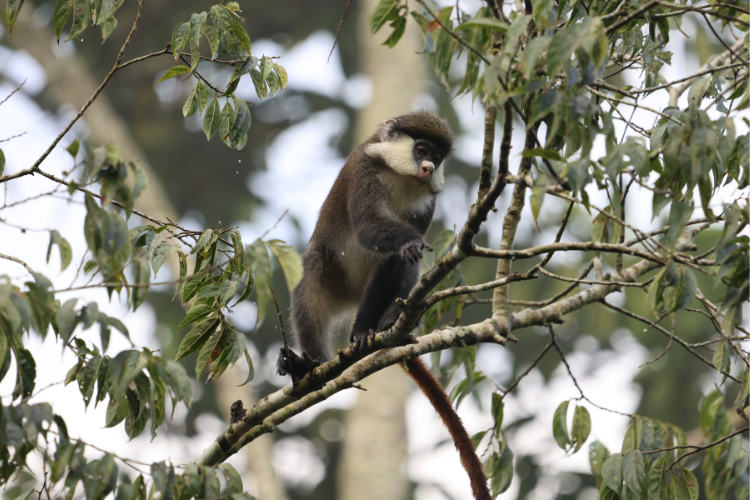
After a briefing and a check that we had masks, we joined our guide, Moses, and started our walk through the forest. It was a fairly easy hour-long walk on well-worn forest paths slightly uphill….but then …. masks on….look up, look up!
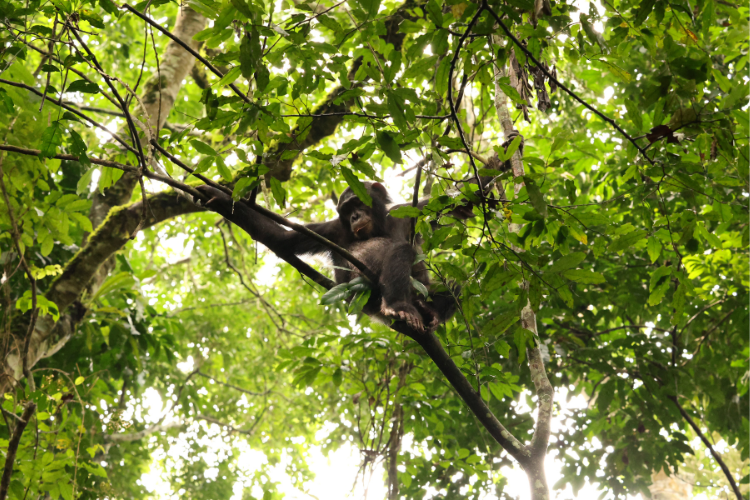
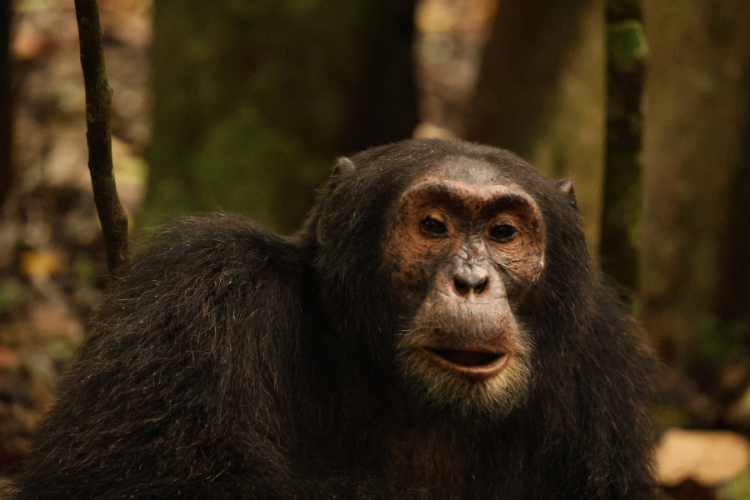
Everywhere you looked in the trees, there were chimps! The guides were really helpful in making sure you saw them, found us the best places to take photos, and ensured we weren’t caught in the many streams of wee! The sound in the forest was extraordinary – it sounded so aggressive, but the guides assured us that the chimps were just communicating!
Eventually, our Moses encouraged us to move through the forest, following some of the chimps who had come down to the ground. There were quite a few groups of people around (more than I expected), but the chimps didn’t seem at all bothered. We came across a chimpanzee just sitting, taking it all in – we were only a few metres away – just amazing.
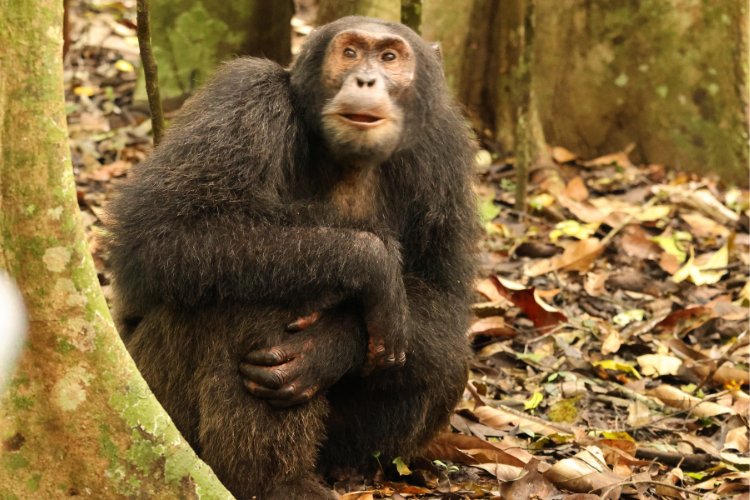
Eventually, it was time to leave. We were with the chimps for just over 2 hours, and it was a magical experience, seeing a few on the ground but many in the trees.
Surprisingly, we didn’t need to walk back to the welcome centre, we just walked about 500m where our truck was waiting to take us back to the hotel.
After another delicious lunch, we drove for 10 minutes to the Bidodi Wetlands Sanctuary. This is a community-operated organisation aiming to showcase and teach how regenerative agriculture can support local families and train local coffee and groundnut growers in regenerative agriculture.
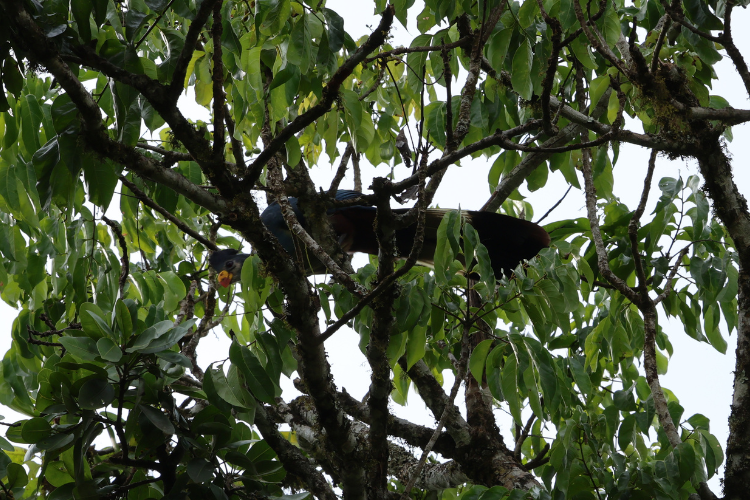
There are several activities available, but our tour included a guided nature walk around the area (which included a swamp). During the walk, we saw black-and-white colobus, red colobus and vervet monkeys as well as a great blue turaco (the national bird of Uganda) and a black-and-white casqued hornbill.
The area is known for over 200 species of birds and 8 species of primates, but they didn’t want to show themselves while we were there! Nevertheless, it was a pleasant walk and interesting to see the Blue Turaco, which really looks like it is wearing lipstick!
Day 4 – More Chimpanzees
We got to the welcome centre earlier today and saw the welcome entertainment (a dance by the local community). After the briefing, we were the first group to leave and were driven to the same area where we picked up the trucks yesterday.
As soon as we arrived, we saw chimps on the ground, and as we walked further into the forest, we saw more and more. Today was more about following the chimps as they moved. Initially, they were eating fruit high up in one group of trees, then they individually climbed down and moved across the forest to another group of trees.
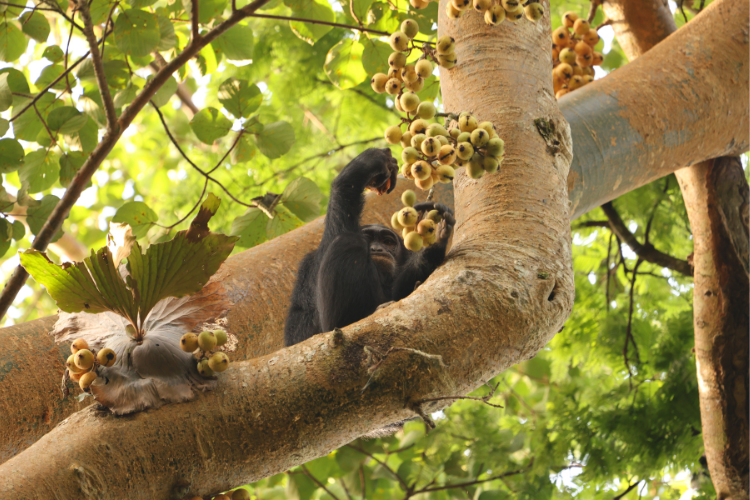
So we were following different chimps between the eating areas. During the course of the couple of hours, we saw baby chimps playing at the top of the trees, chimps climbing up and down trees and chimps traversing the forest – so amazing to see so many of these incredible creatures.
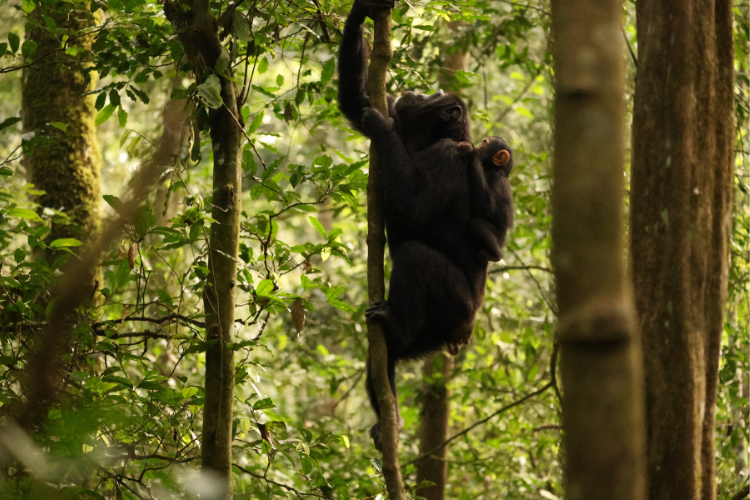
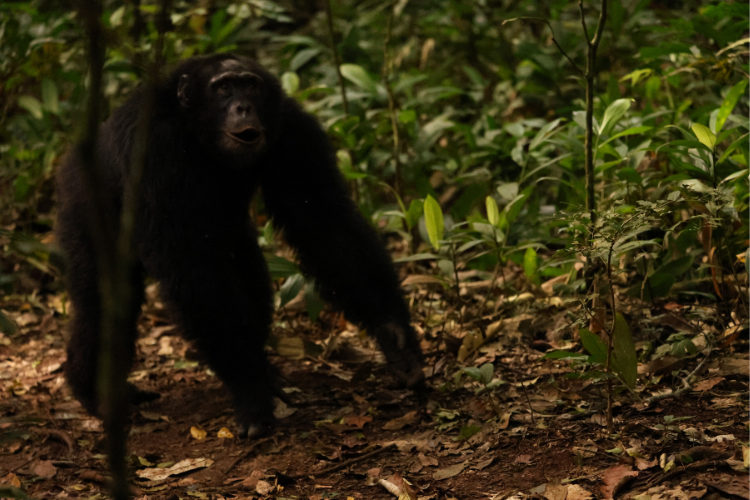
The final experience was five or six chimps on the ground, one chilling, two grooming, two play fighting. This video doesn’t really do the magic justice but hopefully you get the idea.
All in all, an incredible experience.
Notes about chimp trekking
- The additional chimp trek cost £275 pp for the permit. There are a limited number of permits, so if you want to do it, book as early as possible (we booked it when we booked the whole tour).
- The trek on the first day was on well-trodden forest paths, and we found it easy in length, climb and ground underfoot
- Wearing long-sleeved tops and trousers is a good idea. We wore our gaiters, but it would be fine to tuck your trousers into your socks. This is to prevent red ants from getting into your trousers. When we were actually looking at the chimps, it was more difficult to see what was underfoot
- Gardening gloves aren’t needed for the chimp trekking
- Masks are mandatory – our tour leader provided them for us, but it is probably worth taking them with you
- Camera – a lot of the chimps are at the top of trees, so a good zoom is recommended (we used 150 – 600mm)
- I would highly recommend doing 2 days of chimp trekking if you have the opportunity. Each day gave us a completely different experience – even though we were in the same area of the forest.
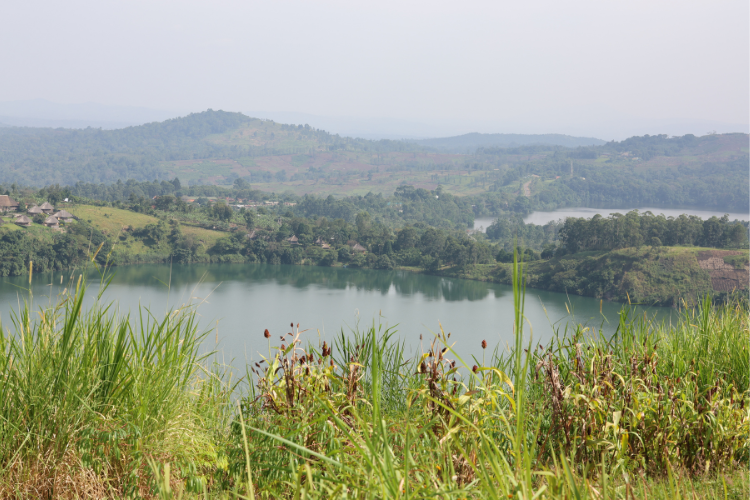
In the afternoon, our tour included a guided hike around the Crater Lakes in Kibale National Park. There are 60 lakes in the region, believed to have been formed from volcanic activity 8-10,000 years ago. The hike, known as the Top of the World trail, allows you to see some of these lakes. On the way, we also saw a few birds, including a flying Blue Turaco.
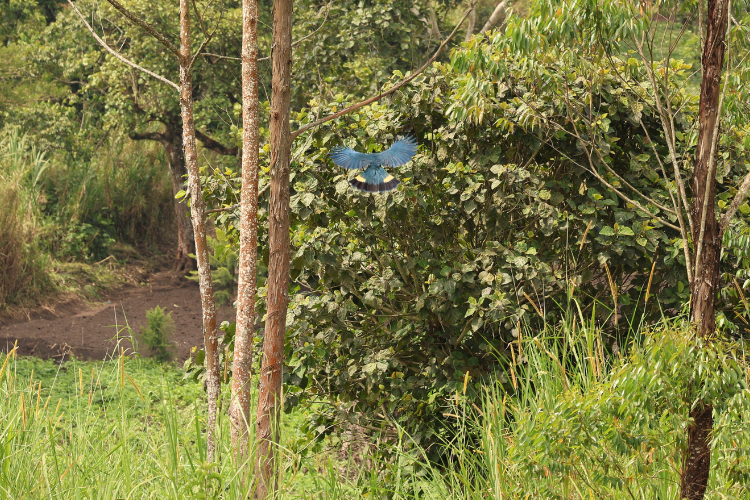
The ‘Top of the World’ hike (2.5 hours round trip) was along well-trodden paths uphill to the viewpoint and back. The scenery was beautiful, but if I’m honest, the activity couldn’t compete with the amazing experience of the chimpanzees in the morning.
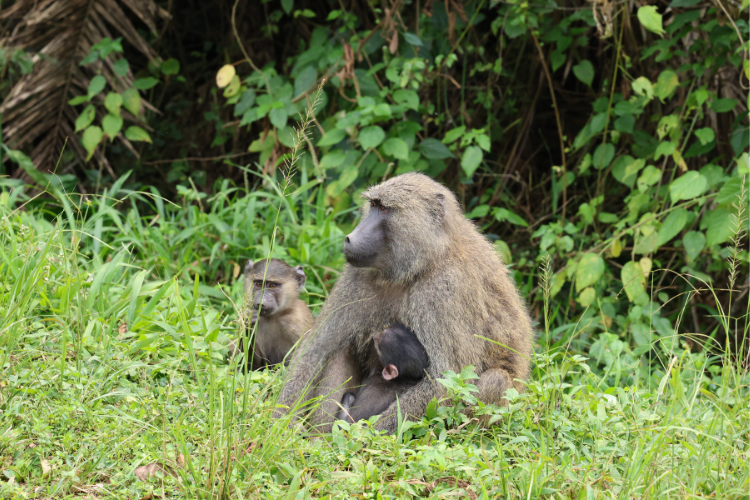
On the way back to the hotel, we came across a troop of baboons. Of course, we had to stop, but baboons became a familiar sight during the rest of the trip.
Day 5 – Travel to Buhoma, Bwindi Impenetrable Forest
Another travel day from Kibale Forest to Bwindi Impenetrable Forest. It was still a long day, about 7 to 8 hours with regular stops, but not as long as before. Most of the journey was on paved roads, but the last 45 kilometres were on an unpaved road.
We arrived at Haven Lodge, our home for the next four nights. All profits from the lodge are reinvested back into the community. The lodge was very comfortable, with rooms nicely spaced out looking into the forest (torches needed again). The food was absolutely fine, but not as nice as Turaco Treetops (to be fair, that would be hard).
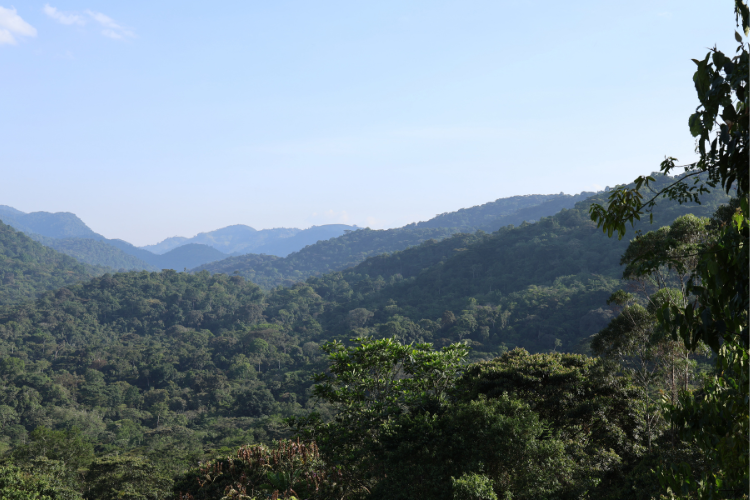
The lodge had amazing views over Bwindi Impenetrable Forest – in just a couple of days, we would be visiting gorillas in that forest….
Day 6 – Community Activities in Buhoma
As part of the tour, there were several optional activities in Buhoma for day 6, the afternoon of day 7 and day 8 (if you didn’t choose the 2nd day of gorilla trekking).
We could choose from the following:
- A 1-hour visit to the Pangolin rescue centre (about a 10 min drive). Cost of $30 pp
- A 3-hour guided waterfall trail in the Bwindi National Forest. Cost of $40 pp. Note: If this is done on a different day from gorilla trekking, a park entrance of $40 pp is also required
- Guided community walk in Buhoma. Cost of $30 pp
- Batwa Cultural Experience, 5-hour visit to the Batwa pygmies. Cost of $80 pp
- Ride 4 a Women Activities, each costs $30pp and lasts 1 – 2 hours
– Guided bike ride through the community
– Cooking traditional food
– Basket weaving
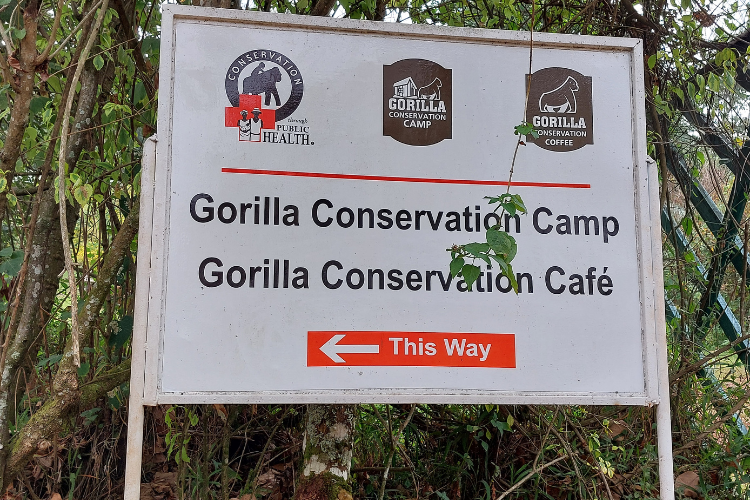
– Sewing - In addition, we noticed a sign next to our lodge for the Gorilla conservation camp and cafe, which was worth a visit. No cost
- Or you could relax in the lodge
Members of our group chose different activities over the three days.
Pangolin Rescue Centre
Some of our group chose this activity and really enjoyed the time spent with the pangolins and learning about the centre’s work rescuing, rehabilitating and releasing pangolins back into the wild.
Guided Waterfall Trail
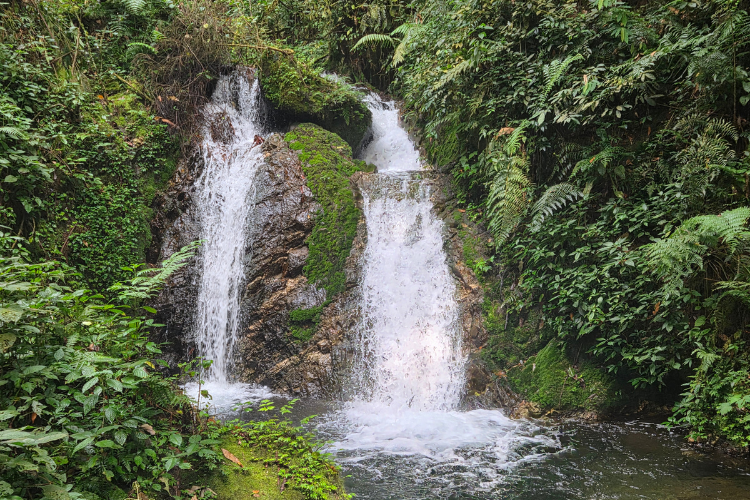
We did this on the afternoon of day 7, after the 1st gorilla trekking. Initially, the walk followed a quiet road slightly uphill, then turned into the forest and wound up through the ferns and tall trees towards the waterfalls. The guide pointed out different trees and fauna, as well as a couple of birds (over 250 bird species can be seen in the jungle, in addition to the primates). The walk took around 3 hours and was a pleasant way to spend the afternoon.
Ride 4 A Woman
Ride 4 a woman is a charitable organisation set up to empower women in Bwindi socially and economically. It was founded in 2009 by Evelyne Habasa (who grew up in the area) and her husband, Denis Rubalema.
Initially, the organisation started by renting bicycles to tourists to support local women struggling with issues associated with poverty, HIV and domestic violence.
It has now expanded to offer visitors a variety of activities, and the money now pays women’s salaries, sponsors children through education, microfinances women’s entrepreneurial ideas, provides safe water and more.
When we were there, it was the last day of the holiday before the children went back to school. The charity was giving out packs to each child to get them ready for school. I didn’t get a detailed look, but the packs appeared to include pens, paper, toilet roll, laundry soap and hand soap. Any child who was going to board at the school also got a mattress. The queue of children to receive packs went on the whole time we were there – I believe it was over 500 children. A very impressive operation!
In the morning of Day 6, S and I did the guided bike ride, followed by the cooking experience.
Guided Bike Ride
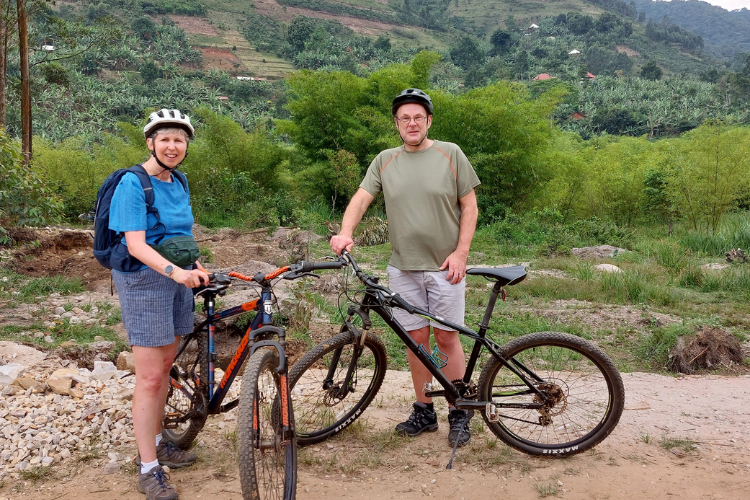
We were given mountain bikes and helmets and set off around the village. The roads, being unpaved, were very stony and bumpy, but the bikes were up to the task. The route we took was surprisingly hilly – having not been on a bike for a few years, I was pleased not to struggle too much! Our guide was a young university student from the village who was happy to talk about his community, how they are benefiting from gorilla trekking, and the struggles they are still experiencing.
We learnt that it costs approximately 80,000 Ugandan shillings (£160) to send a child to the local primary school for 1 term. Many of the local people earn money as farmers, coffee producers or as gorilla porters, guides, trackers, etc., as well as in tourism. We were also shown a couple of other ways people could earn money:
- The rain washes large stones down the mountain. Using small hammers, the stones are broken up into aggregate. It takes about 5 days to create enough stones for a lorry-load, for which they are paid 80,000 shillings. An incredibly hard way to earn enough to send your child to school, which seemed to be the objective.
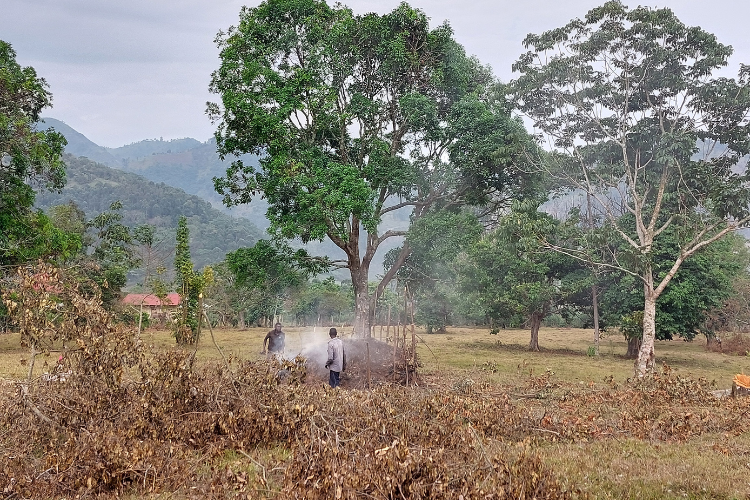
- We also saw charcoal being made. An old tree is bought from a farmer, and then an earth pit is created to burn the wood to make charcoal – it takes about a week. The charcoal is sold to the villagers. A bag of charcoal (which will last a family two to three weeks) costs 30,000 Ugandan shillings.
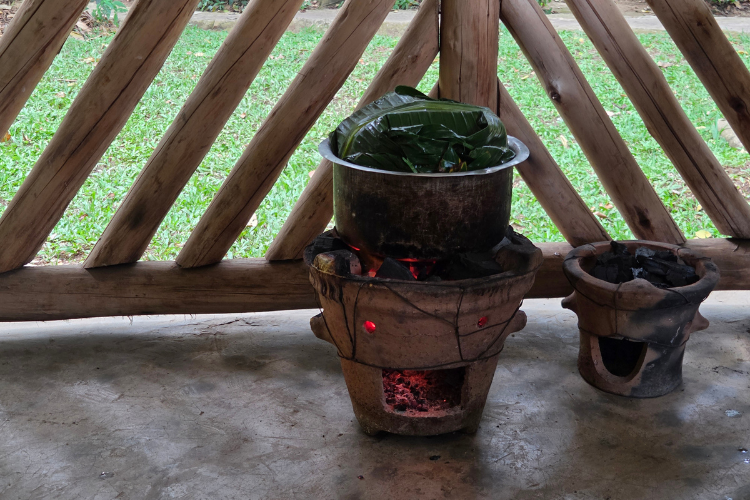
Following the ride, we joined two members of the Ride 4 a Woman community to learn how to cook traditionally. We went into the garden to see what they were growing, and then we ‘helped’ them cook.
We started by placing a few banana leaf stalks into a big pot to prevent the food from burning on the bottom. Plantain wrapped in banana leaves was added to the pot, followed by white sweet potatoes and pumpkin. Additional banana leaves were used to cover the food, making a sort of pressure cooker. A parcel of spinach wrapped in banana leaves was put on top, and the pot was put on the fire.
In an aside, potatoes in Uganda were either sweet (normally white but sometimes red) or ‘Irish’ – which were like the potatoes in the UK.
The next task was to make a peanut sauce. The peanuts were shelled by hand and then ground to dust in a huge pestle and mortar. It probably took 15 to 20 minutes to grind the peanuts (of which we contributed 3 minutes). As they ground the peanuts, they taught us the grinding song that is used to maintain the pace (and pass the time). Once the peanuts were ground, they were added to boiling water and cooked down, before red onion was added as a seasoning and cooked down further.
The final item we made was traditional bread, or Kalo. The bread was made with maize and dried cassava. The maize was briefly cooked to bring out flavour and then separated from the chaff by winnowing.
The dried cassava was ground again with the pestle and mortar before being mixed with the millet. A grinding stone was used to produce a very fine flour. Using the grinding stone, not an easy process, also came with a unique song.
The resulting flour was mixed with boiling water and stirred for about 2 minutes until a cooked dough was formed. Pieces of the dough would be ripped off to eat.
By this time, the vegetables had been cooking for around an hour, and the meal was ready:
- Mashed plantain
- Sweet potato and pumpkin
- Peanut sauce
- Kola bread
The rest of our tour group met us in Ride 4 a Woman’s restaurant to sample the food – the kitchen had also made a beef stew and rice to go with the vegetables – far too much food – not least as we then returned to our hotel for lunch.
The activities we did at Ride 4 a Woman were really fun, and the people we met and the experiences will stay with me for a long time.
Community Walk
In the afternoon of Day 6, we took part in the community walk. This was a guided walk about the culture and people in the Buhoma area. Our interesting and informative 3-hour walk included:
- A craft shop set up by the Single Mothers community
- A demonstration of coffee growing and production (with tasting)
- How banana gin and beer are made (with tasting)
- A dance show from the Batwa community
Coffee Demonstration
The local community are encouraged to plant coffee bean trees to supplement their income. The coffee tree takes 3 years from seed to produce berries.
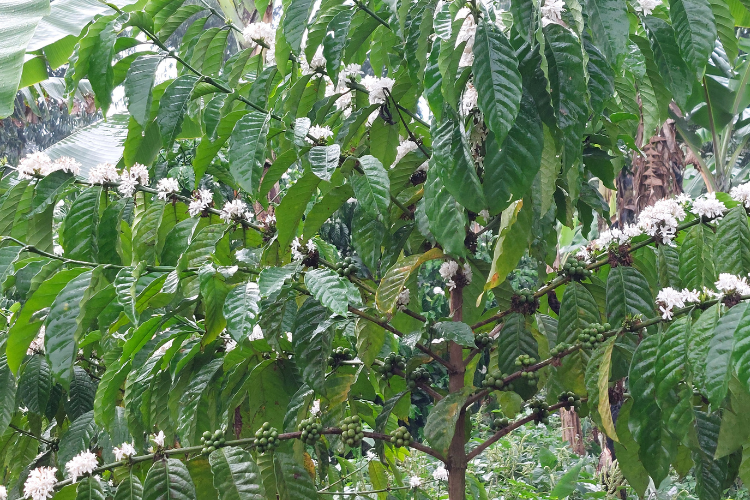
Once the berries turn red, they can be picked. As the picking is done manually, berries are picked at different times from the same tree. The berries are dried in the sun for about 2 weeks.
The berries are hulled, either in a central warehouse or locally with a machine created for the purpose.
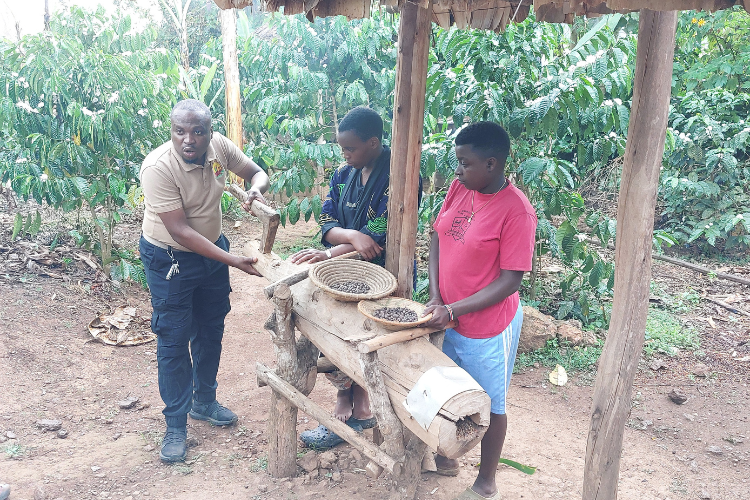
The hulled beans are roasted and either left whole or ground into powder.
Coffee growers can sell the berries to the factories if they need to make quick cash, but they are encouraged to sell the dried beans to the community co-operative to make more money.
Interestingly, when we sampled the coffee, the suggestion was to eat a small, eating banana with it instead of sugar.
Banana Gin / Beer
Banana gin is made from yellow (or overripe) plantain. The plantains are artificially ripened by creating a hot pit (by burning old banana leaves), adding 40 plantains to the pit, covering them with more banana leaves and earth and leaving them for 5 days. Tradition says they have to be left for 5 days, so if they ripen too quickly, the pit is opened up to cool down.
The ripened plantains are removed from the pit and peeled. The pulp is put into a canoe-like structure and squashed (by feet) to extract the juice.
The juice is a drink in its own right, but to make banana beer, sorghum (an ancient cereal grain) and water are added, and it is left to ferment for at least 48 hours. We were told that banana beer is essential for traditional community gatherings, particularly when meeting the family of somebody you want to marry.
To make banana gin, the beer is boiled, and the steam is passed through a copper pipe in a stream. The condensed liquid drips into a container to make banana gin.
The beer tasted very sweet, and the gin was a sweeter version of pocheen, which I’ve had in Ireland.
Notes about Community Walk
If you are going to do the community walk, consider wearing walking boots/shoes as it takes you around the back paths of the village, up and down hills on uneven ground.
Batwa Cultural Experience
We didn’t do this, but a couple from our group did and enjoyed the visit. There was some overlap with the guided community walk, though, which might be a consideration. Both groups watched dancing, saw how a trap was made and learnt how the Batwa people lived in the forest before they were moved out to help preserve the mountain gorillas. The couple who did the full experience got a more in-depth tour.
Gorilla Conservation Camp
We walked up to the camp (right next to our hotel) on the afternoon of Day 8. We had a free cup of Gorilla Conservation Coffee followed by a presentation on the work of Conservation Through Public Health (CPTH), a non-profit, non-governmental organisation focusing on the interdependence of wildlife and human health.
It was a very interesting afternoon learning about the CPTH’s One Health program, which aims to improve the health of mountain gorillas and the local community using a multi-disciplinary approach that brings together veterinarians, medical and public health professionals and environmentalists.
The organisation was set up by Dr Gladys Kalema-Zikusoka, following a 1996 fatal scabies outbreak in the gorillas, which was traced back to the local communities.
Since coming home, I have enjoyed reading ‘Walking with Gorillas‘ by Dr Kalema-Zikusoka, which covers the amazing work she and CPTH have done to ensure both the gorillas and local communities have thrived.
Day 7 – Gorillas
The day had finally come. It was time to visit the gorillas!
I’ve written the details about the gorilla experience in this post. On the first day, we had quite an easy 20-minute walk and saw the Binyindo family of 9 gorillas (including a month-old baby) out in the open. It was an amazing experience, as you would expect.
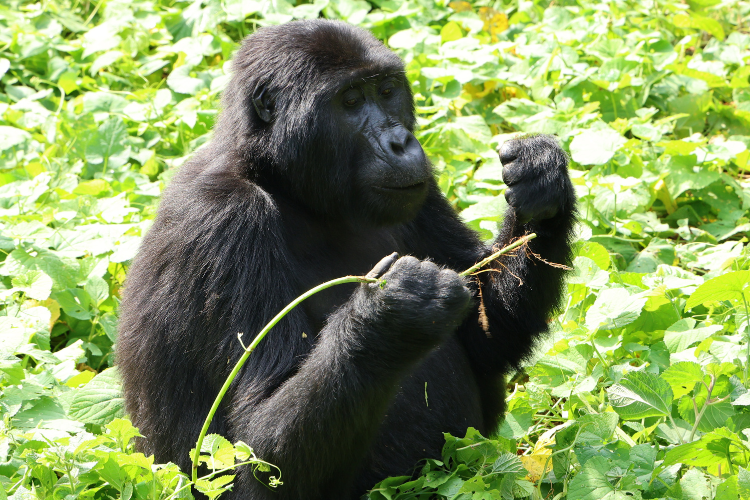
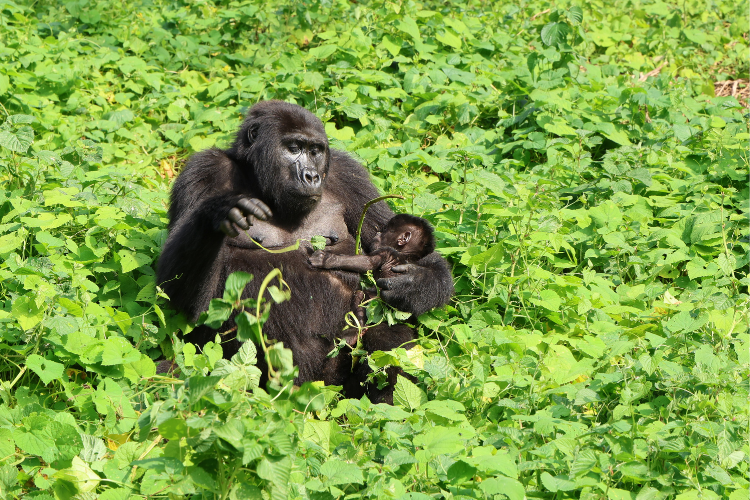
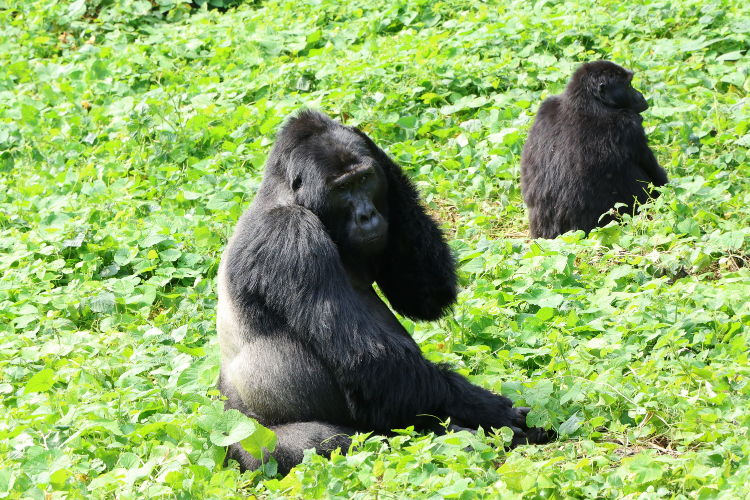
We did the Guided Waterfall Trail in the afternoon. This worked well after a fairly easy morning walk, and it meant we didn’t have to pay for an additional park entrance fee.
Day 8 – More Gorillas
This day was scheduled as an optional gorilla trekking day within the Exodus tour.
This option was one of the main reasons we chose the tour from Exodus, and we reserved our additional gorilla permits when we booked the tour (an additional £800pp). It wasn’t something you could book once in Uganda.
However, only 6 of the 9 people on our tour decided to do the additional trek. If you didn’t do the trek, the community activities as listed above were available, or you could relax in the lodge.
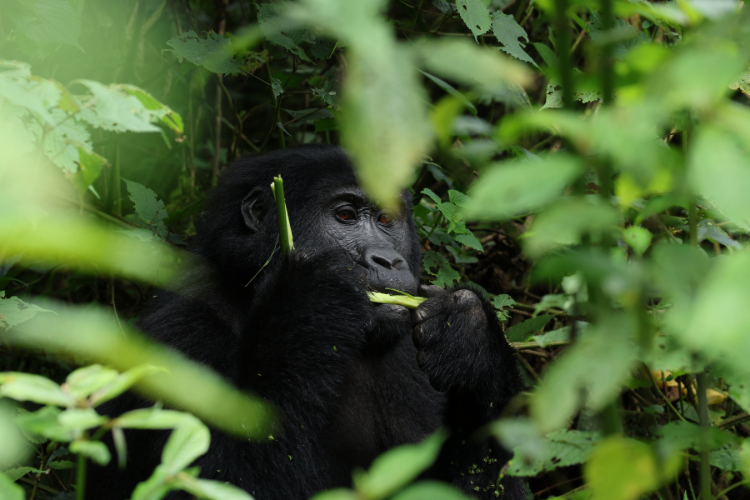
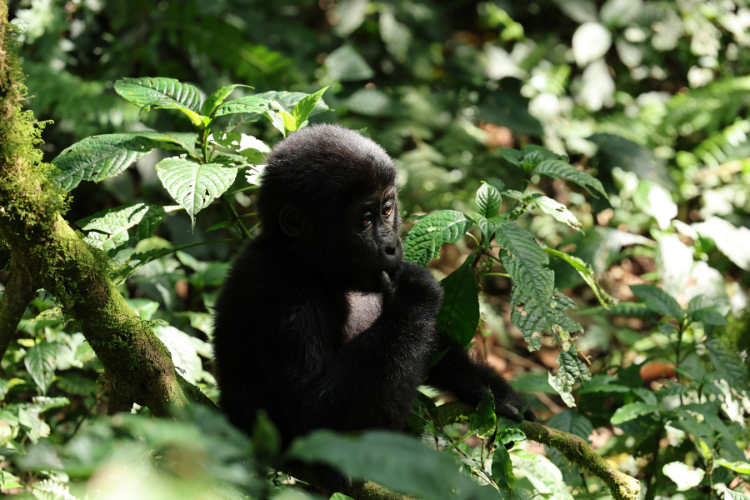
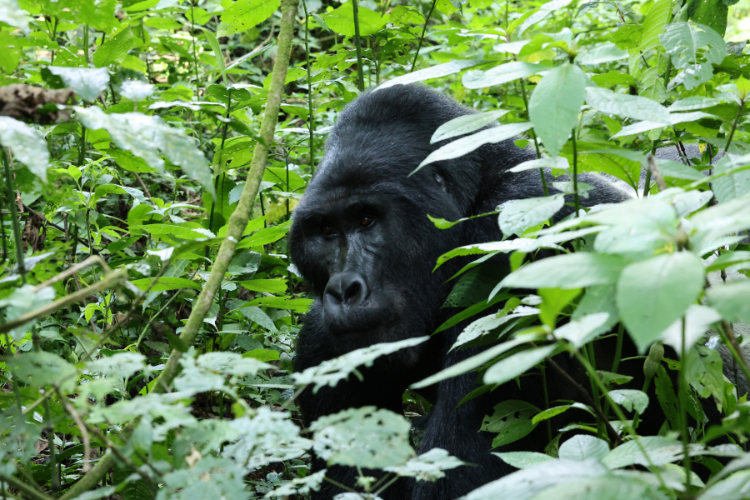
I was very pleased we did the 2nd day. It was a harder trek, probably a medium – about 1 1/2 hours each way up/ down steep hills to see the Mubare family, but it was a completely different experience. More details in this post, but some photos:
In the afternoon, we went to see the work done by the Gorilla Conservation Camp, which was a fitting end to a brilliant few days in Buhoma.
Day 9 – Travel to Lake Mbobo
We were all sad to leave the gorillas – personally, I could easily have done another trek with them, but it was time to turn for home.
Today, we drove to Lake Mburo National Park. It should have been around five hours, plus a stop for a picnic lunch, and we were hoping to do an (optional) night drive once we arrived, but due to traffic and one of the trucks breaking down, it took a lot longer. To be fair, they got the truck repaired fairly quickly – even finding a replacement part on a Sunday!
We were pleased to arrive at Rwakobo Rock, a lovely lodge in the middle of nowhere with amazing views over hills and 2 waterholes
Day 10 – Giraffes and Zebras
At Lake Mburo, the tour included a game drive. This meant that the trucks we had been travelling in had their roofs lifted. Our drivers (tour leaders) then drove through the park, stopping at waterholes and when they saw birds or herds of animals.
In addition, there were ‘optional’ activities of a morning game walk and a boat safari on Lake Mburo. To be honest, there wasn’t much point in being at Lake Mburo without doing the optional activities, and I believe they should be included within the tour.
The park is fairly small, and to get to the optional activities, you effectively were doing the same route as the game drive.
Guided Game walk
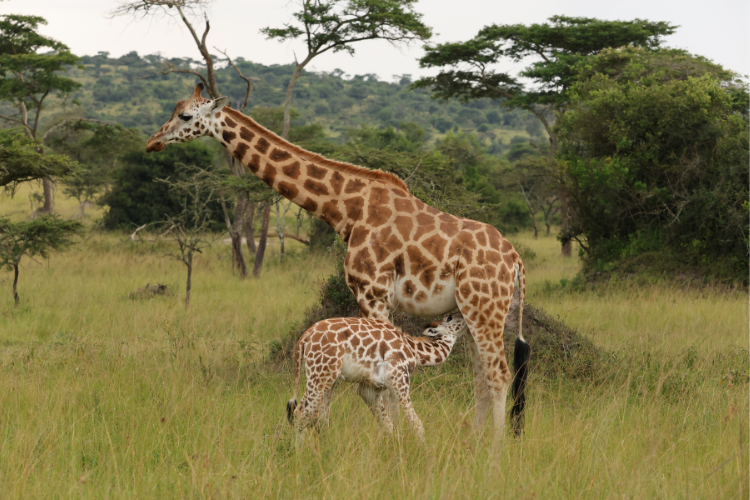
For us, the game walk turned out to be less of a ‘walk’ and more of an incredible wander amongst giraffes and zebras. The guide found the giraffes and zebras in the park, and the truck took us there. We then got out, and the guide talked to us about the animals as we got to within 5 or 6 meters of them.
We learnt loads about giraffes (Rothchild) in particular, with my standout new fact being that giraffes adopt a nursery-style system of caring for their young, with one adult looking after multiple young giraffes while the other adults feed.
The zebras were pretty cool, too, and it was magical to get so close. I guess we were on the guided walk for about 2 hours.
Guided Boat Trip
In the afternoon, we returned to the park for the two-hour boat trip. This was a public boat (so with people other than our tour group) on the lake.
The lake was completely calm, so no need for sea-sickness tablets! As we went around the edges of the lake spotting hippos, we were given a guided commentary. I couldn’t believe how many hippos we saw, in and out of the water, and we even saw a calf! The lake has crocodiles, too, but they were really difficult to spot when we were there.
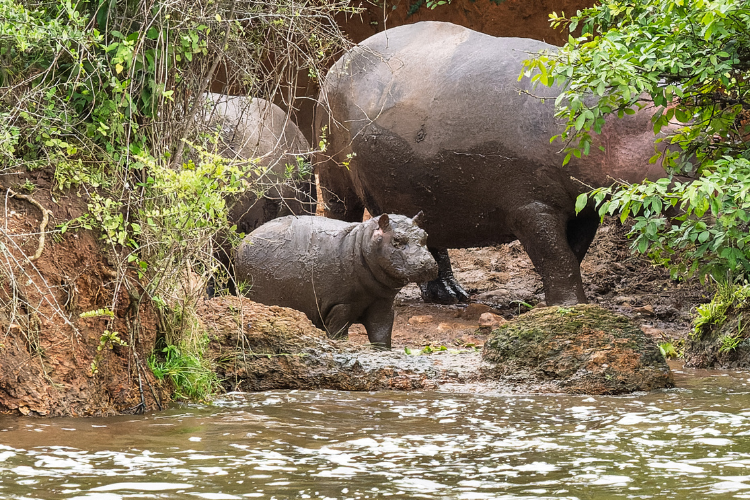
Notes on Lake Mburo optional activities
The following activities were available, and I think they are both ‘must-dos’, well worth the money:
- Game walk – cost $30 pp
- Boat safari – cost $30 pp
Payment is made for each of the activities at the National Park entrance. In theory, they only take card payments, but in reality, the card machine frequently goes down due to their isolated area, and cash is required.
Day 11- Travel to Entebbe via Mabamba Swamp
From Lake Mboro, we drove 4 hours to Nakiwogo, a small tourist port on the edge of Lake Victoria in Entebbe.
Our tour group transferred to a small boat (the one in the middle of this image) to cross Lake Victoria to Mabamba swamp
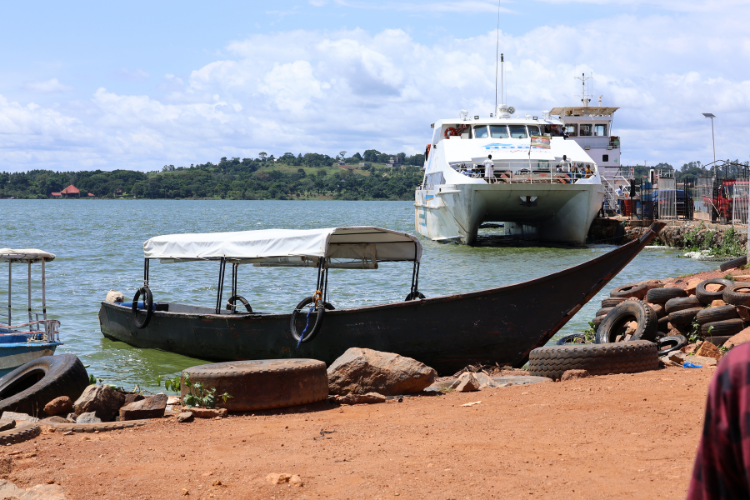
Bearing in mind I’m not a big fan of boats, this came as a bit of a shock to me, and it was too late to take seasickness tablets. The journey lasted about 1 hour each way and got (in my opinion) quite choppy in the middle. Although I wasn’t sick, fortunately, if you are planning this trip, I would recommend taking tablets if you need them.
Once at Mabamba Swamp, the group split further into 3 smaller boats. By this time, the water was completely still (even by my rigorous standards). The small boats had outboard engines, but as we got further into the swamp, the boats were poled manually (similar to a punt).
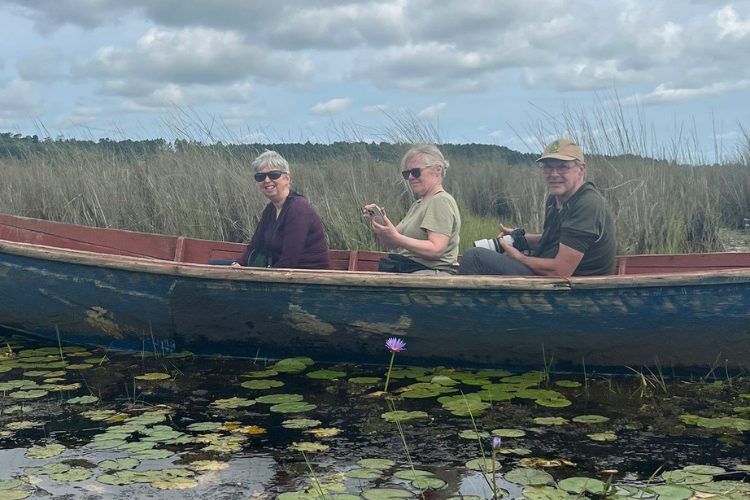
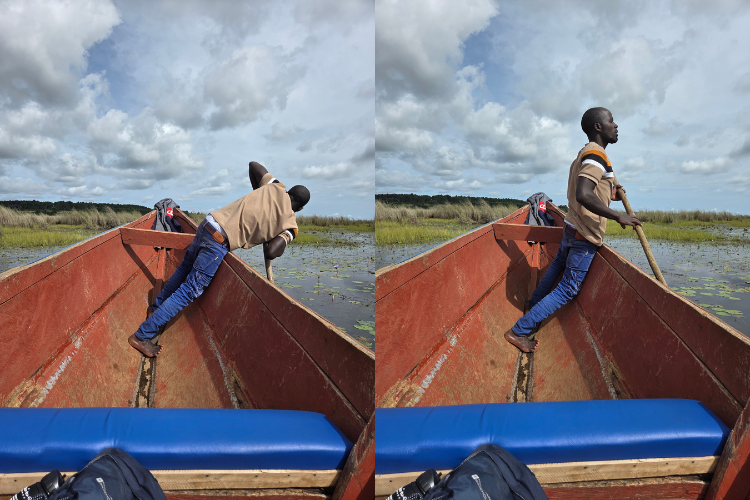
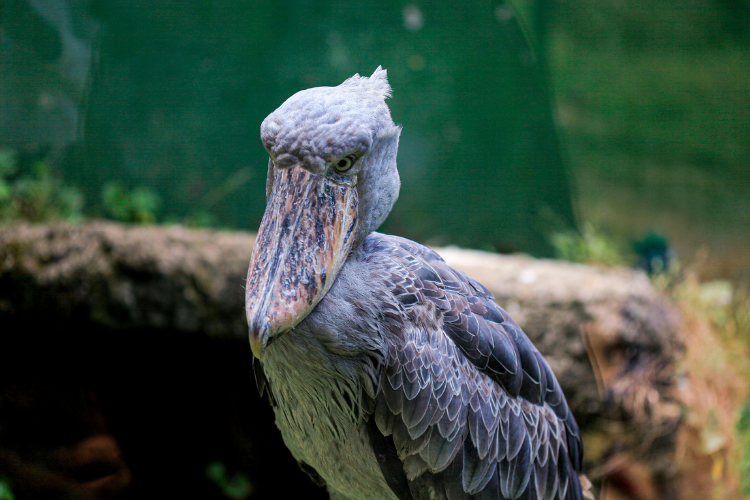
The aim of visiting Mabamba Swamp was to see some of the 300 bird species in the area, in particular the globally threatened shoebill stork. We spent approximately 2 hours in the swamp and saw a few birds. The guides were working together to try to get a sighting of the shoebill stork, and 1 of our three boats had a fantastic sighting. Our boat saw the stork flying, which, although far away, was still pretty impressive.
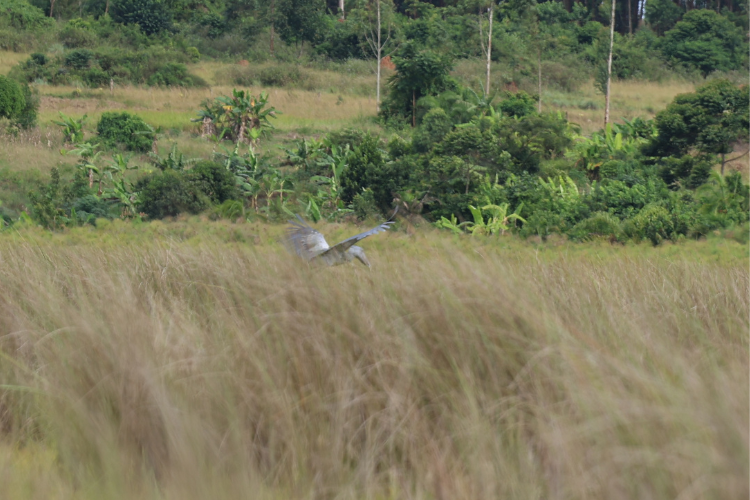
Thanks to Marvin Ssemakula for this photo on Pexels:
Returning to Entebbe, we checked into our hotel, the Papyrus Guest House and went out for a last group meal before the tour ended. Some of the group left that night, but most stayed in the hotel for a night before returning home.
Day 12 – Travel Home
An uneventful trip home concluded an unforgetable 2 week holiday.
Essentials
Cost
Let’s be honest, this isn’t a cheap adventure. The tour, including the additional passes for chimps and gorillas, cost just shy of £13.5k for the two of us. This included flights, transport, comfortable accommodation, activities as outlined above, all except 2 meals. We spent about £500 on the 2 meals, optional activities and tips. You could probably do it cheaper by booking with a local company and organising your own flights, but we’re prepared to pay a little more for a complete package and getting ABTA protection. The only thing I would say, based on the research I did, is to make sure you compare what is included. A tour may look cheaper, but it may not include everything you need or want.
Money
We took cash in US dollars (on Exodus’s advice). We did change money into Ugandan shillings, but all of the hotels were happy to accept US dollars. Shillings were useful for the local shops (for coffee and souvenirs)
Tips
Talking of money, it is important to budget for tipping. As we were on an Exodus tour, most of the tips came out of a central kitty, to which we all contributed $80 pp. Exodus suggested the tip for the tour leader should be around US $5 pp per day (but that is completely up to each group member).
Any optional activities needed to be tipped separately. As an idea:
- We gave $10 to each of the activity leaders at Ride 4 a Woman
- We gave $10 to the porters who accompanied us on day 1 of the gorilla trek and $20 to those who helped us on day 2 (as it was a longer, more difficult trek).
Vaccinations and Malaria
We followed the UK government’s advice on vaccinations for Uganda. We just needed to add Yellow Fever to be fully covered. We took our Yellow Fever card with us (per regulations), but we weren’t asked for it.
Because of the high malaria risk in Uganda, we took Maloff Protect tablets throughout the trip (with no side effects, fortunately). We used DEET when walking with the chimpanzees and giraffes, but avoided it around the gorillas after being told it can attract wasps. In the evenings, we wore mosquito-repellent bracelets instead of DEET, as I don’t like how it affects my skin. Surprisingly, we only ended up with a couple of bites over the whole two weeks, so maybe all the precautions paid off—although there didn’t seem to be that many mosquitoes around. That said, we’d normally expect to come away with quite a few bites, even when we do take precautions.
Visa
Don’t forget that you will probably need a visa to enter Uganda. Applying for a visa on the Ugandan immigration website was a straightforward process (you will need to upload a return ticket and have an address in Uganda), cost US $50 and took 24 hours to arrive. It was valid for 90 days, so don’t do it too far in advance.
We needed to take a printed copy of the visa to show at immigration. We also took a passport photo with us (as requested by the Visa process), but didn’t need it as photos were taken digitally at immigration.
Fitness
From Buhoma, it’s possible to trek to 5 gorilla families. Informally and unofficially, the trek could be ‘easy’, ‘medium’ or ‘hard’. This depends on how far the families have moved into the forest. One of our group members had some mobility issues, and fortunately, our tour leader was able to negotiate an ‘easy’ trek for us on day 1, which was only about 20 minutes. Most of the walk was through a tea plantation, with a steep hill at the end. We all hired porters who were available to assist with the hill.
On the 2nd day, we were assigned a ‘medium’ trek, which was 1.5 hours up (and down) a steep hill. This was more challenging, but as somebody with a slightly above-average level of fitness, I was fine. I would probably have struggled to do a ‘hard’ trek, though.
One thing to remember if fitness is a concern is that the porters will support you as required. We spoke to one lady who had MS, and she had hired two porters who ‘pushed and pulled’ her up and down the hills. I’m not sure which level of walk she did, but she successfully saw the gorillas!
What to Pack
Apart from the obvious, I would recommend the following:
- Water bottle – all the hotels had filtered water available to fill up water bottles, so water filters weren’t needed
- Long-sleeve T-shirts suitable for trekking, in a subtle colour
- Long walking trousers in a subtle colour
- Waterproofs – the weather was warm but changeable, and it could rain at any moment, so waterproof clothing was essential, as was a waterproof cover for your day rucksack.
- Gardening gloves for gorilla trekking
- Jumper or fleece – it got chilly in the evenings
- Torch – just a mobile phone torch is fine
- Walking boots – the trekking is up (and down) steep hills and could be muddy underfoot, so good ankle-protecting boots are recommended.
- Gaiters were useful against red ants, but tucking your trousers into your socks (if they are long enough) will work too
- Binoculars are essential for the chimps – these worked well
- UK plugs are used, so no need for adapters if travelling from the UK
Questions?
If you are planning on this trip or something similar, contact me at mary@thomasadventuremusings.co.uk if you have any questions.
I hope you have a wonderful time.