
In November, we spent a long weekend in Valencia, a beautiful, welcoming and surprisingly affordable city with something interesting around every corner. From colourful street murals and a giant fibreglass geckco attached to an apartment wall to a woman enjoying a coffee with a large green parrot perched on her shoulder, there was never a dull moment. We stumbled across a parade, spotted bat decorations on the undersides of old town balconies, saw one of Europe’s narrowest houses and wandered through some beautiful historic streets.
What we hadn’t anticipated was how much the trip would turn into a food and drink adventure. Between sampling traditional paella and other local specialities, and stopping off for leisurely drinks along the way, it soon became as much a culinary adventure as a city break. It was only a short trip, but one that gave us plenty of memorable sights, amusing encounters and delicious things to eat and drink.
We booked the trip back in April, spending £708 on flights and a 5-night hotel stay (including breakfast) through British Airways Holidays.
Our itinerary:
- Day 1 – Arrival
- Day 2 – Old Town Tour, Wine & Tapas
- Day 3 – More Detailed Exploration of Old Town
- Day 4 – L’Albufera de Valencia and Paella
- Day 5 – City of Arts and Sciences
- Day 6 – Mopping up Old Town and Home
We didn’t get time to explore the beach, which could easily be included as it is a short (20-minute) bus ride away.
Day 1 – Arrival
When we originally booked our holiday, the flight was due to depart at 7:50 am. However, it was later changed to 4;50 pm. Although this was a much more sociable time to travel, it did mean we lost a few hours exploring Valencia on our first day. On the plus side, the flight arrived on time and getting through security at Valencia was a breeze. With just hand luggage, we were on our way to the Metro within 10 minutes of leaving the plane!
The ticket machines had several language options, making it easy to buy a rechargeable Metro card (€1.10) and load it with a single journey into the city (€4.50 for the AB+ zone). We bought one each.
25 minutes later, we had reached Xàtiva and walked 20 minutes to Senator Parque Central Hotel, arriving at 22:00 (21:00 UK time). We ate the baguettes we had brought from the UK and decided to explore the local neighbourhood.
On the walk to the hotel, we saw Bar Fernanda was busy, so this seemed a good first option. This was the first of many visits to this bar over the weekend – what a lovely place! Wine was €2, beer was €3.50. It was a real local haunt and busy even though it was late (to us). I particularly enjoyed seeing an older woman who, after walking her dog, met her friends at the bar to share pizza (more on the food offerings later) and have a drink. This was at 11 pm! By this time, I needed my bed!
Day 2 – Old Town Tour, Wine & Tapas
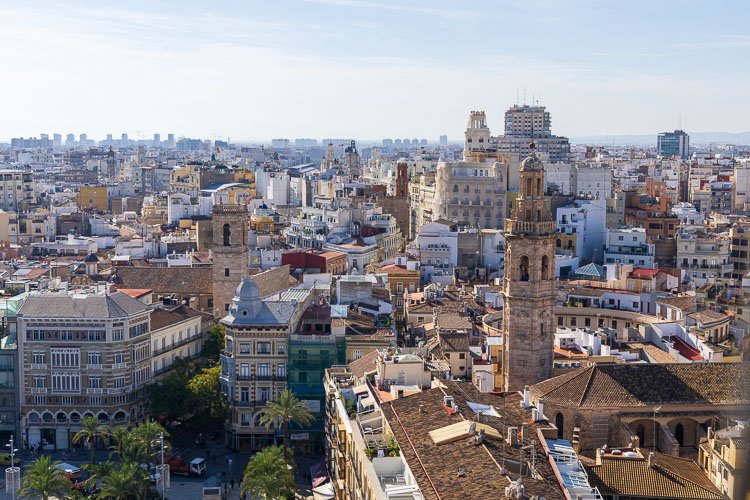
We woke up to a beautiful blue-sky day, so we walked 30 minutes into Old Town and picked up the 7-day, no-transport Valencia Tourist Cards we had ordered online for €13.50 pp. We had an activity booked for the afternoon, so although we didn’t want to do too much in the morning, it seemed a perfect day to climb El Miguelete, the bell tower of the Valencia Cathedral.
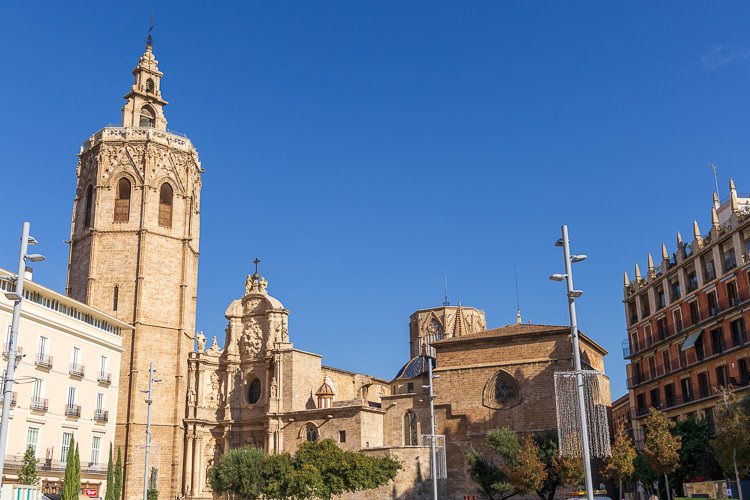
The tower, at 50.85 meters high, was built between 1381 and 1424. It is named for the gigantic bell that strikes the hours, El Micalet, cast in 1539. When we were in the city, we never actually heard the bell, but apparently it is very loud if you happen to climb the tower when it rings!
It costs €3 to climb the 207 steps. As you approach the cathedral entrance, the tower entrance is on the left (you don’t need to pay to enter the cathedral first). Because the narrow spiral staircase operates as a one-way system, only 50 visitors can go up at a time, which can cause a queue to form at busy times.
Once at the top, you get a 360º view of the city. The city is incredibly flat, rising only 15m.
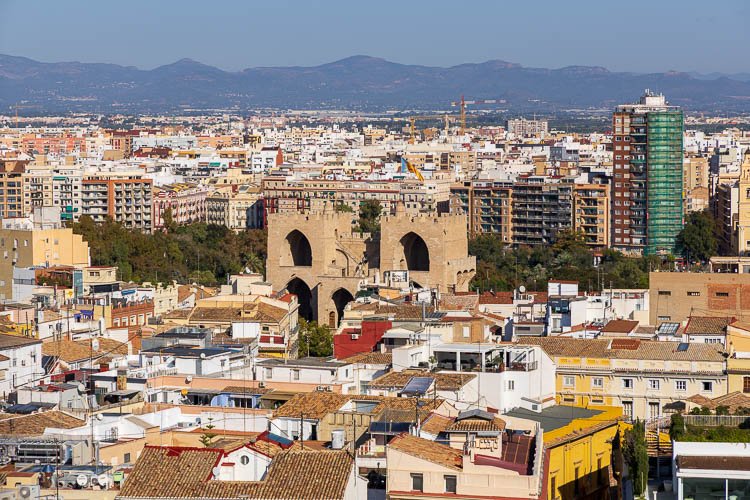
North
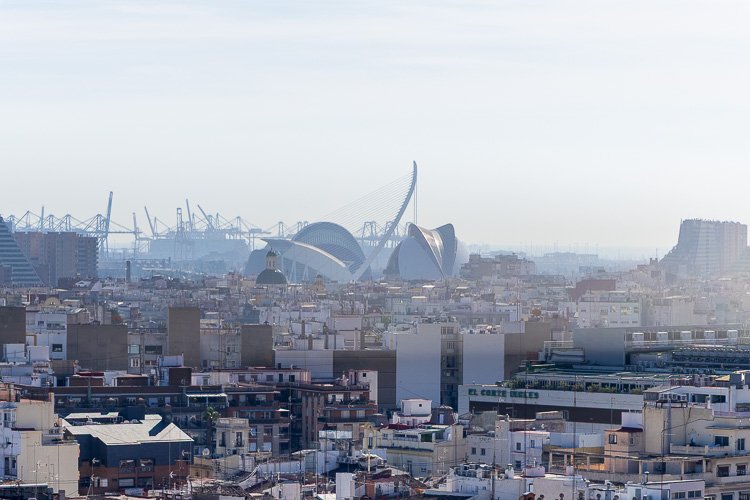
East
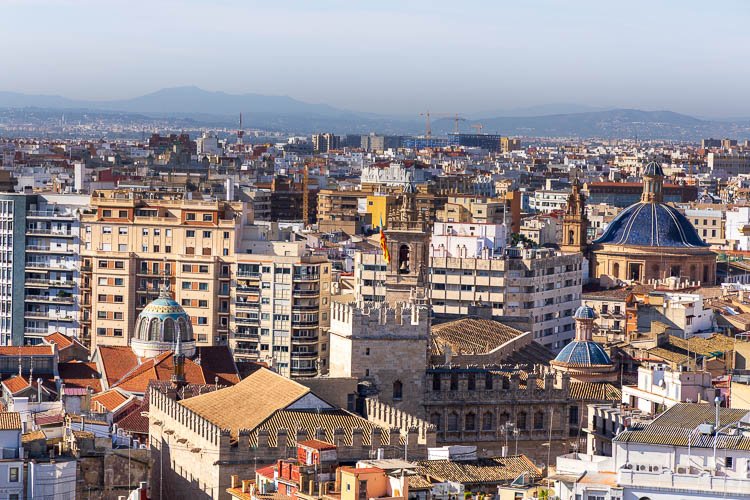
South
West
Before we left home, we had spotted this highly rated Old Town Tour, Wine & Tapas in an 11th c. Monument (£135.18 for two).
We joined our guide, Isabella, who happened to be a student from England on work experience, a lady from Canada and a couple from Australia for the 1 pm tour.
Isabella took us around the main sites of the Old Town, including the cathedral, the central market, the silk trading exchange and one of Europe’s narrowest houses.
We had some free time in the Central Market and, unlike similar markets I’ve been to in other countries, I was glad to see it wasn’t such a tourist trap, as there were plenty of locals doing their regular shopping. It was good to see the stalls running out of food by lunchtime too.
Isabella shared Valencia’s history as well as interesting facts, including:
- There are approximately 12,000 orange trees in the city – and you can see them on every street – but the oranges are bitter, not sweet. Some people use them for bitter marmalade, but most are used as agricultural fertiliser. Outside the city, sweet oranges are grown, and you can buy fresh orange juice in every bar
- The Turia Fountain, unveiled in 1976, celebrates Valencia’s historic agricultural irrigation system. The eight female figures surrounding the bronze male figure (Neptune) represent the eight main irrigation canals that carry water from the Turia River to surrounding farmland. Every Thursday at noon, members of the Water Tribunal (in traditional clothing) still meet at the cathedral to settle irrigation disputes. It is the World’s oldest court and Europe’s oldest democratic institution.
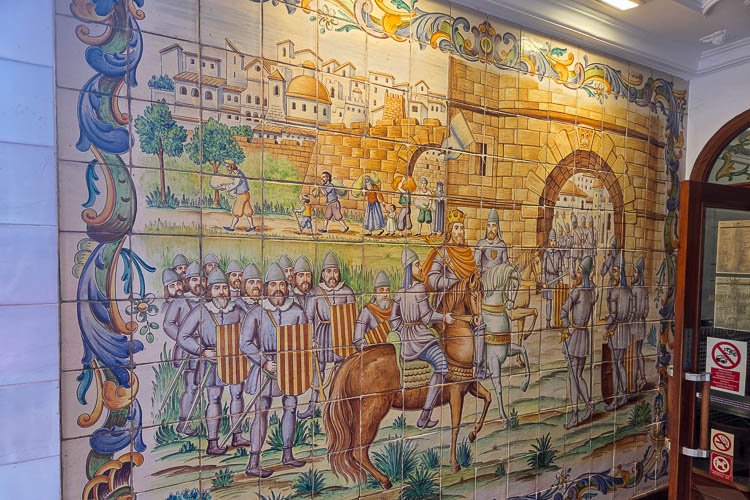
- Bats appear prominently beneath many of the Old Town’s balconies and on the city’s coat of arms. Local legend suggests their significance dates back to the 13th century. Jaume I and his Christian troops were encamped outside Valencia in 1238 when a bat alerted them to a surprise night raid by the Moorish army. Because they were awakened in time, they fended off the attack and eventually conquered the city. In gratitude, Jaune I put the bat on top of the city’s coat of arms. In reality, the bat is thought to have evolved from a dragon emblem during the 16th and 17th centuries, but why ruin a good story!
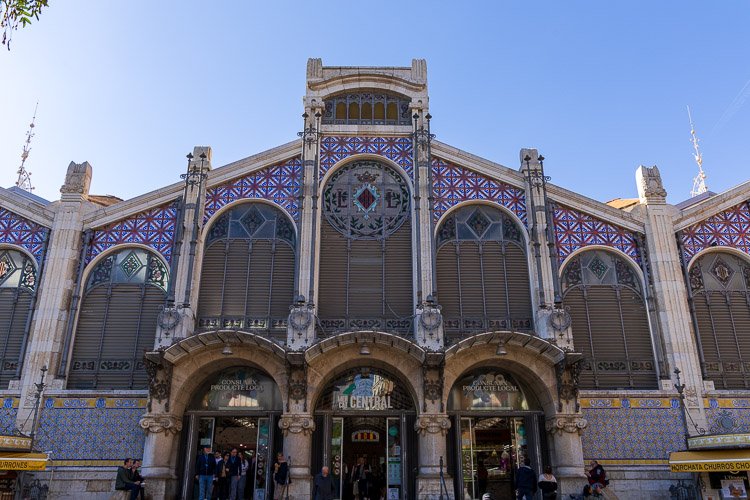
Central Market
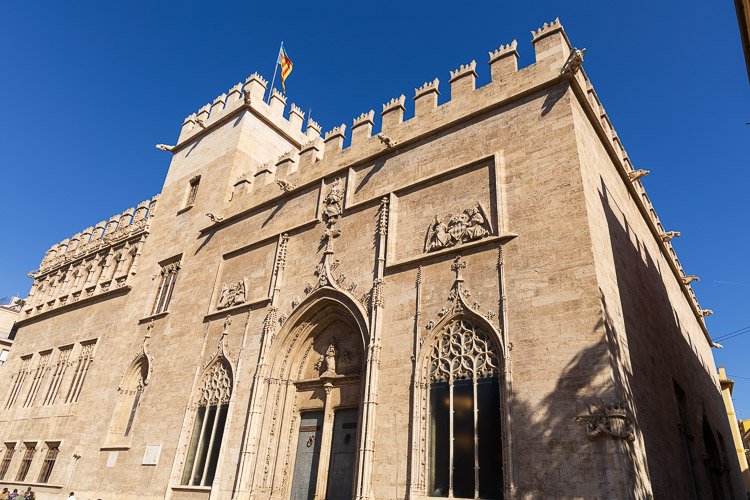
Silk Exchange
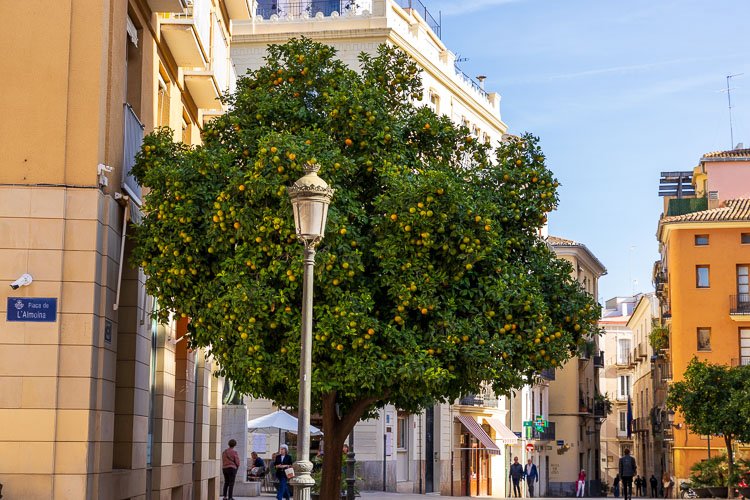
Orange Tree
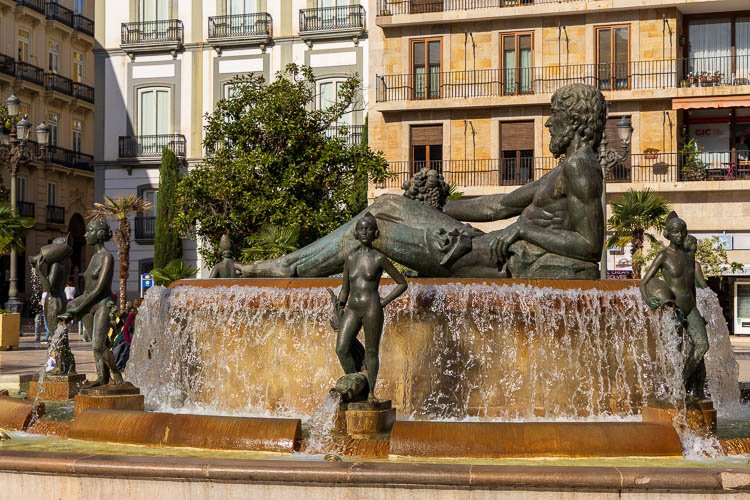
Turia Fountain
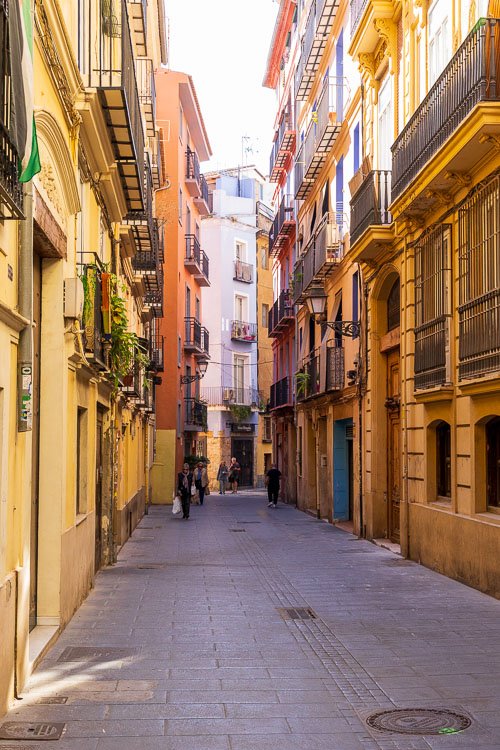
Typical Street in Old Town
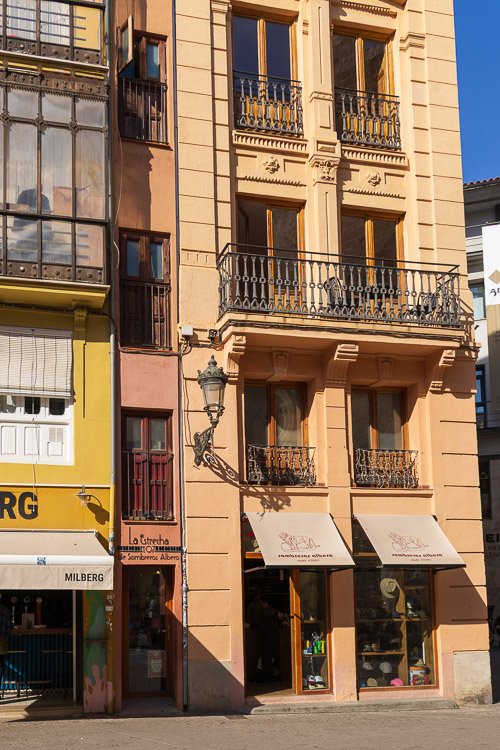
Narrow House (between the two houses with balconies)
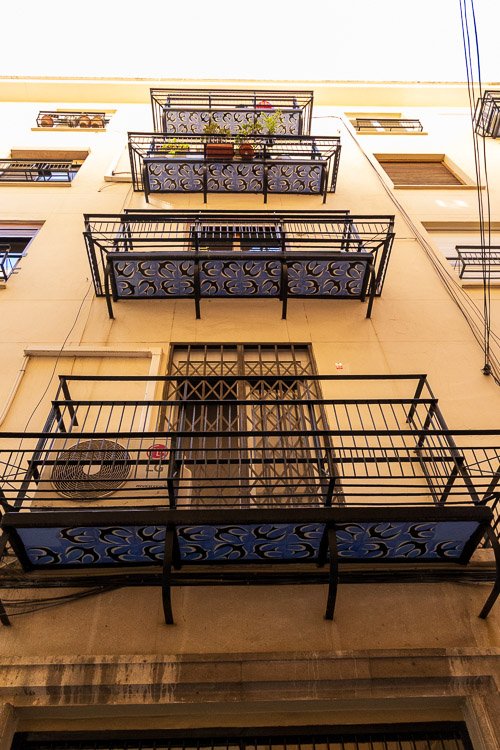
Bats on the underside of the Balcony
After the 90-minute walking part of the tour, we were taken to a building near Portal de Valldigna to sample wine and tapas. We started with a glass of cava, then moved on to 2 white wines and 2 red wines, along with a variety of tapas, including gazpacho, manchego cheese, tortilla (with onions), and a pork rice dish. This was essentially paella, but in Valencia, only Valencian paella can be called paella, and it includes rabbit, chicken, and (in some cases) snails.
Each glass of wine we were given was a standard serving and was frequently topped up! It was a lovely way to spend an afternoon, drinking, sampling food and chatting. The tour ended at 4 pm, and one of our group had the bright (?) idea to go on to Café de las Horas – the place Isabella recommended to sample Agua de Valencia.
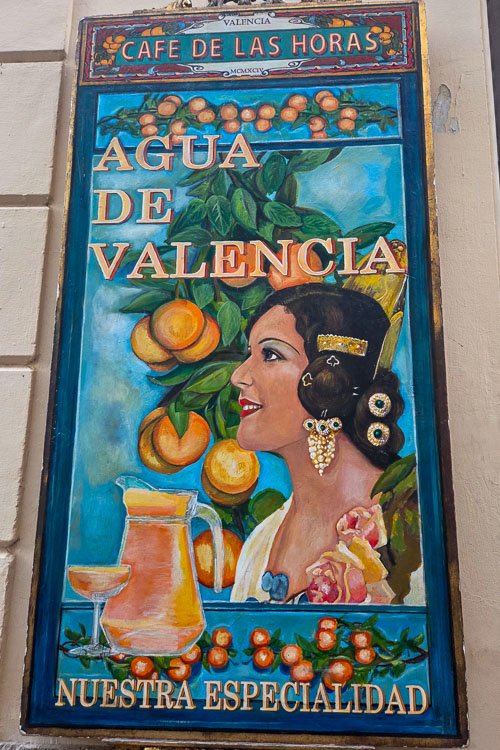
The 5 of us arrived and tried to sit outside (to enjoy the warm afternoon), but were told that only tables of 4 were allowed outside. So reluctantly, we went inside, but wow – we are so glad we did. What an amazing place.
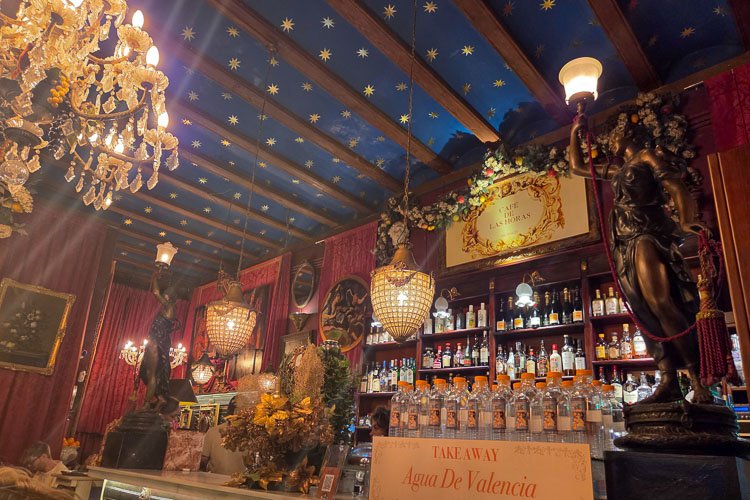
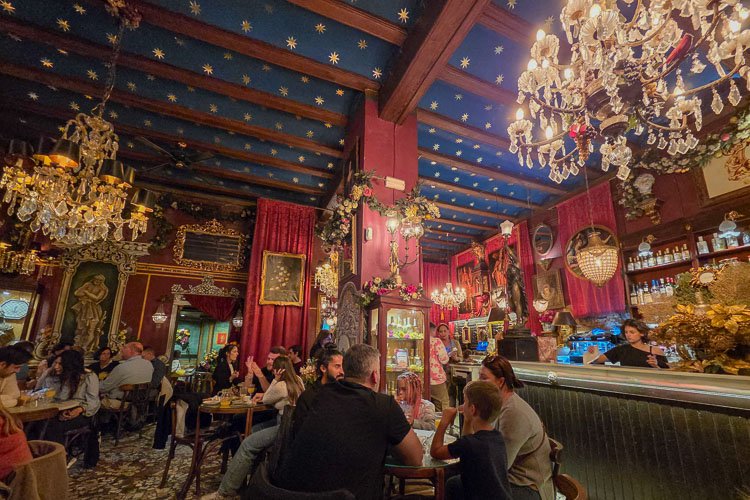
Agua de Valencia is an alternative to Sangria. Although it is clearly pushed on the tourist circuit, it appears that locals do drink it – but only from reputable places like Café de las Horas. To make a litre (generous serving for 4 people, €25) of Agua de Valencia, combine 500ml fresh orange juice, 300ml chilled Cava, 100ml dry gin and 100ml vodka.
It tasted surprisingly good and was very (too) easy to drink. Though I didn’t enjoy the 2nd jug we shared so much – it became more cloying – perhaps due to the amount of alcohol we had had by this time! I would definitely suggest giving it a try, but personally I wouldn’t rush back to have it again.
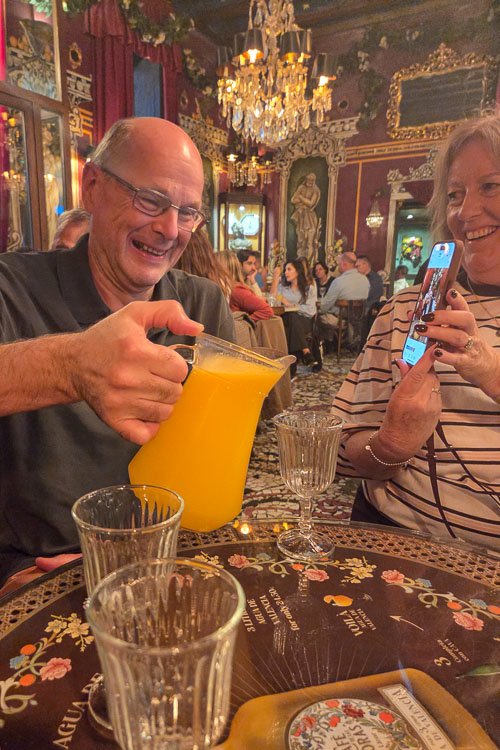
After sharing 2 jugs of Agua de Valencia and travel stories, we said goodbye to our new friends and headed (wobbled) back to the hotel to rehydrate!
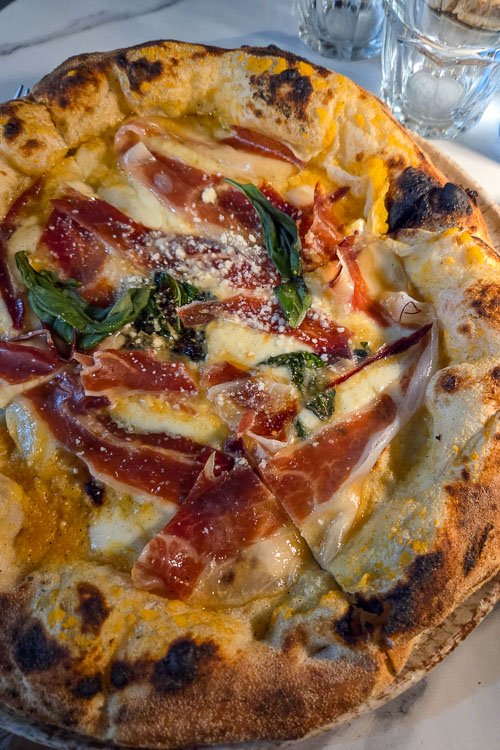
That night, all the local bars around us were full, but we found Nanine, a great pizza place to soak up the excess alcohol.
Day 3 – More Detailed Exploration of Old Town
Our first stop today was Valencia Cathedral. After a 30-minute queue, we entered and picked up an audio guide. Entry was free with a Valencia Tourist Card, but it normally costs €12 pp, including the audio guide, which is worth having. It was a self-contained device, not downloadable.
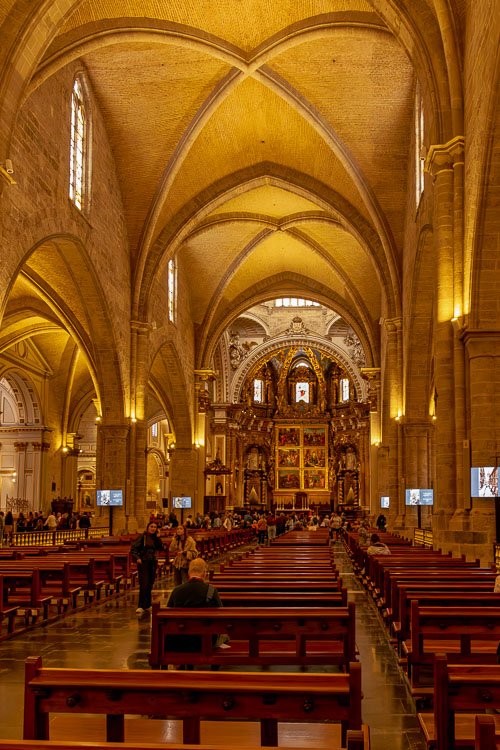
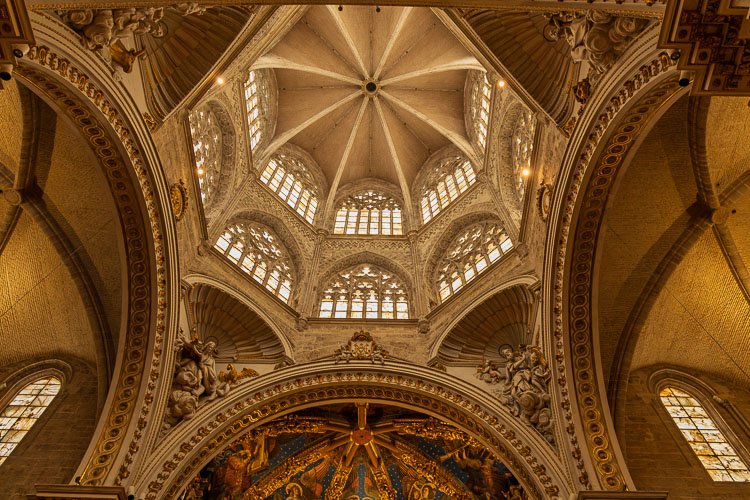
The Cathedral was built in 1262 on ground consecrated in 1238. Expanded during the 14th and 15th centuries, the bell tower (El Miguelete) was completed in 1425. Decorative elements (frescoes, iron gates, etc.) were added in later centuries. It suffered fire damage during the Spanish Civil War (1936 – 1939) and underwent major restoration in the 1970s.
The audio tour covered the highlights of the cathedral, including the stunning Gothic-ribbed ceiling over the central nave,
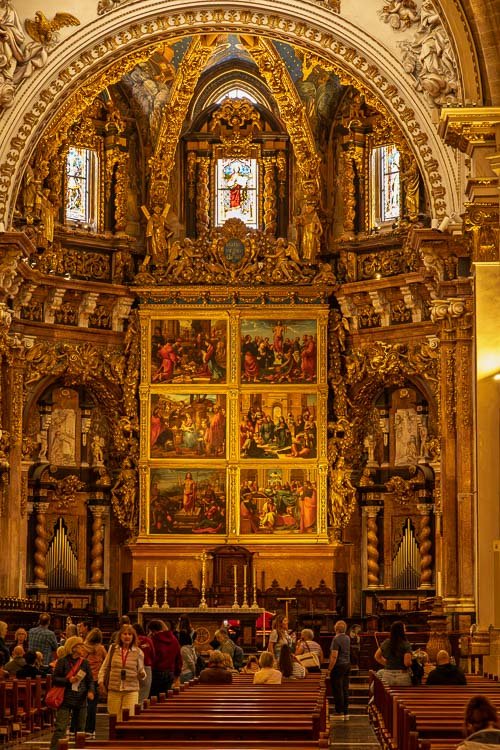
the beautiful altar with early 16th-century Renaissance painted doors,
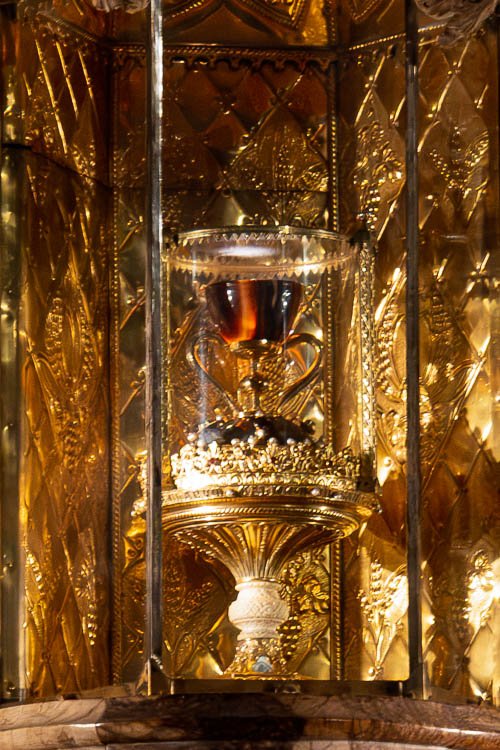
and the most important artefact – the Holy Grail. This is venerated by many as the actual Holy Grail (Chalice) used by Jesus at the Last Supper. The dark red agate cup has been dated to the 1st century AD and is of Palestinian or Egyptian origin. The gold handles, ornate stem and base were added in medieval times (11th century or later).
After the cathedral, we visited the Silk Exchange (La Lonja de la Seda). Entry was free with our Valencia Tourist Card (normally €2 pp).
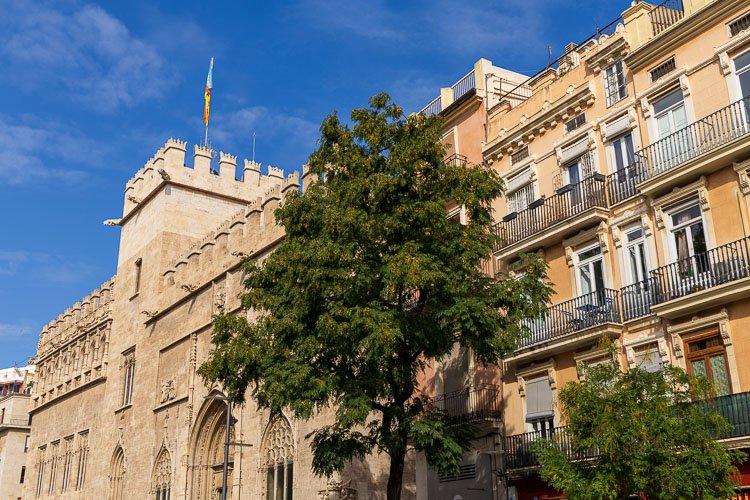
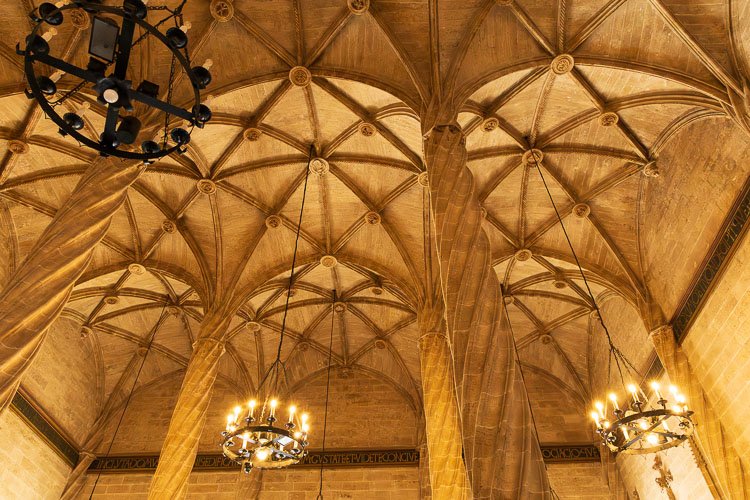
A UNESCO World Heritage Site since 1996, the Silk Exchange was built between the 15th and 16th centuries and used as a commercial trading hall and mercantile hub, especially for the city’s silk trade.
Palm trees in the Column or Contract Hall reach toward the sky of ‘paradise’.
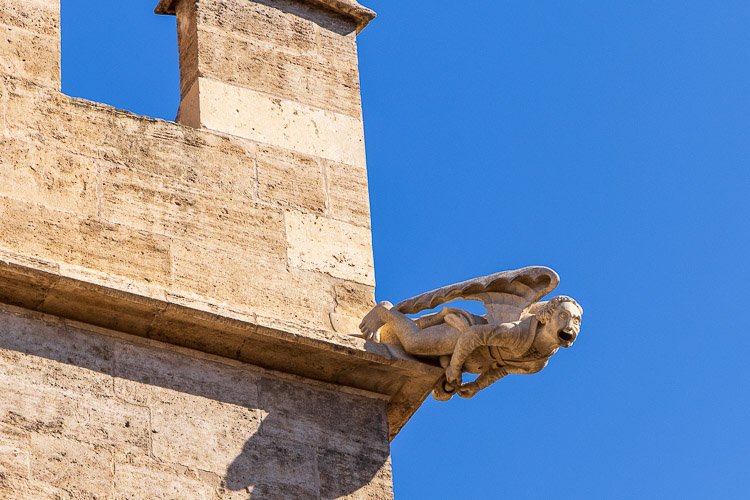
When we were there, the tower was closed, but the building was still worth a visit. Outside, 28 stone Gothic gargoyles channel rainwater off the roof and serve as vivid moral warnings for passers-by. Many of the sculptures depict sin, vice and temptation.
From here, we wandered through the beautiful streets of the Old Town to the Torres de Serranos, a magnificent 14th-century Gothic gate. Along the way, we were overtaken by a guy in an electric wheelchair. That in itself wasn’t unusual, as Valencia is such a wheelchair-friendly city, but this particular man had a flag attached to the front of his chair and was playing fairground music as he made his way through the streets! Even the local waiters stopped to turn and smile as he passed!
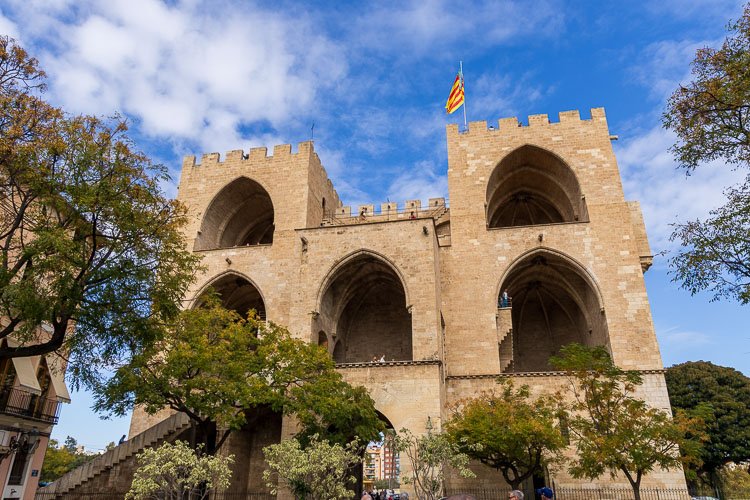
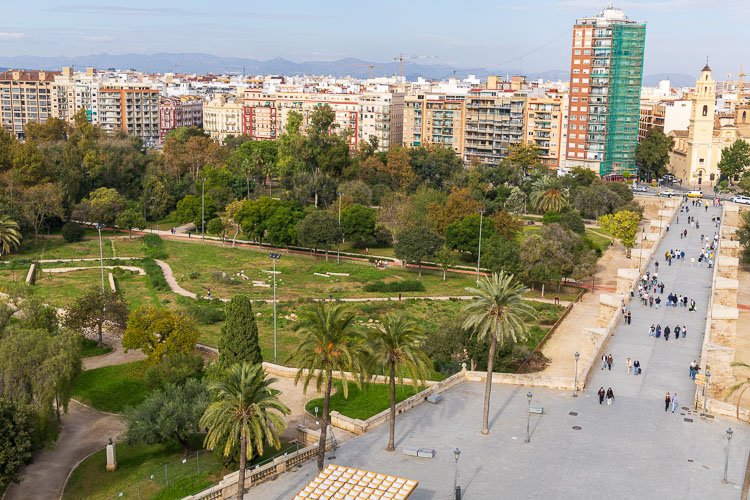
Free entry with the Valencia Tourist Card (€2 pp) allowed us to climb the towers for our first view of the Jardín del Turia. After a devastating 1957 flood, the city government diverted the Turia River to the South of the city and created this urban park in its place. The park runs for 6 miles from west to east through the city.
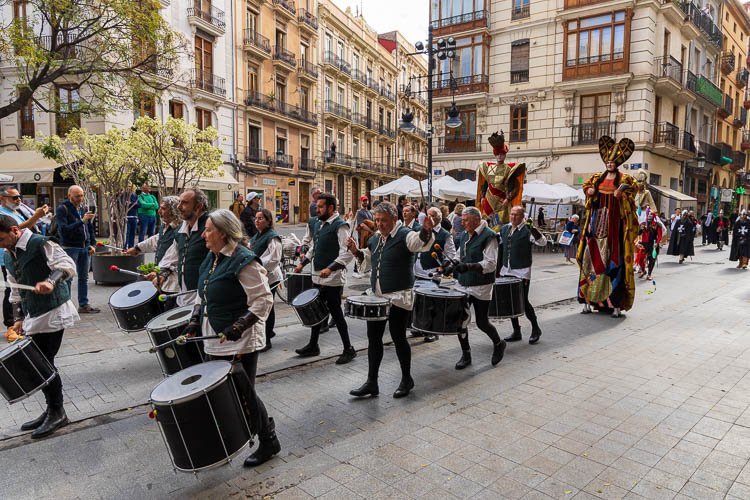
Returning to ground level, we were greeted by a large parade of drummers, court jesters, ….
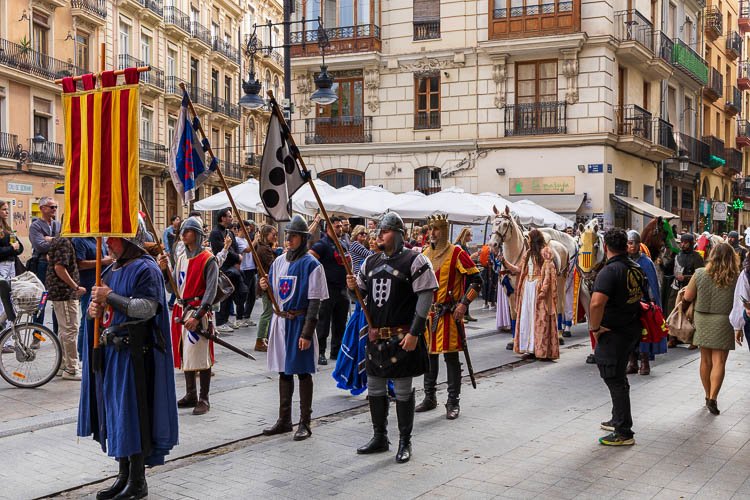
… crusaders, the king and queen and horses.
Apparently, this parade, ‘L’arribada del rei Jaume I i la conquesta de València’, takes place every year to mark King Jaume I’s entry into the city in 1238. It is normally on 9th October (Valencia’s Official Day), but this year it was delayed due to bad weather.
As I said, a surprise around every corner.
On the way back to the hotel for a break, we visited Solaz in the Central Market to pick up cheesecake for lunch. Sold by weight, a large slice cost around €13. It was tasty, but no better than the cheesecake I make at home.
That evening, I tried Tinto de Verano at our local bar. Red wine mixed with lemon soda (e.g. Fanta Lemon or Sprite) over ice. It was very refreshing, and I can imagine it would become a regular option in the summer.
We went to the Mexican restaurant INSIEME for dinner. Good portions and tasty food.
Day 4 – L’Albufera de Valencia and Paella
Today we walked east from our hotel to the Ciutat de les Arts to catch a packed bus to L’Albufera (cost €2 pp one-way; tap with a credit card).
L’Albufera Natural Park, Spain’s largest freshwater lake, is bordered by rice fields and dunes. Moorish settlers introduced rice into the area in the 8th century. In the 15th or 16th century, local farmers created Valencian paella, the original form of paella, a one-pot dish with ingredients available in the surrounding fields: rice, snails, green beans and water.
By the 20th century, paella had spread around Spain and used a wider variety of ingredients. However, in Valencia, only Valencian paella (with chicken, rabbit and optionally snails) can be called ‘paella’. Anything else is ‘rice’.
L’Albufera has been designated a ‘Special Protection Area’ for birds, with over 350 bird species.
We took the bus to El Palmar, the last stop. Once there, we walked towards the lake, where we saw a couple of signs for boat rides – one of the popular attractions in the area. We walked through the Arroseria El Rek restaurant to the boat, which was just about to leave. The motorboat held about 15 people (€6 each, cash or card).
The guide spoke in both Spanish and English (everyone else on the boat was Spanish, so this clearly wasn’t just a tourist activity). He explained that three waterways feed the lake, with the flow carefully managed to control how much water drains into the sea and how much seawater and fish come into the lake. This helps maintain the ideal conditions for growing rice and supporting the local fishing industry.
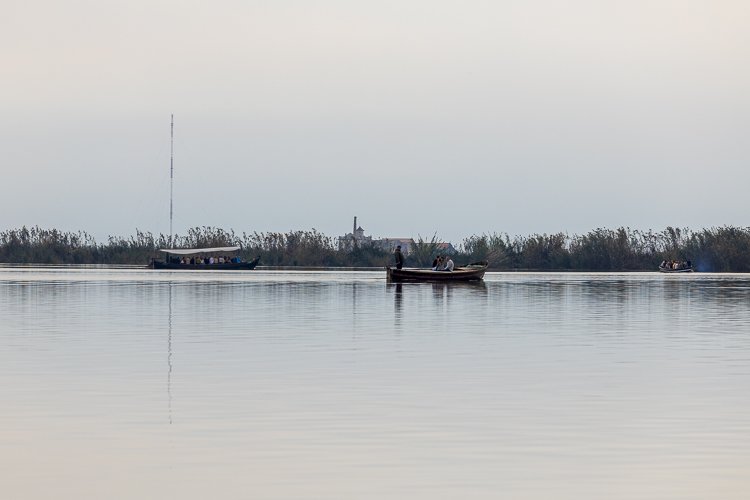
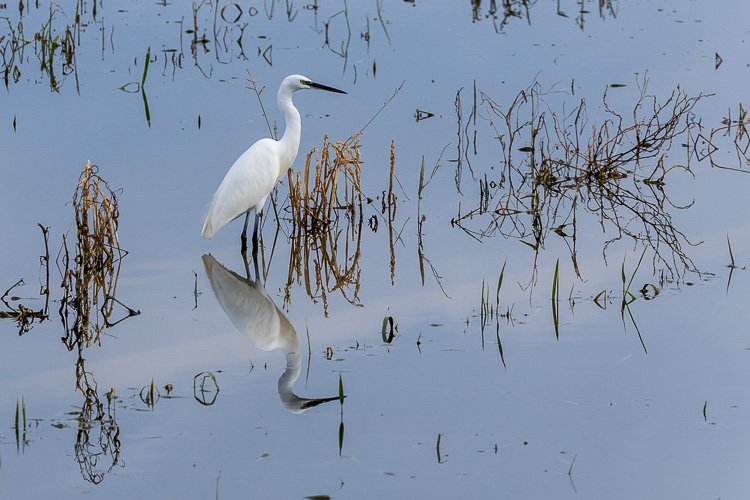
I was disappointed by the number of birds around – I think we may have been a few weeks early to see wintering waterbirds. It was all a bit misty too, but it was worth doing and an interesting way to spend 45 minutes.
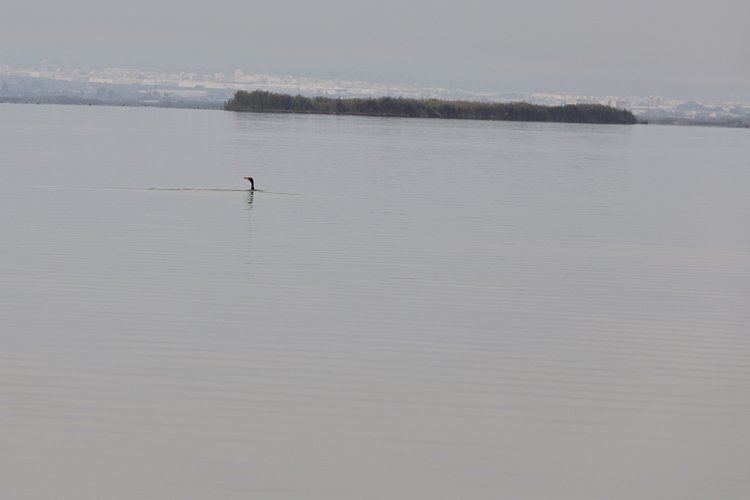
After the boat trip, we walked alongside the rice fields, which had been flooded following the September harvest.
Before leaving the UK, we booked a table at Bon Aire, to experience a traditional paella. We had booked the Bon Aire Menu, a 3-course menu for €35 pp and had selected the ‘Senyoret Rice’ – rice with peeled shrimp, squid and monkfish- rather than the Valencian Paella. The only booking available was at 15:30.
This meant we had a few hours to wait after the boat trip. I expected to find more walks in the area, but there was nothing obvious to do, so after admiring the birds in the rice fields, we found a bar to relax and read our Kindles for a bit.
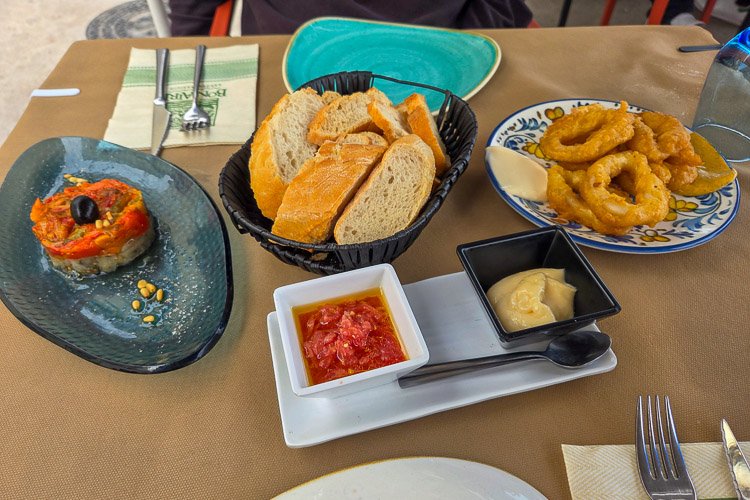
Bon Aire was extremely busy when we arrived – it was good to see so many Spanish families eating there – I was concerned it would just be a tourist trap. The meal was very good, starting with bread, squid, espencat (roasted red pepper and eggplant with pine nuts and garlic) and titaina (vegetable pisto with tuna and pine nuts) (not pictured).
The rice was tasty and full of seafood.
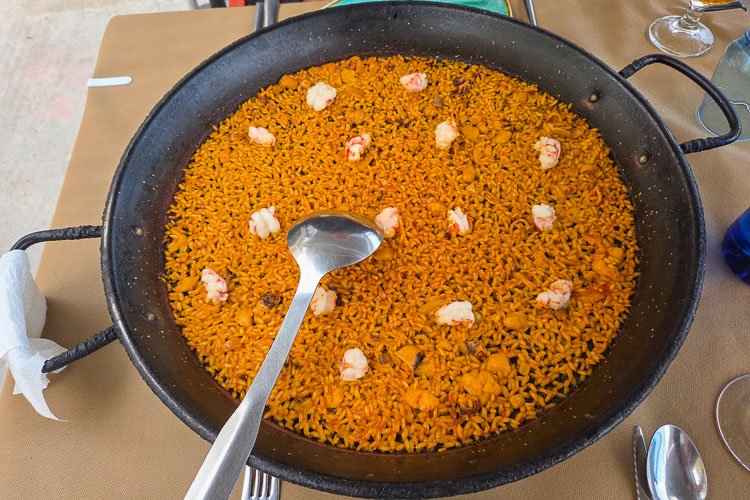
We finished with 3 small portions of homemade desserts – cheesecake, creme brulee and chocolate cake.
We sat on the terrace with a view of the flooded rice fields – it got a little chilly, but to be fair, we probably should have brought more clothes with us. It was November!
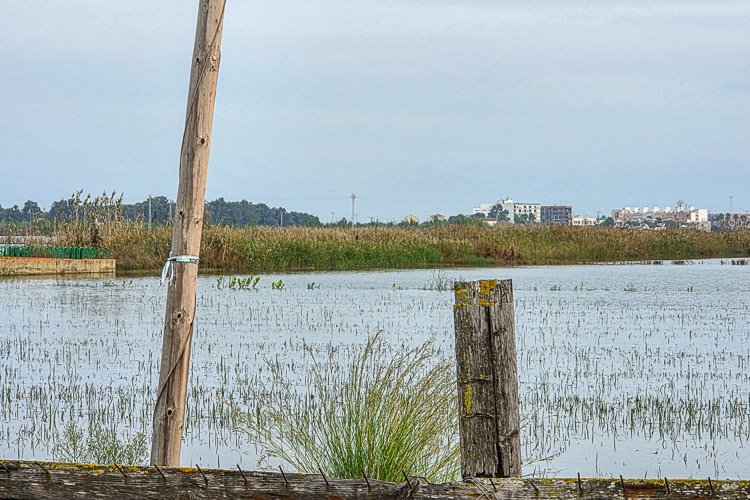
The meal lasted around two hours, partly because the paella takes about 45 minutes to prepare once ordered. Afterwards, we caught the bus back to our hotel. It was a lovely way to spend the day, and I’m really glad we had the opportunity to experience paella as it is traditionally enjoyed.
Day 5 – City of Arts and Sciences
Today we retraced yesterday’s steps to the Ciutat de les Arts. As part of the project to create the Jardín del Turia, Valencia decided to build a City of Science and Technology. Initial plans included a 370m high communications tower, a planetarium and a museum of science, with a budget of 25,000 million pesetas.
Santiago Calatrava designed the three structures, and work began by the end of 1994. After a change of government in 1996, the planned telecommunications tower was cancelled and replaced with an opera house, and Félix Candela was asked to add an oceanographic park to the design. In 1997, construction was started on the Palau de les Arts on the same foundation that had been planned for the cancelled communications tower.
The last structure was completed in 2009. The total cost of the project was 1,200 million euros. In 2019, it was reported that the economic impact of the complex was €113 million a year and generated 3,509 jobs.
There are 5 main structures within the site:
- Palau de les Arts Reina Sofía (the opera house)
- L’Hemisferic (a planetarium)
- L’Umbracle (a promenade with plants)
- Museu de les Ciències Príncipe Felipe (a Science Museum)
- L’Oceanogràfic (an aquarium)
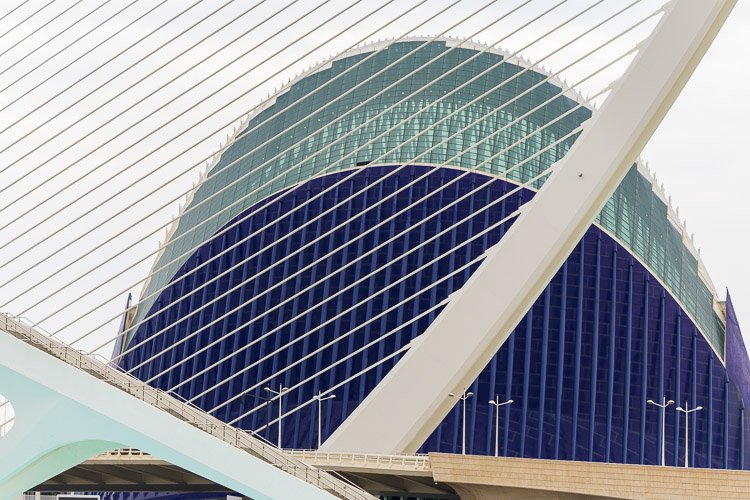
- L’Agora (a multi-purpose exhibition space)
- Pont de l’Assut de l’Or (a bridge)
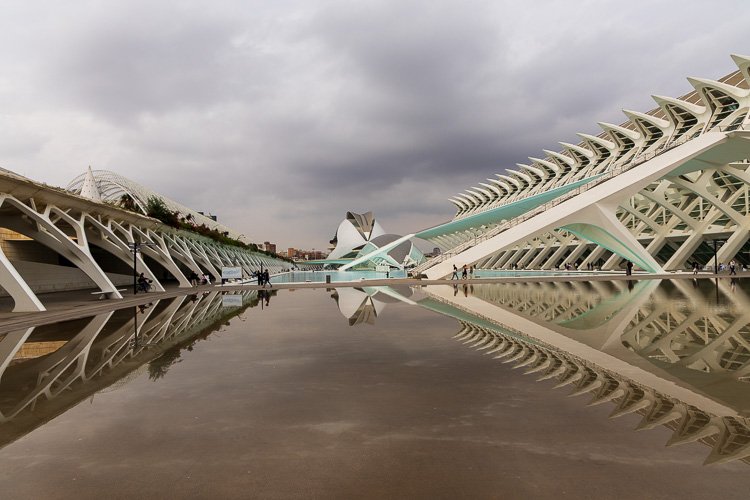
The structures are linked with water pools
On arrival, we signed up for the guided tour of Palau de les Arts (cost €18 pp).
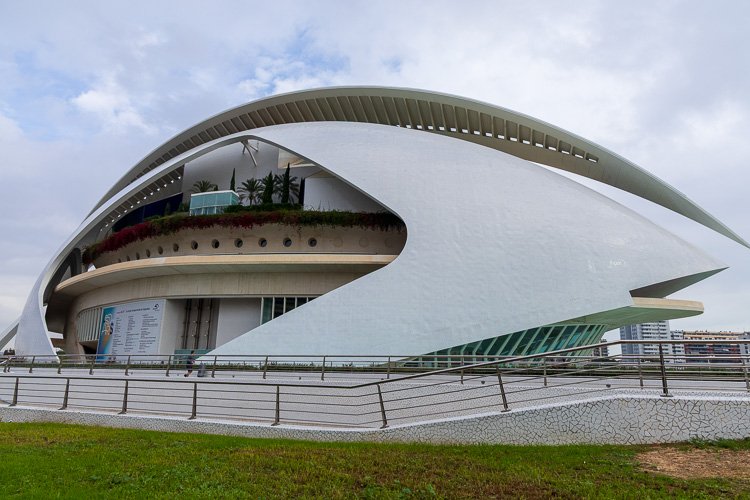
The guided tour was well worth the money. During the 90 minutes, we learnt the building’s history, how it was built and visited the four performance halls.
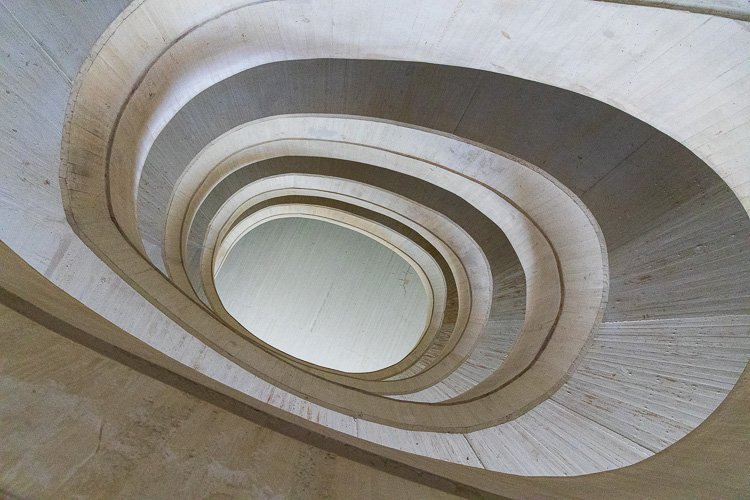
The building combines white reinforced and pre-stressed concrete, structural steel, ceramic mosaic, glass and metal finishes. The concrete staircase was particularly impressive, especially considering the care involved in getting it right: the concrete had to be mixed to achieve the exact shade of white before being poured in carefully planned stages.
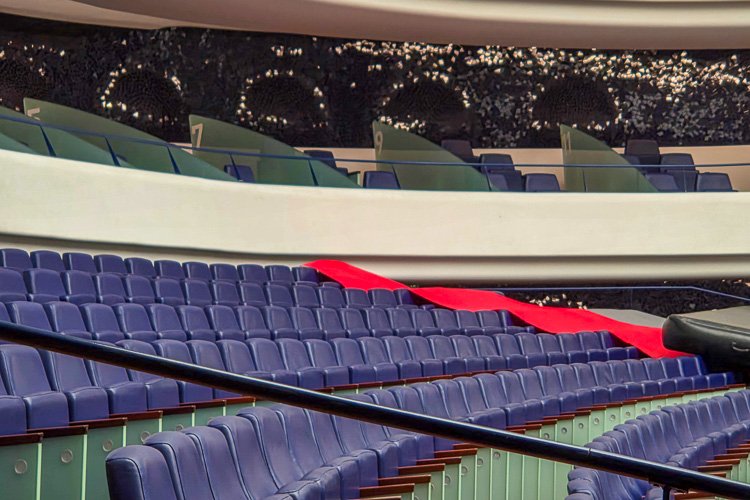
Each of the four concert stages had a slightly different look and feel. The main room, with a capacity of 1,414, has bumps built into the walls to help reflect sound. The bumps also reflect the light – the wall is blue ceramic mosaic; it doesn’t have additional shiny bits; what you can see is just a reflection of the light.
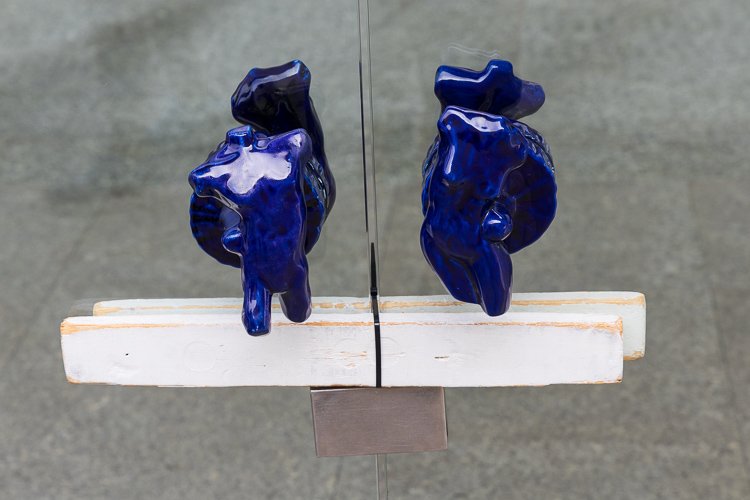
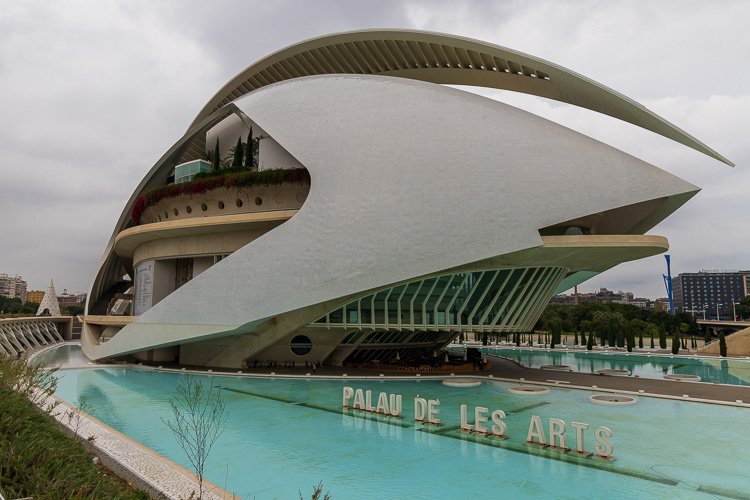
From the outside of the building, you can see an area that looks like a garden. It actually is a small garden with full-sized trees, used as a drinks area during intermission. The attention to detail throughout the building is incredible; even the glass door handles were designed by Santiago Calatrava.
There is some debate about what the Palau de les Arts is meant to represent. Some say a feather or wing, some a boat, ship or fish and others a warrior’s helmet.
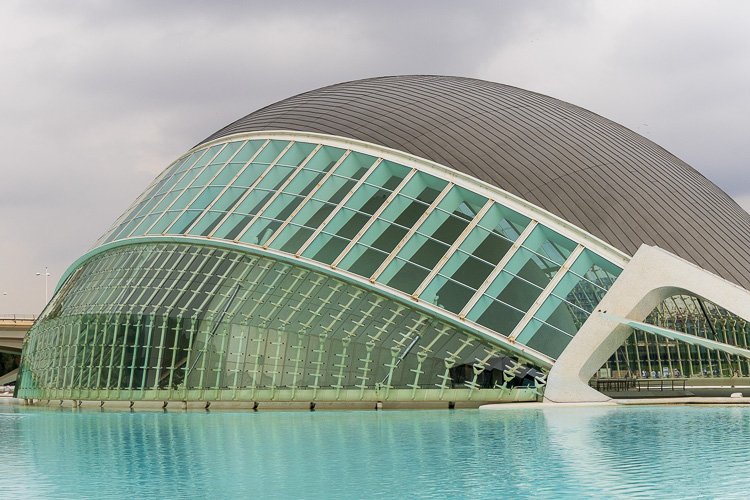
Following the tour, which I would highly recommend, we walked past the other structures in the complex. The L’Hemisferic is shaped like a giant human eye. It is a planetarium, but we didn’t visit it, as reviews suggest it is a bit outdated.
The Museu de les Ciències (on the right in this picture) is an interactive science museum (which we didn’t visit).
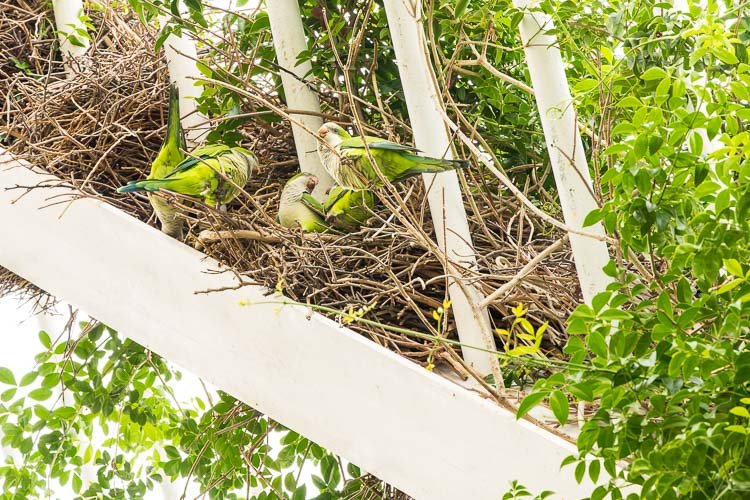
The L’Umbracle (on the left of the picture) is an open-air, palm-lined walkway and sculpture garden above a nightclub and event space. Several families of monk parakeets have made their home in the roof columns.
We popped into L’Agora, but didn’t see any exhibitions we wanted to visit.
We decided not to go into L’Oceanogràfic as we aren’t comfortable with dolphins in captivity, but since it is the largest aquarium in Europe, it might be worth a visit.
After walking around Ciutat de les Arts, we walked up to Mercado de Colón. The attractive building was built between 1914 and 1916. It was restored in 2003 and is now a gastronomic hall, cafe and bar hub.
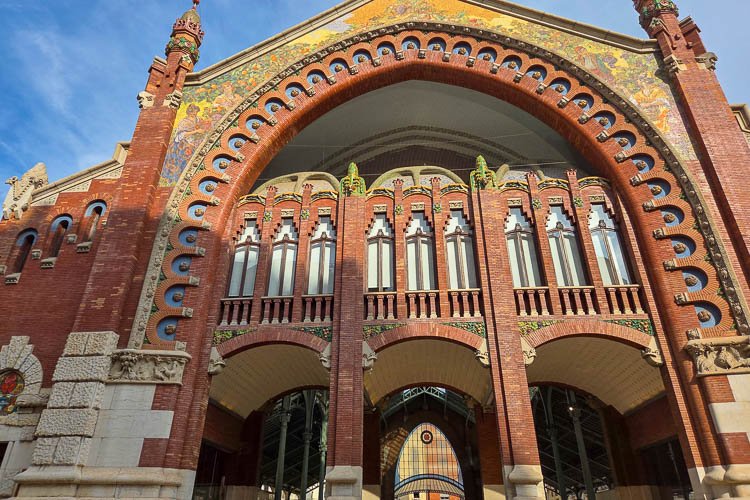
We had a baguette for lunch at Tot Banh Mi on the lower floor and then went back to the hotel for some downtime.
In the evening, we returned to our favourite bar for pizza (€1.50 a slice) and a selection of tapas: hummus (€7), patatas bravas (€6.50), grilled provolone cheese (€7.50) and chicken fingers (€7.50). All very tasty and good-sized portions. It would be easy to make this a habit!
Day 6 – Mopping up Old Town and Home
Since we had an evening flight, we booked a late checkout (4 pm) for €17. In the morning, we walked into Old Town to see a few sights we had missed earlier in the week.
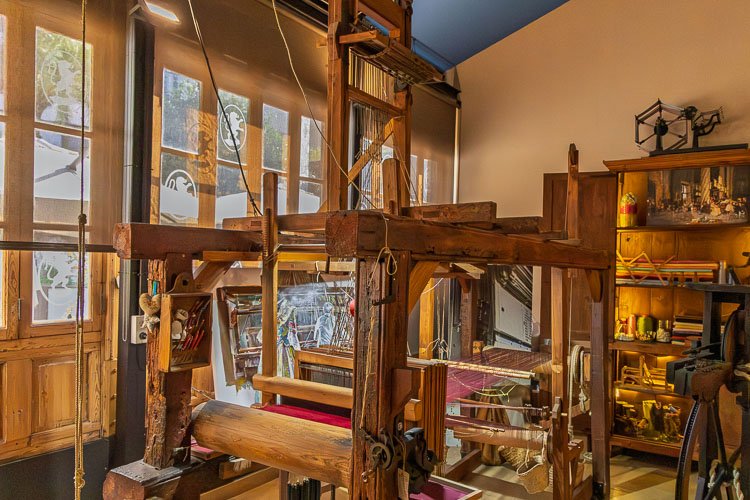
Our first stop was at the Silk Museum (entry €9 pp). I had hoped there would be an audio guide as advertised on the website, but it wasn’t available when I asked. However, good English descriptions were available. The museum included the silk moth life cycle and how silkworms were farmed.
Silkworms, mulberry leaves and knowledge arrived in Valencia in the 14th century. By the 16th century, raw silk became Valencia’s principal crop. By the 18th century, Valencia became Spain’s leading manufacturing centre with 4,000 looms and up to half of the city’s population employed. A silkworm disease in 1854 weakened the sector, and together with the impact caused by machine-driven manufacturing, the silk industry had virtually disappeared from the city by the end of the century.
The museum also included a range of beautiful silk fabrics as well as a display of looms. Apparently, you can sometimes see people working the looms, but it was quiet when we were there.
It was worth a visit to understand how silk played such an important part in Valencia’s history.
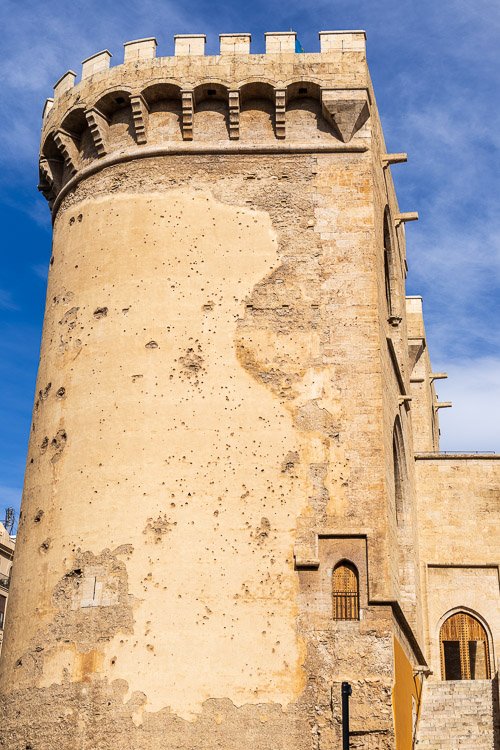
Our next stop was Torres de Quart, which was built in the 1400s as part of Valencia’s city wall. Entry (€2 pp) was included in the Valencia Tourist Card, so we climbed to the top. Not surprisingly, the views were similar to the other towers we had climbed!
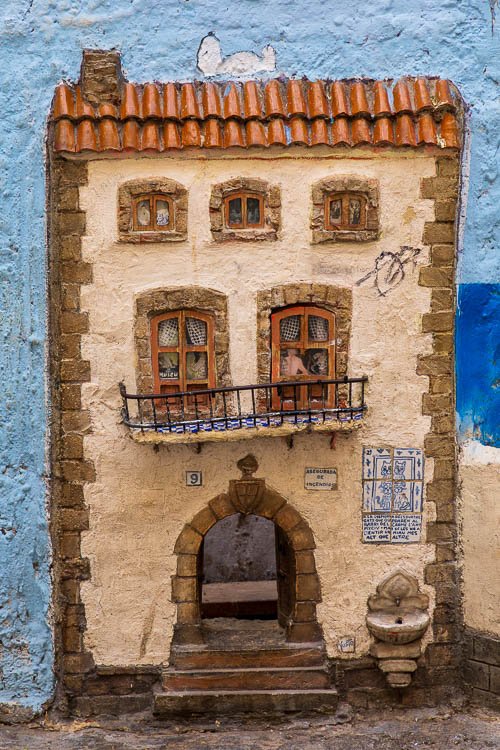
While in this part of town, we had to visit the Cat House! In 2003, artist Alfonso Yuste Navarro noticed a group of cats entering the lot through a hole in the wall. He used ceramics, marble and parts of a shopping trolley to decorate the hole. It looks a little run-down now, but it follows the surprise-around-every-corner nature of Valencia!
Before leaving Valencia, I wanted to try horchata – a chilled drink made from soaked tiger nuts, water and sugar. On the food tour, Isabella told us Horchatería de Santa Catalina was the best place to go for horchata, so this was our next stop.
The place was massive, with two floors of tables, but ordering was confusing, as there didn’t seem to be a menu. I guess the local people who go there know what they want. Eventually I asked the waitress for horchata (€4), and she suggested having it with a farton, which is a traditional long, soft sweet bun dusted with icing sugar, dunked into the drink (€1.55). We also ordered a hot chocolate (€3.95) and a portion of churros (€3.60).
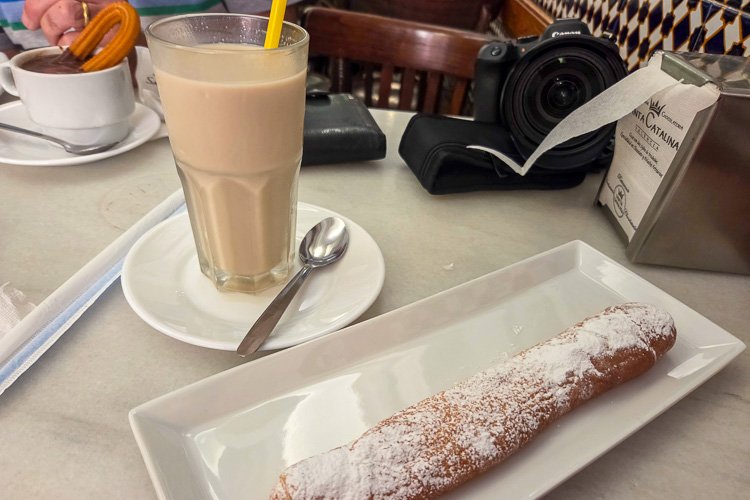
I’m glad I tried the drink – it was like a cold sweetened milk – but I probably wouldn’t rush back. The farton wasn’t as nice as the churros, which were lighter than we have had in other parts of Spain.
The cafe is worth visiting for the decoration alone.
Our final stop before heading back to the hotel to check out and catch the metro to the airport was the Mercado Central. We bought baguettes for lunch (and to take with us on the plane for dinner).
A fitting end to a weekend that was significantly focused on food, drink and local experiences.
Notes about Valencia Tourist Card
We ordered the 7-day Valencia Tourist Card without transport before leaving the UK (€13.50 pp) and chose to pick it up from the central Tourist Office. We definitely made a profit compared to purchasing entries separately.
As we walked most places, it wouldn’t have been worth buying the 72-hour version with transport (€27 pp).
We both thoroughly enjoyed Valencia. It felt like a welcoming city (though we left the day before Spain’s general strike) and, compared with some other destinations, it didn’t feel overly touristy. I’m glad we chose to stay in a more residential area rather than in Old Town, as it gave us a better feel for everyday life in the city. I’d also recommend choosing a hotel when visiting Valencia and other parts of Spain, as there are visible (understandable) protests against tourists taking up local housing through short-term holiday rentals.