
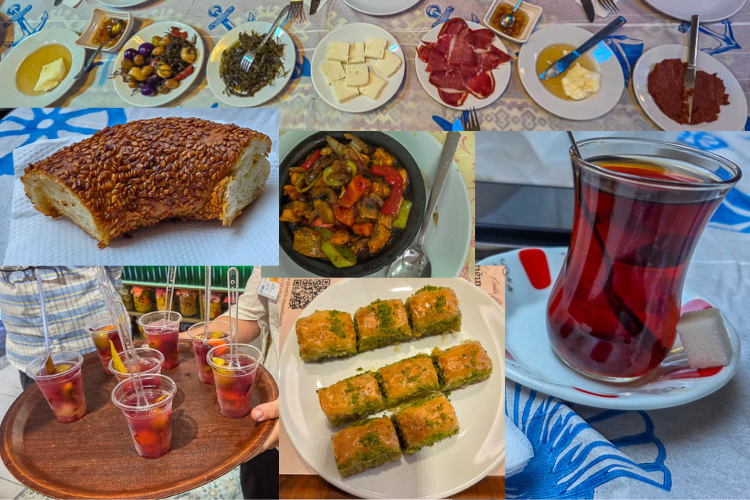
Food always forms an important part of our holidays, and we enjoy learning more about the regional differences. Having experienced an excellent food tour from Culinary BackStreets in Athens last year, we decided to try them again in Istanbul, not least because this is where the company was created in 2009.
Culinary BackStreets offers four tours in Istanbul. We booked the ‘Two Markets, Two Continents‘ tour ($300) before leaving home, as we felt this was the one which would give us the best introduction to the different types and styles of food available.
The tour started at 10:30 in Karaköy, a 25-minute walk across the Galata Bridge.
Once in Karaköy, we met Daphne from Culinary Backstreets. She was born in Istanbul and had just completed an MA in Anthropology, including a focus on food and culture. It really showed! Her passion and knowledge of Istanbul, Turkish food, food culture and history were incredible, and she was a delight to spend time with.
We were joined on the tour by 5 other people from the US.
We started our tour learning about the importance of tea in Istanbul culture and the tea shops in the markets and bazaars.
Originally, Istanbul was all about coffee, with coffee beans arriving in the 16th century. However, after World War I, the Ottoman Empire lost control of Yemen, which made coffee expensive to import. In the 1930s and 1940s, the government promoted tea farming, and tea became an affordable, daily, casual household drink. Coffee is an important part of the culture but is drunk less frequently and to symbolise moments of intention and respect.
It was interesting to learn about the tea shops in all the local markets. The merchants in the markets buy monthly credits from the tea shops. The tea shops constantly deliver tea to the merchants on a metal tray with the tea already poured into glasses.
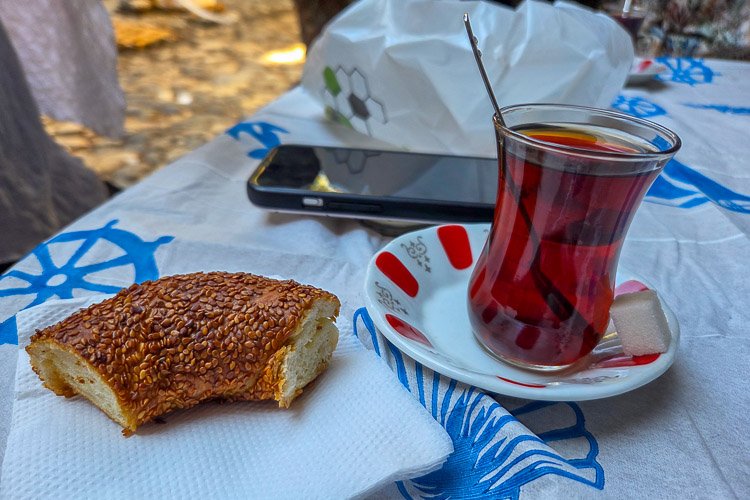
We had the opportunity to try the tea with a piece of a smit, a tasty sesame-seed bread ring . Smits are for sale in street vans all around the city. The tea was perfect for me, black tea leaves served weak without milk.
Following the tea stop, we walked through several street markets to our next stop for breakfast. It was interesting to see how similar shops clustered together; a whole street was dedicated to power tools, and another to ironmongery.
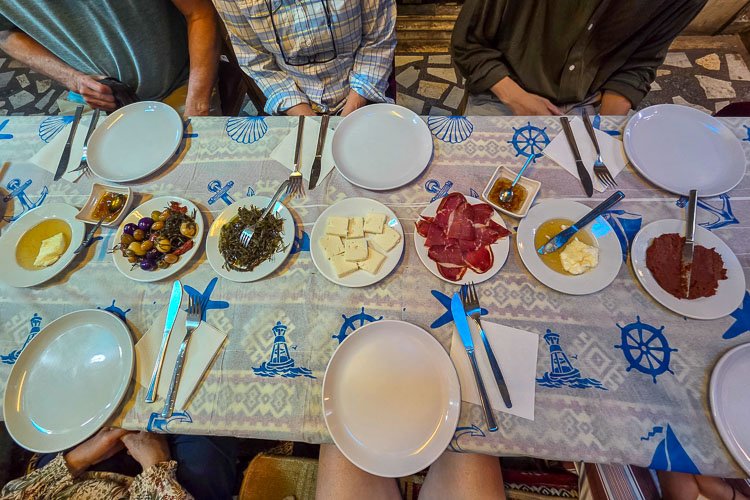
At our breakfast stop, we sampled kaymak (rich clotted dairy cream with honey), olives, zahter (fresh wild thyme), white cheese, pastırma (dried beef), jam and acuka (red pepper, tomato and walnut paste) with bread rolls. I really enjoyed everything (except the olives – not a fan) and particularly liked the mix of honey and cheese. A good start to the tour.
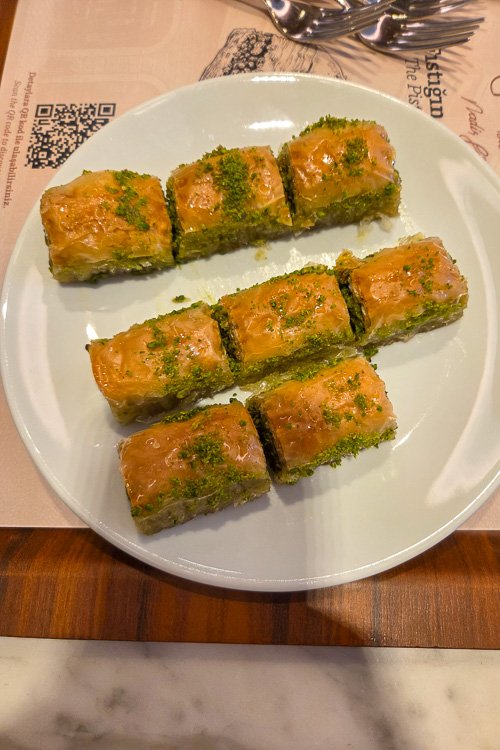
We then walked through the busy streets to Karaköy Güllüoğlu, a famous family-run large baklava store. The baklava is made in a nearby factory and sold in the shop or exported around the world.
We tried the traditional pistachio baklava on the tour (we returned later in the week to sample more) along with a traditional Turkish coffee. The baklava was very good – not too sweet and strong in pistachio. Personally, I struggled with the coffee. I suspect it is an acquired taste. It was very thick, and after only a few sips, you hit the coffee grounds.
Our last stop on the European side was at Beşaltı Kirvem Tantuni & Künefe. Tantuni is made with thin strips of fried beef kept warm on the side of a massive circular pan with a concave depression in the middle. When an order comes in, the cook scoops up some beef and reheats it in the middle of the pan with oil and water, creating a thin gravy. The warm beef is put on top of a lava (a flatbread) with tomatoes, onions dusted with sumac, parsley and spices including cumin and red pepper. The lava is rolled into a long torpedo and served with pickles and mint – very tasty. We also tried Ayran, a popular drink made from yogurt, water and salt.
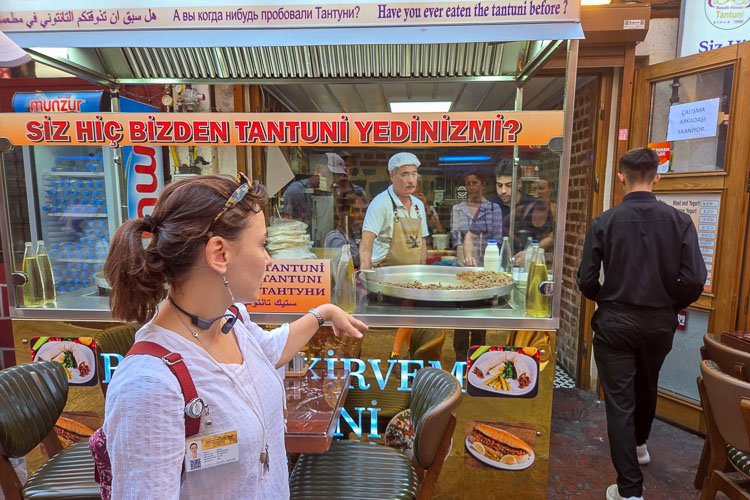
Tantuni Preparation
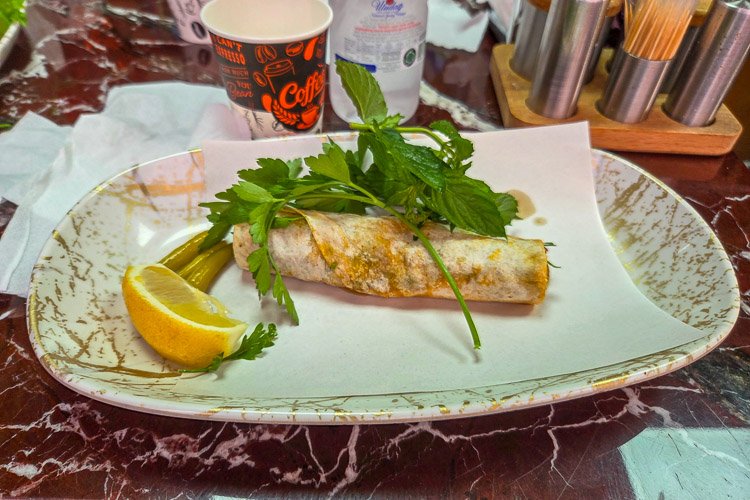
Tantuni with mint, lemon and chilli
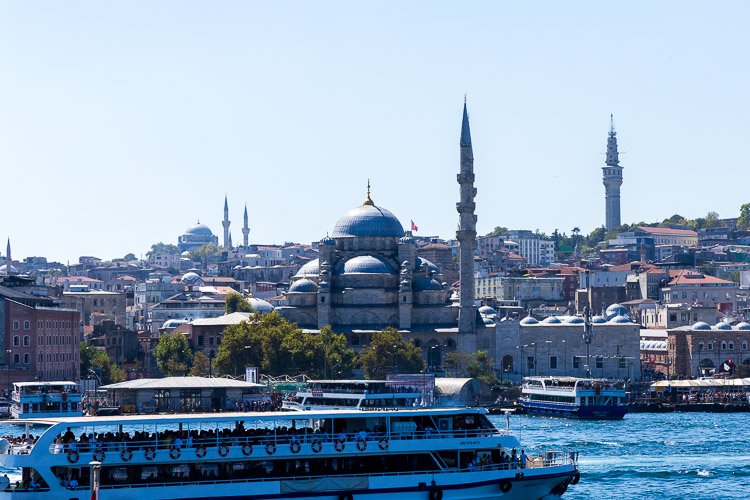
It was now time to catch the Bosphorus ferry across to the Asian side of Istanbul. A one-way ticket was included in the tour price, and Daphne organised us through the barrier. We went up to the top deck and admired the view.
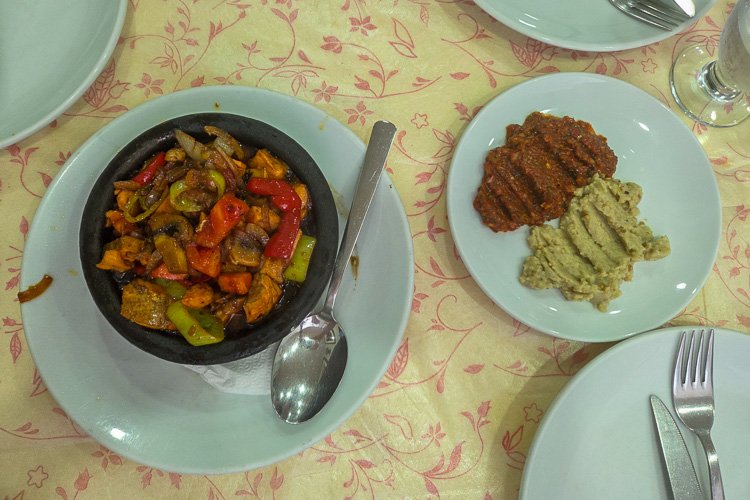
Once we reached the Asian side, our first stop was a fish restaurant, where we tried a delicious salmon stew with a side of sardines. The sardines were served as a pair, one on top of the other, for a bigger bite.
Walking through the backstreets, we ended up at a place that looked like the sort of kebab shop I’d have headed to after a night out when I was at college (many years ago!). As it turned out, Daphne had done exactly the same in her younger days – it was her post-drinking stop of choice, too.
The meat was mixed with tomatoes, peppers and oregano, and served in a torpedo roll. We were each given a small bite to taste.
It was quite tasty, but I didn’t like the texture and didn’t eat the ‘meat’. I certainly didn’t want another piece.
It turned out to be kokoreç, lamb intestines wrapped tightly around a skewer of sweetbreads and other offal!
I’m glad I tried it, but wouldn’t go back for more. It is a popular post-drinking stop, as kebabs are generally made with high-quality meat – which is too good to not appreciate after you have had a few drinks.
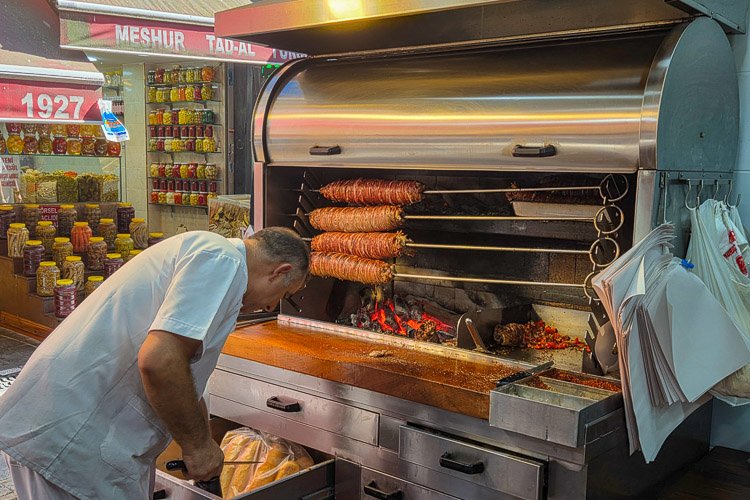
Our next stop was at a shop with hundreds of colourful jars – it looked like an old-fashioned sweet shop. In fact, it was a pickle shop. Turkish pickling dates back thousands of years as a way of extending the harvest throughout the year and to cut through meat-heavy dishes to provide balance and aid digestion.
We were each given a small cup of pickled vegetables and pickle juice. I enjoy pickled red onions at home, but I found the pickle juice a bit strong.
The jars on the walls of the shop were full of different pickled vegetables.
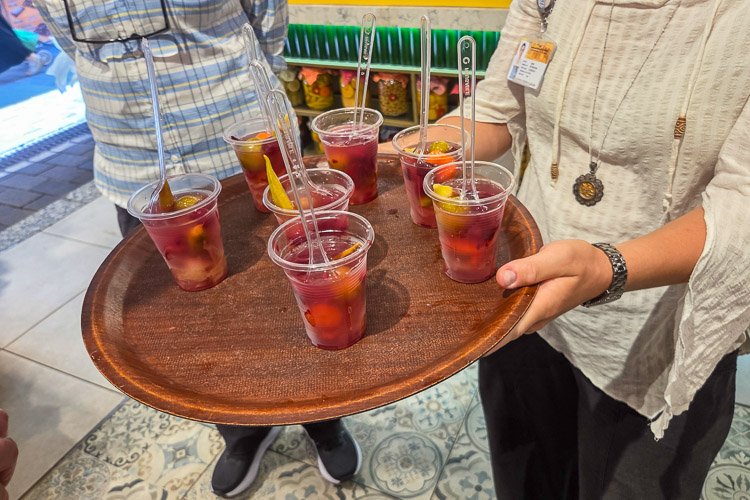
Pickle juice sample
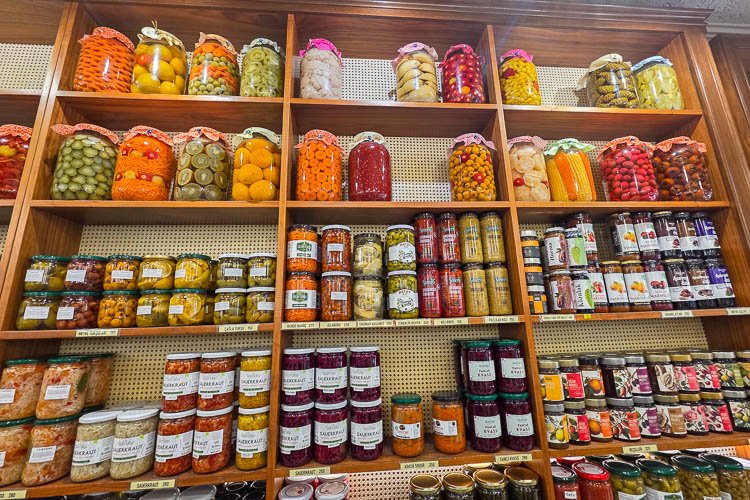
Pickled vegetables
Following the pickling, we went to a shop to sample different types of nuts and dried fruit.
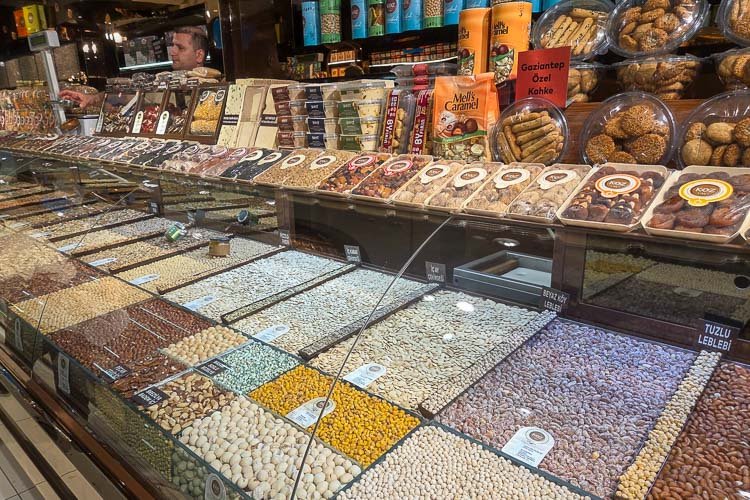
Nuts
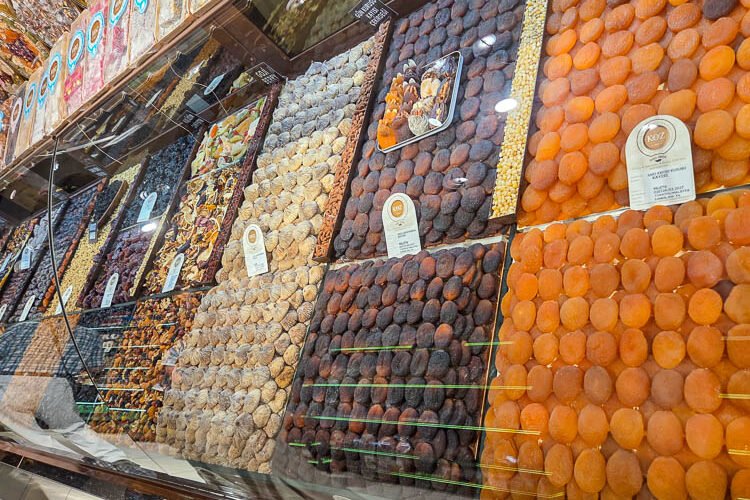
Dried fruit
Our final stop was at a delicatessen where we tried stuffed vine leaves. I found these less tough than the vine leaves we had had in Athens.
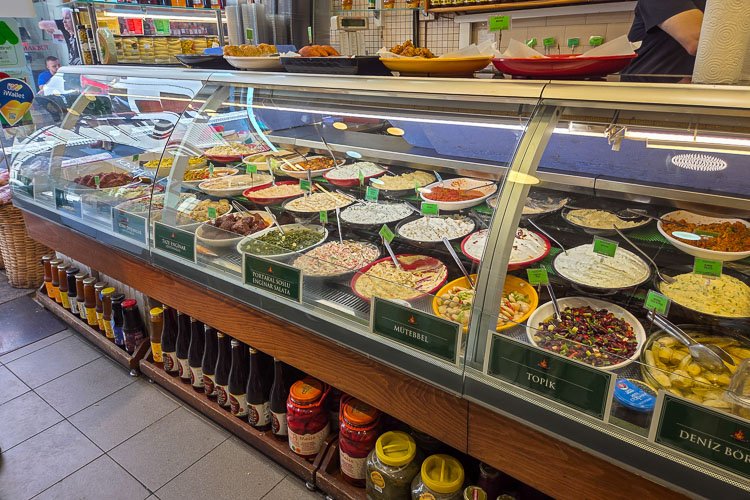
By this time, it was 15:45, and it was time to say goodbye to Daphne and our fellow guests.
It had been a thoroughly enjoyable way to spend our first day in Istanbul. We learnt so much about the history and culture of the food we tried, as well as Istanbul’s history, which served us well for the rest of our trip.
Daphne suggested a few things we could explore on the Asian side after the tour. My only criticism of the whole trip was that, as first-time ferry users, we weren’t entirely sure which of the many ferry piers we needed to use to get back to our hotel. However, we quickly figured it out.
I would highly recommend taking this tour.
Tipping our guide
Be aware that cash is required to tip your guide.