
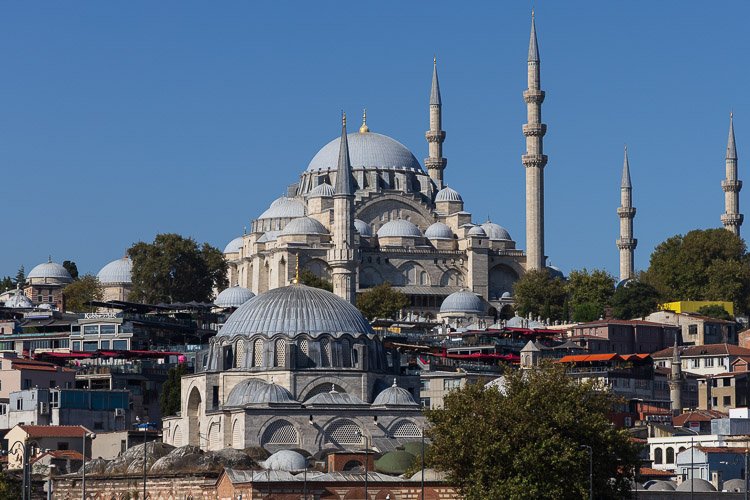
In September 2026, we spent a week in Istanbul. We went for a week because the flight is long, and we wanted to take it slower than our usual frenetic pace. In retrospect, it was probably a little too long, but I would still recommend the city, perhaps combined with another part of Turkey.
We got a good deal with BA Holidays – flights and 8 nights in a 4-star hotel in the centre of the old town for £1575 for two.
Day 1 – Arrival
Day 2 – Food Tour
Day 3 – Cistern and Mosques
Day 4 – Topkapi Palace
Day 5 – Sick Day
Day 6 – Grand Bazaar, Spice Market, Baklava
Day 7 – Golden Horn, Süleymaniye Mosque
Day 8 – Free Walking Tour, Rooftop Bar
Day 9 – Home
Costs in this blog
I have included costs where possible in this blog – in Turkish Lira (TL) and GBP. However, as inflation in Turkey is running at over 30% in 2026, prices may be higher for your trip. Unless stated, the costs given are for two.
Day 1 – Arrival
For a change, our flight was at the sociable time of 13:30, so we arrived in Istanbul at 17:30 or 19:30 local time. Passport control was pretty quick; I guess we waited around 15 or 20 minutes.
We didn’t have checked bags, so we soon met our transfer booked through Welcome Pickups. This wasn’t quite what we expected; many transfer companies have the same pickup location. We waited about 15 minutes for another transfer guest to arrive, and then we were escorted to the parking deck where we found our taxis. The taxi was clean and spacious, and an hour later we were at Hotel Sultania (cost £36).
Following a lovely welcome from the reception staff, we were directed to our first-floor room. Each room is dedicated to a specific Sultana (wife, daughter or mother of an Ottoman Sultan), with an image and a scroll explaining her story. We were also given samples of Turkish Delight and two bottles of water.
The room was spacious, and the bed looked comfortable. As it was late, we quickly unpacked and headed up to the 6th-floor restaurant (Olive) for a meal.
As we looked out over an amazing view of the Bosphorus Bridge, lit in multi-coloured lights, we had a tasty meze starter, followed by kebabs. Several times during this holiday, we were slightly disappointed by the food because of preconceived expectations. These kebabs were slices of meat in a tomato sauce with peppers, yoghurt, and large quarters of fresh tomato. The food was fairly tasty but not as tasty as the kebabs (with pita and spicy sauce) we are used to at home.
Finally, it was time for bed as we had an early start the next day.
Notes about arrival
1. Money – we got cash from an ATM at the airport, something we frequently do when arriving in a foreign country. This was a big mistake on this trip. Not only was the ATM commission high, but we also found many money exchange booths in Istanbul charging no commission and offering better exchange rates. Taking Pound Sterling would have been a better option.
2. Transfer – normally we get public transport from airports, but since we were arriving late, we weren’t sure how confident we would be walking the streets in the dark with suitcases. In retrospect, public transport and a walk to the hotel would have worked perfectly well and would have been considerably cheaper (400 TL / £6.15).
Day 2- Food Tour
Wanting to discover more about the food of Istanbul, we had booked the ‘Two Markets, Two Continents‘ food tour with Culinary Backstreets ($300) before leaving home.
The tour started at 10:30 in Karaköy, a 25-minute walk across the Galata Bridge.
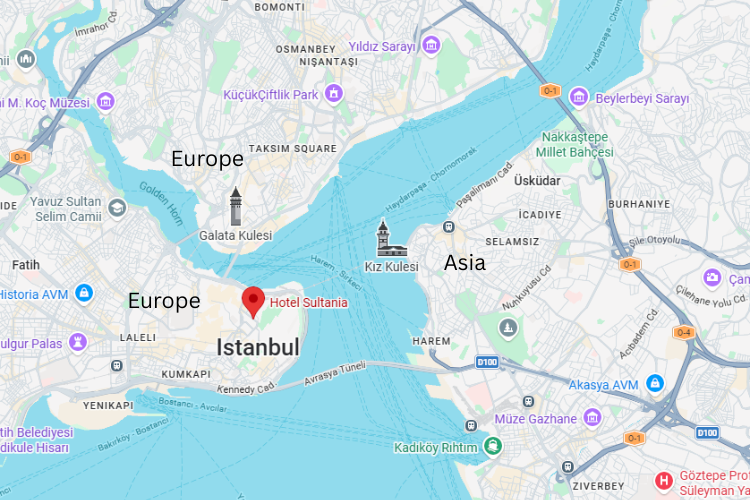
This was our first introduction to different areas of Istanbul. Our hotel was in the old town in Europe; the food tour started in Europe and later moved to Asia.
Regular ferries crossed between the different parts, or you could walk across the bridge from one side of Europe (Eminönü) to the other (Karaköy).
Throughout our trip, we learnt that Istanbul residents view the different parts as ‘Istanbul’, regardless of whether they are in Europe or Asia.
Read more about what we experienced and learnt on the highly recommended food tour here.
The tour finished on the Asian side, so we caught the Bosphorus ferry back to our hotel to change before heading out for drinks.
Notes about public transport
- Payment. You can pay for ferries, trams and the metro by tapping your credit card at the turnstile. We decided to purchase an Istanbulkart card (at the yellow or blue vending machines near any terminal) and load it with cash. We only needed one Istanbulkart card for the two of us; we just tapped twice at the turnstile. You have to purchase the card, but the trips are cheaper than using a credit card. It is also more reliable. In theory, you can top up your Istanbulkart with a credit card, but we couldn’t find a machine that worked with our card. We didn’t have problems with credit cards anywhere else in Istanbul. The Istanbulkart card costs 165 TL.
- You only need to tap on entry.
- When catching the ferries, there are several piers – check the digital LED screens above the gates for the destination and departure times. The ferries run on time, so don’t expect them to arrive early and don’t hang around getting on.
Although we had plenty of food on the food tour, we still needed a small top-up. We had a drink (tasty Turkish wine) at the nearby Salute Bar and Restaurant before walking 3 minutes to Şehzade Cağ Kebap, a traditional fast-food kebab restaurant featured in many guidebooks.
After a short wait for a seat at the shared pub-style benches, we looked at the menu.
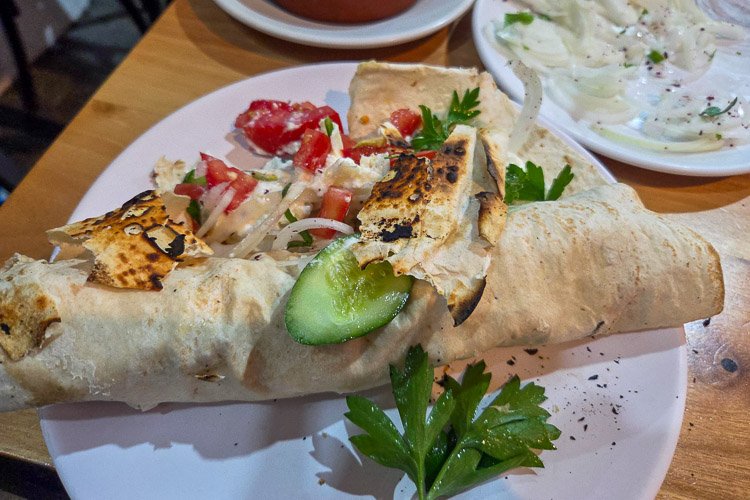
It was very simple – two kebab options: cag kebab, 2 lamb skewers with pita (620 TL) or cag kebab wrap, 2 skewers of lamb wrapped in a pita (620 TL). In addition, a waiter continuously walked around with sides. He placed all sides on the table unless you said you didn’t want one. We could choose from salad (tomatoes, greens, cucumbers and peppers) (160 TL), hot spicy tomato dip (160 TL), or buffalo yoghurt (180 TL). A plate of onions was free.
We felt a little pressure to decide quickly (it was a fast-food place), so both chose the wrap. Looking around, most people were eating the skewers. I suspect this is because the skewer option makes it easier to add the sides to a do-it-yourself wrap.
The food arrived quickly and was tasty. On the food tour, we learnt that Turkish food is based on the flavours of ‘naked’ meat or fish without additional flavourings, so it was less herby/spicy than we expected. Diners use the sides to add more flavouring.
A fitting end to our first day.
Day 3 – Cistern and Mosques
Today we decided to hit the main tourist sites, a short walk from the hotel. We grabbed a coffee/smoothie and a croissant from BARK Coffee and Bakery (on the main tourist route, so quite expensive) and went to the Basilica Cistern. We fully expected to queue, but we walked straight in (10:30 am on a Sunday) cost 2,250 TL (£34.50) each.
This was just amazing and, for us, easily the best thing we saw in Istanbul.
In 532 AD, this underground water reservoir was built to store water for the Great Palace of Constantinople and surrounding buildings as an emergency reserve during droughts or sieges. Aqueducts provided it with a continuous supply of fresh water from the Belgrade Forest.
As you descend into the building, you start to understand its size.
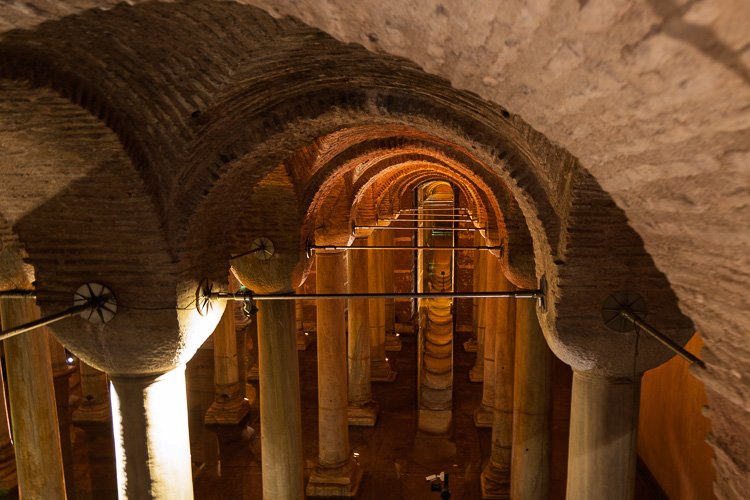
A shallow layer of water covers the floor of the cistern, reflecting the lights and making the building even more spectacular.
The cistern is 138 metres long, 64 metres wide and 9 metres high, with a storage capacity of 80,000 cubic metres.
The roof is supported by 336 marble columns, each 9 metres tall, arranged in 12 rows of 28 columns.
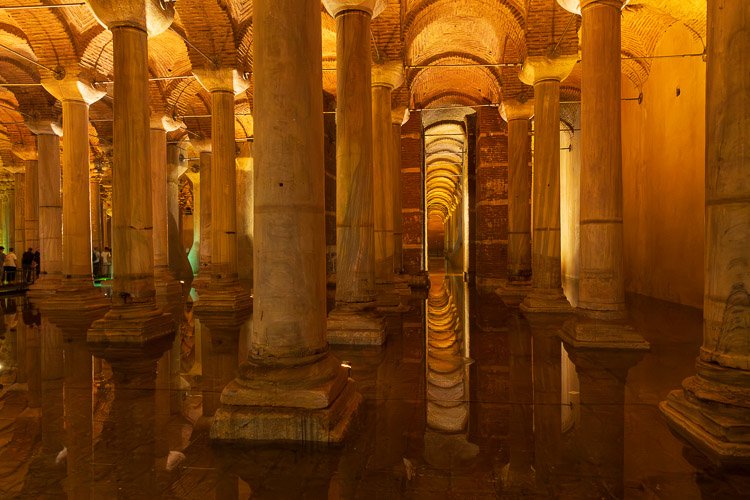
It was constructed by approximately 7,000 slaves, many of whom died in the process.
Many columns were repurposed from earlier Roman structures, including a couple of iconic Medusa head columns.
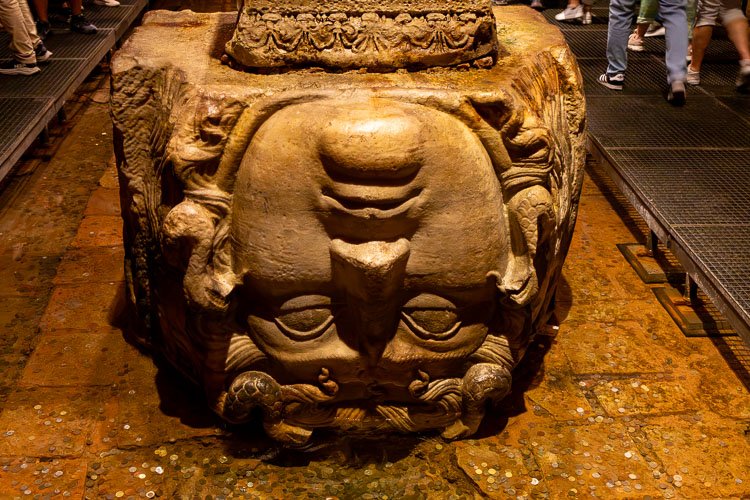
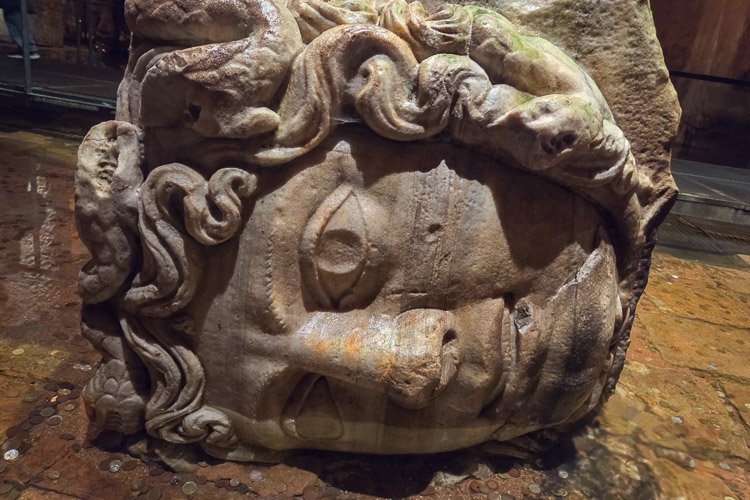
After the Ottoman conquest of Constantinople, the cistern fell into disuse and was largely forgotten. It was rediscovered in 1545 by the French scholar Petrus Gyllius. The Ottomans, recognising its significance as a historical monument and water source, cleaned and maintained it for the Topkapi Palace gardens and nearby buildings.
It opened to the public in 1987 as a museum. Can you imagine being the first to find this incredible monument?
We spent around 40 mins in the Basilica. There was a steady stream of visitors, with guards encouraging everyone to keep moving, but we still managed to find the occasional spot to stop and take it all in. If you can, I’d recommend allowing yourself time to appreciate this remarkable place. It really is a memorable building.
Our next stop, just across the road, was the Blue Mosque.
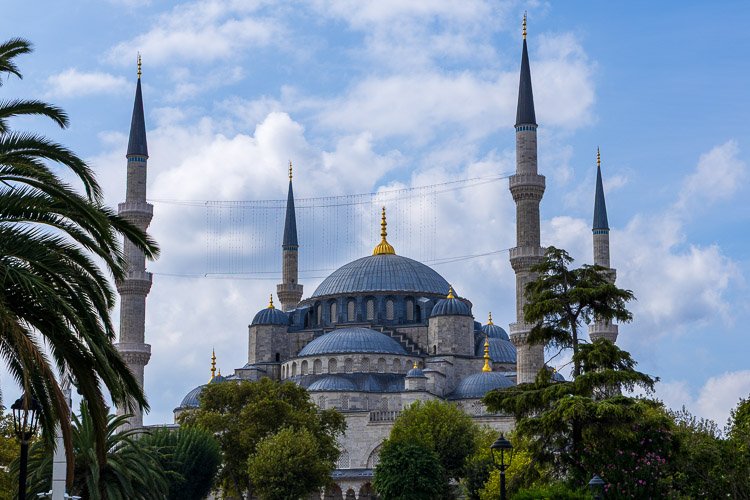
The Blue Mosque (or the Sultan Ahmed Mosque) was commissioned by Sultan Ahmed I and built between 1609 and 1616.
The mosque features six slender minarets, causing controversy at the time because the sacred mosque in Mecca was the only other mosque with six minarets. It was considered an arrogant display of pride for a regular imperial mosque. Sultan Ahmed I resolved the scandal by funding the addition of a seventh minaret to the Grand Mosque in Mecca.
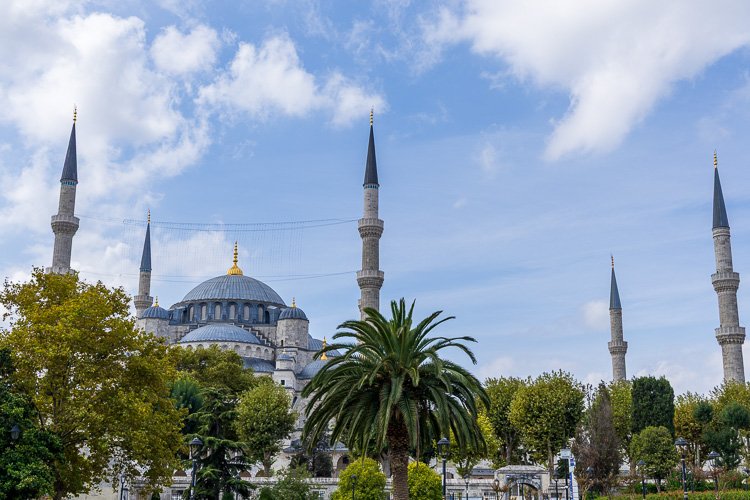
The mosque is free to enter, with no advance tickets or bookings required. It is open from 8:30 am to 7 pm (May to September) or to 5 pm (October to April). However, it is closed to non-worshippers five times daily for approximately 90 minutes during prayer sessions and on Friday mornings until 2:30 pm.
Clear signage indicates the tourist entrance on the south side through a courtyard. A board here shows the current day’s closure windows (it changes daily).
As with all the mosques in Istanbul, you need to wear appropriate clothing:
- Shoulders covered (men and women)
- Knees covered (men and women)
- Hair covered (women)
- Shoes removed before entering
Cover-ups and scarves are available at the entrance if needed.
Once in the courtyard, we joined the short queue (10 mins) to enter. Put on your headscarf before the queue passes the cover-up loan booth. Take off your shoes at the entrance door. It is worth carrying your shoes into the mosque, as you exit via a different door.
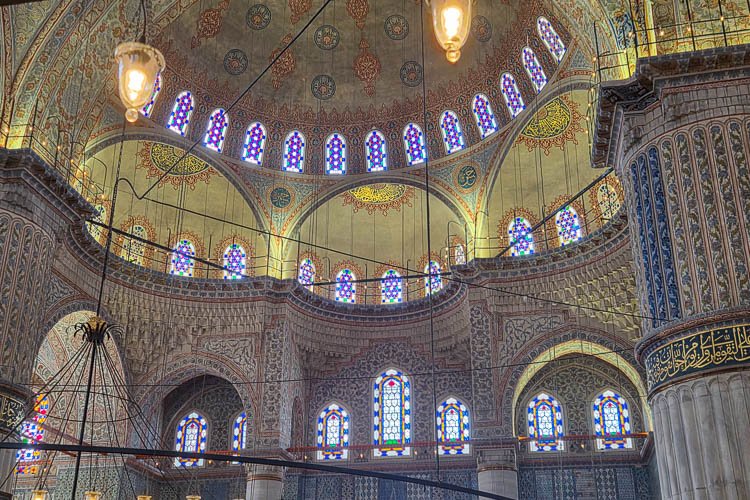
As you would expect, the mosque is very impressive. It has a massive central dome 43 meters tall.
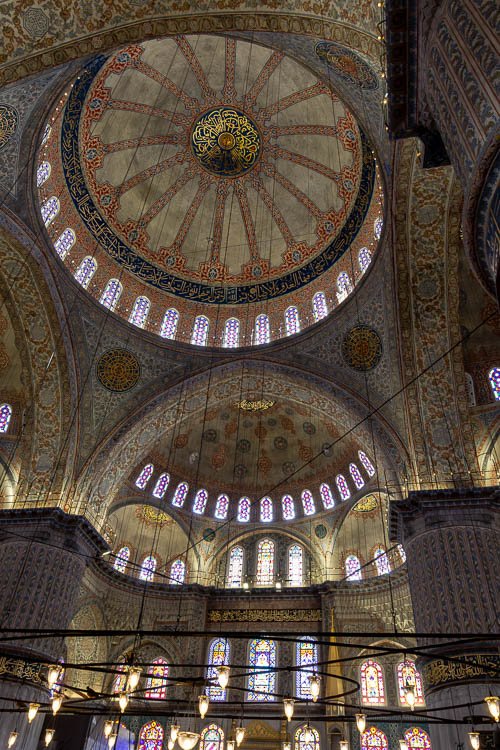
It is decorated with over 20,000 hand-painted ceramic tiles (Iznik) in shades of cobalt blue, turquoise and green, featuring tulips and roses. These tiles give the mosque its popular name, ‘Blue Mosque’.
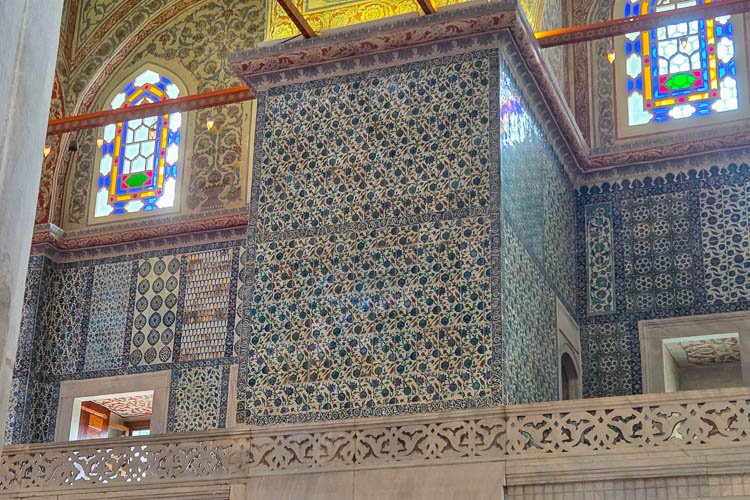
The soft light is achieved through 260 stained-glass windows.
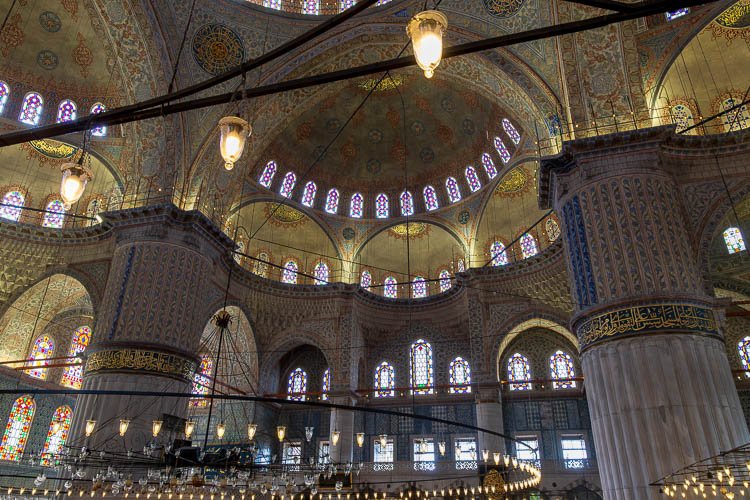
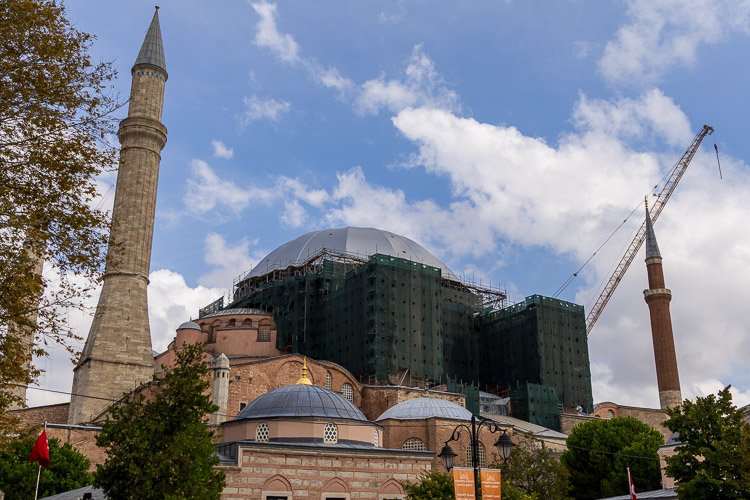
The Blue Mosque was worth a visit, but 10 minutes looking around was long enough for us. The other big draw in this area is the Hagia Sophia. The Hagia Sophia was originally built as a Christian cathedral in 537AD. It was converted into a mosque in 1453, turned into a museum in 1935, and became an active mosque again in 2020.
Tourists pay €25 to access the upper gallery. After reading reviews, we decided not to go in as it is currently undergoing extensive renovations.
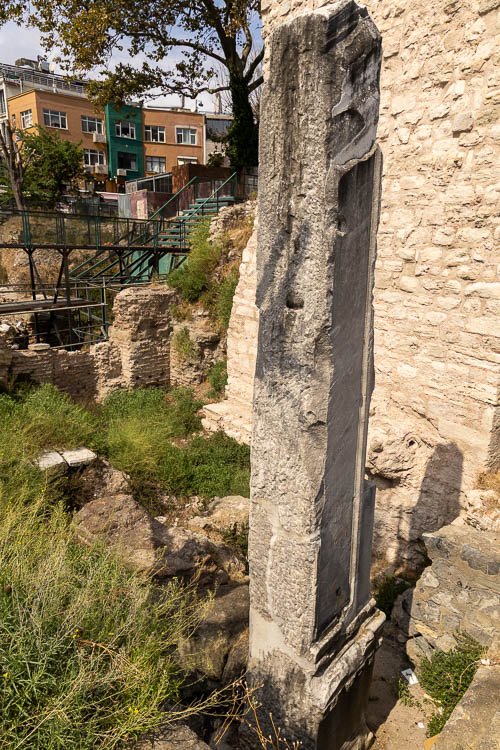
More interesting (to us) was the nearby zero- mile marker. Originally built in the 4th century by Emperor Constantine the Great, it was used as a reference point to measure the distance of all roads to the capital; Constantinople became the Eastern capital of the Roman Empire on May 11, 330 AD and remained the sole capital of the empire after the western parts were lost in the 5th century.
Only a stone pillar of the original four-arched monument remains; however, it reinforced how important Constantinople was within the Roman Empire – something I hadn’t appreciated despite my interest in all things Roman.
From the mile marker, we walked along the remains of the Hippodrome – the Roman sports arena built in 203 AD and enlarged by Constantine in 330 AD when he made the city his capital. It originally held 60,000 to 100,000 spectators for chariot races and political gatherings. Now, it is a wide pedestrian park with monuments.
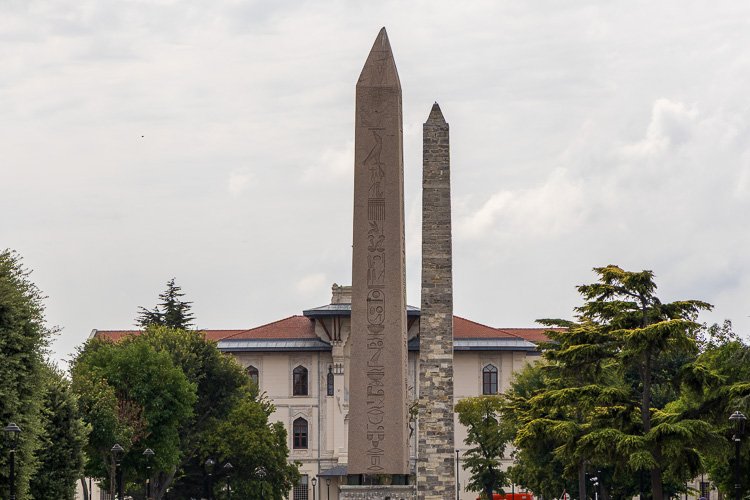
The nearest column is the Obelisk of Theodosius, made from a single piece of pink granite. Originally Egyptian, it was erected in 1600 BC at the temple of Karnak, and brought to Constantinople in 390.
The further column, Constantine’s Obelisk, was a stone-built obelisk once covered in gilded bronze plaques.
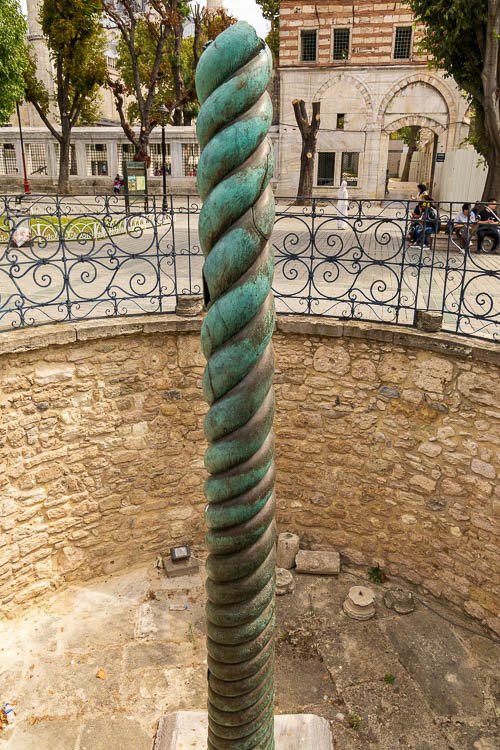
The Serpent column, a bronze column from Delphi, Greece, was also brought to Constantinople in the 4th Century. At the top, a golden cauldron was attached by coils each in the shape of a serpent.
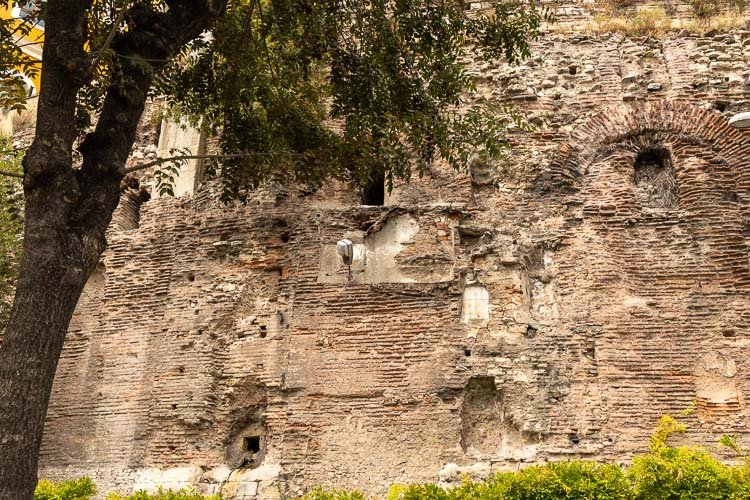
Walking around the neighbourhood behind the Hippodrome, we discovered the Sphendone Remains, the retaining wall of the former spectator tiers. It just showed how incredible it must have been.
Back to the hotel to rest, and then out to dinner at Seher Restaurant. It was near the hotel and had good reviews. We had Turkish moussaka (no white sauce and fewer layers than the Greek version) and kebab – both tasty, with good service. Free Turkish tea and baklava too!
Day 4 – Topkapi Palace
Today we went to Topkapi Palace, also in the Old City and near our hotel. It wasn’t entirely obvious how to get into the Palace – it was up a narrow path just inside Gülhane Park. Ignore the ticket booth just inside the park – you should buy tickets directly at the Palace.
Notes about Topkapi Palace
- The palace is open between 9 am and 5:30 pm every day except Tuesday.
- We purchased the combination ticket for 2750 TL (£42) pp, which includes the main palace courtyards, the Harem quarters and Hagia Irene.
- Download the audio guide included with the tickets before entering the complex. The QR code is shown on boards by the ticket office. We didn’t wait for it to finish downloading before going in, and we couldn’t access it all as internet access is limited inside the palace. It was worth having it, as there aren’t many written English descriptions on-site.
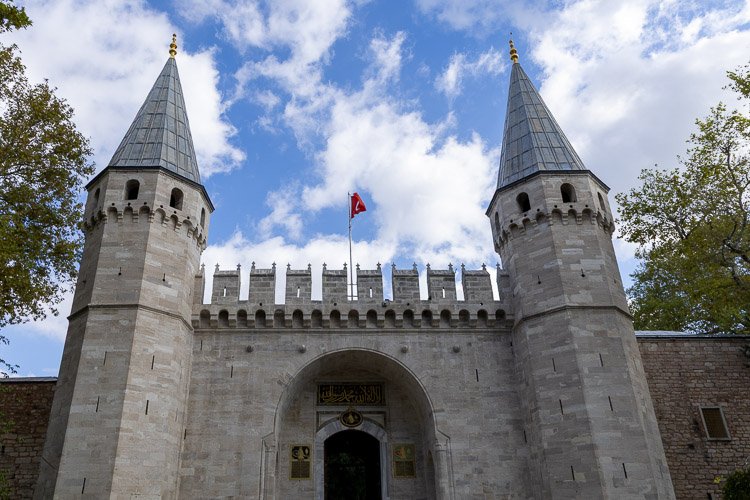
The Topkapi Palace was commissioned by Sultan Mehmed the Conqueror in 1459 and completed in 1465. Until 1853, it was the primary residence and administrative centre of the Ottoman Empire. In 1924, it was converted into a museum.
The palace has four courtyards, organised from public service areas in the outer ring to deeply private royal chambers and the Sultan’s personal library in the inner sanctum. It sits on a peninsula overlooking the Bosphorus, the Golden Horn and the Sea of Marmara.
The buildings in each of the courtyards got more and more elaborate and impressive. In my opinion, the Baghdad Pavilion (built in 1638) in the fourth courtyard was every bit as beautiful as the Blue Mosque – and more intimate.
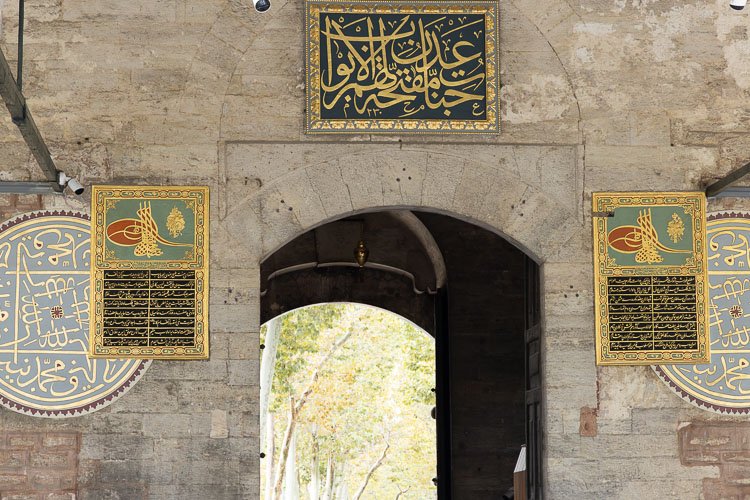
Gate of Salutation
Second and main ceremonial entrance
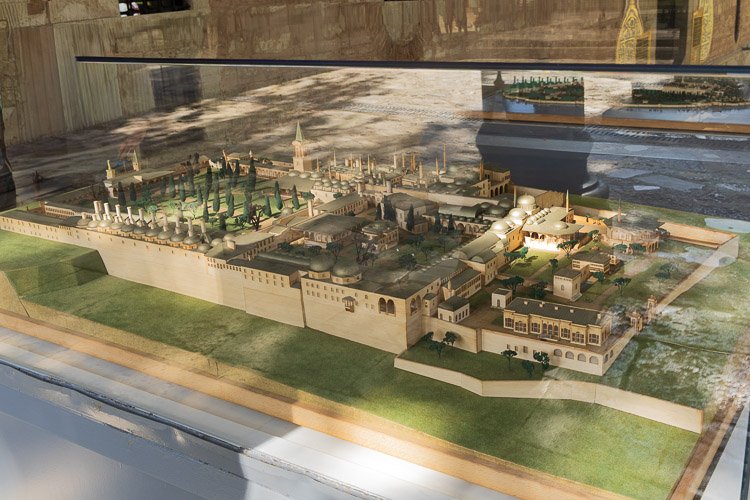
Model of Topkapi Palace
Architectural scale model
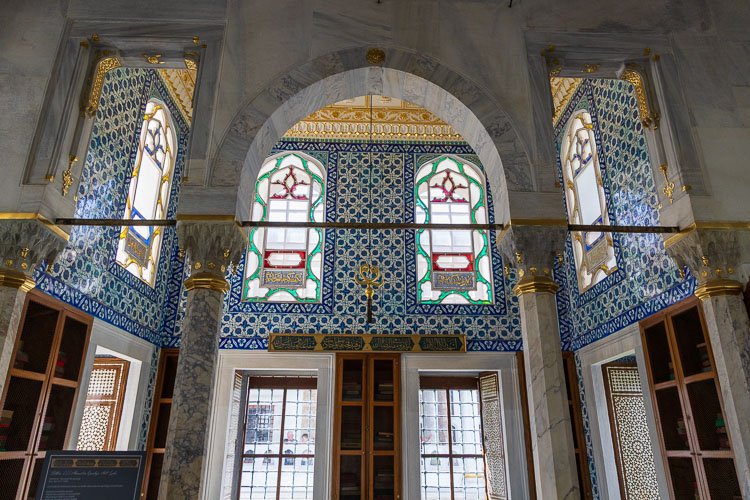
Baghdad Pavilion
Built in 1639 to celebrate victory in Baghdad campaign
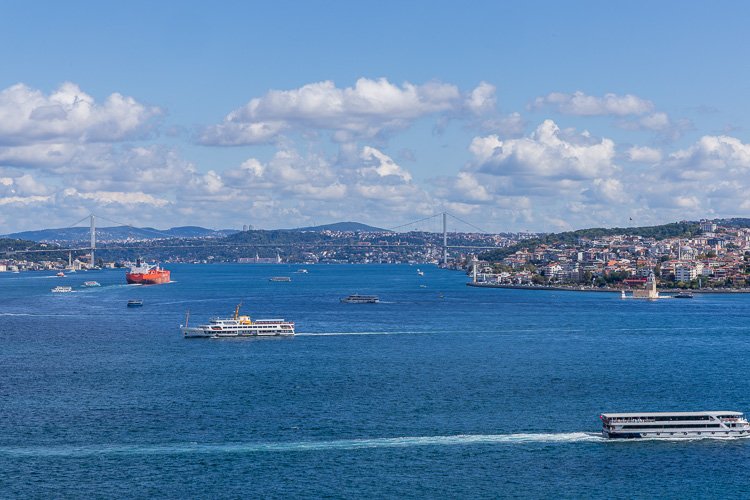
View of Bosphorus Strait
From Topkapi Palace
We joined the queue (fast-moving) to enter the Imperial Treasury to see, amongst other jewels and golden thrones, the Spoonmaker’s Diamond, a massive 86-carat pear-shaped diamond encircled by 49 brilliant-cut diamonds, and the Topkapi dagger, a gold-hilted ceremonial weapon adorned with large emeralds and a built-in watch under the hilt, made in 1747.
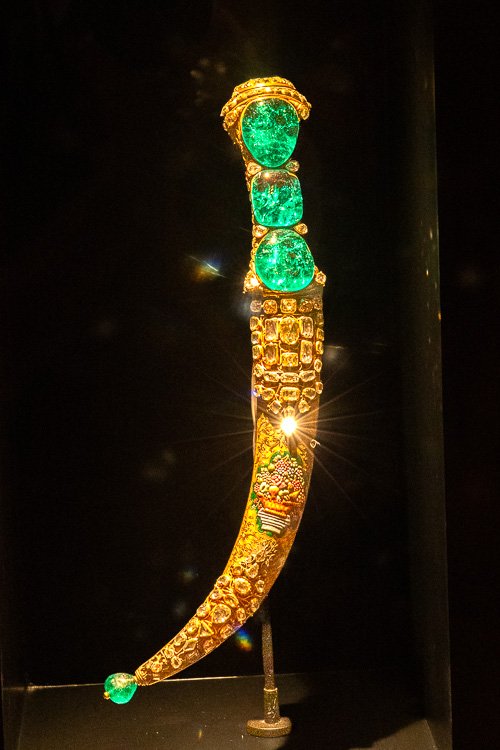
After exploring the four courtyards, we stopped for a drink and cake at the cafe in the 1st courtyard, before entering the Harem. This was still within the Palace, but was a separate entry (part of the combined ticket) and was a maze of buildings to the West of the 1st Courtyard
The Harem expanded significantly in the 1540s when Suleiman the Magnificent moved his household there. It housed the Sultan, his family, consorts and hundreds of female slaves and eunuchs (a boy or man who has been castrated) – at its peak there were over 1,000 residents. It is a vast labyrinth of more than 300 rooms, including baths, mosques, a hospital, laundry quarters, courtyards and gardens. It included a school that raised the mothers, wives and future sultans of the Empire. During the 16th and 17th centuries, clever women rose through the harem ranks to hold huge political influence, becoming kingmakers and de facto rulers of the empire.
Unfortunately, the section on the harem hadn’t downloaded onto our audio guide, so we missed the explanations and wandered from one room into the next without really knowing what we were looking at. I would have liked to know more about the stories behind the Harem’s occupants, but I don’t think the audio guide covered that – it was more factual.
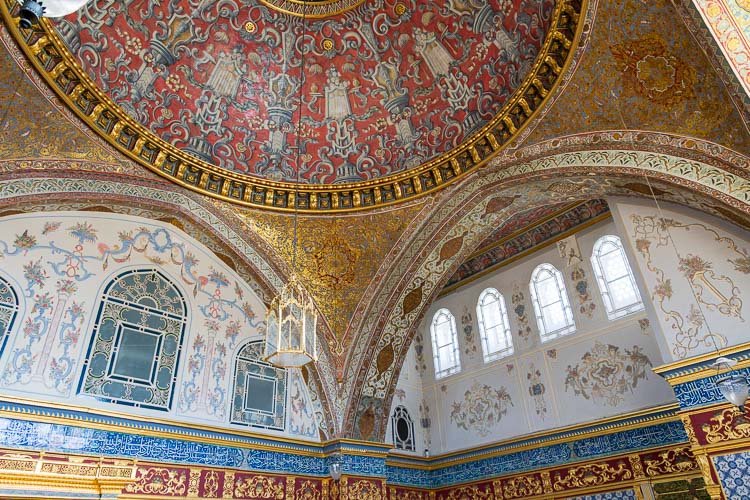
Imperial Hall
Largest ceremonial room inside the Harem
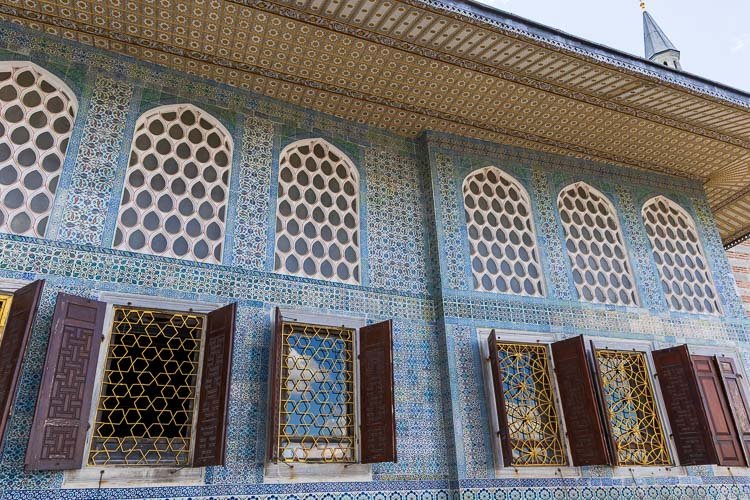
Twin Kiosks
Housed the Sultan's sons in strict seclusion
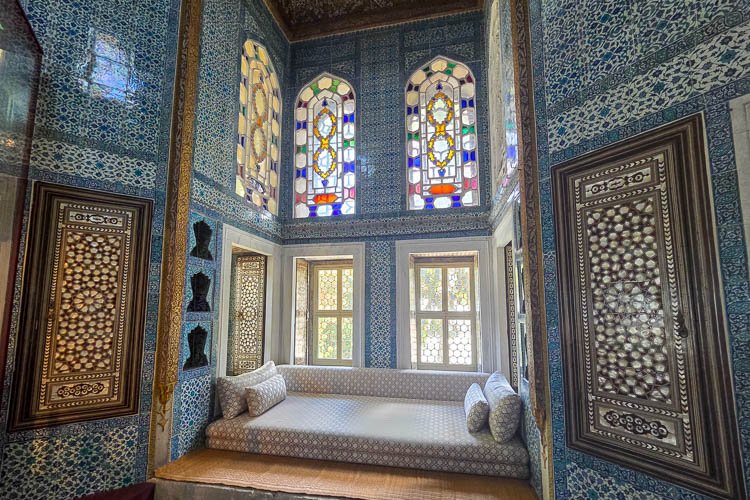
Room in the Harem
I think this was used by one of the Concubine
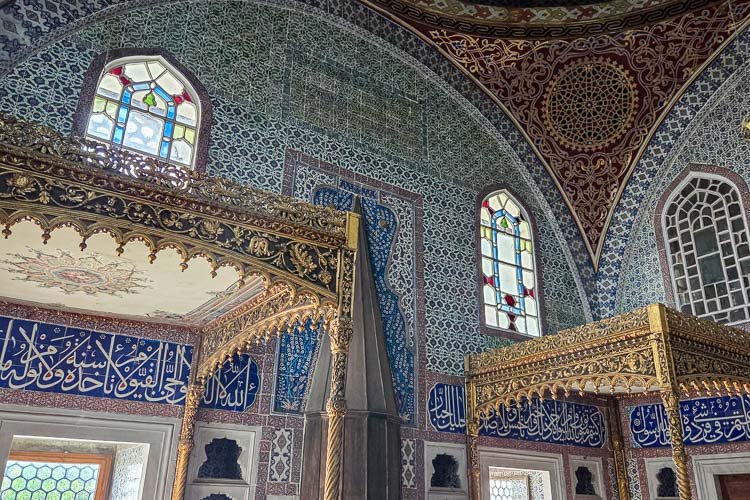
Privy Chamber of Sultan Murad III
One of the oldest (1578) and best preserved rooms
We spent over 4 hours exploring the beautiful palace and the associated Harem. We could have stayed longer (particularly if we could have listened to the audio guide), but S was starting to feel ill, so we went back to the hotel.
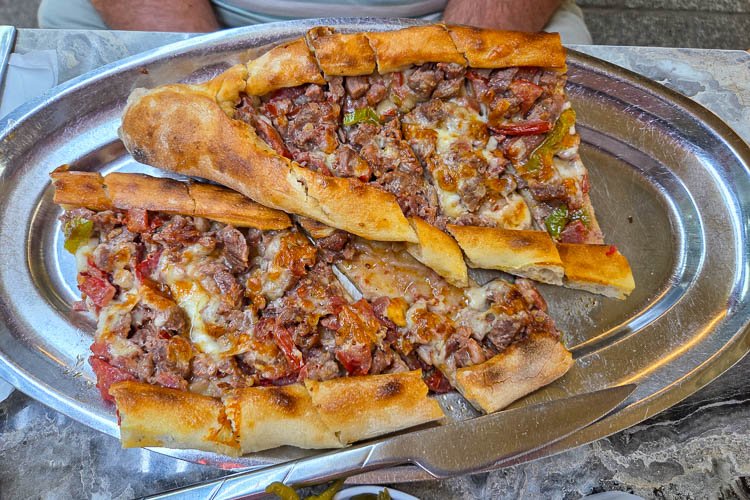
For dinner, we went to Hocapaşa Pidecisi, a popular place for Pide (like a pizza with a base of Turkish flatbread and no tomato sauce), £16 for two pide. Highly recommended, but be aware they close around 6:30 pm.
After eating, we walked down to the riverside to admire the views.
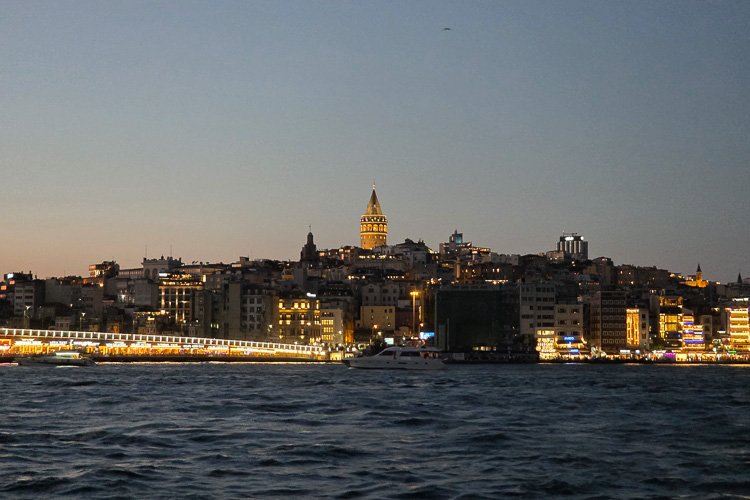
Galata at Dusk
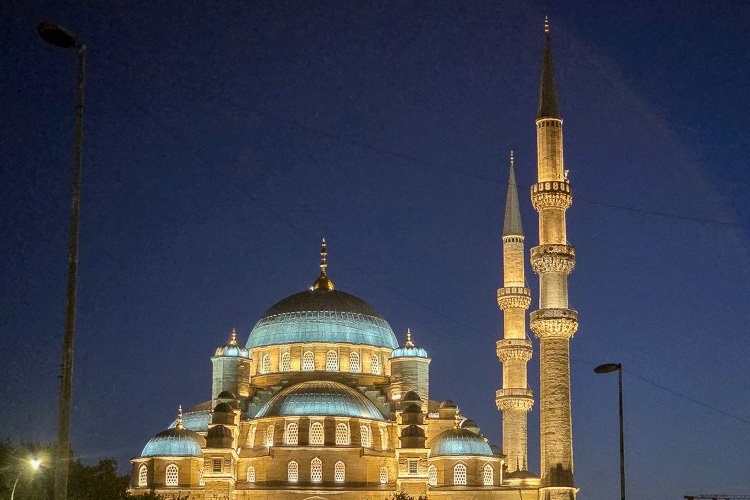
New Mosque at Dusk
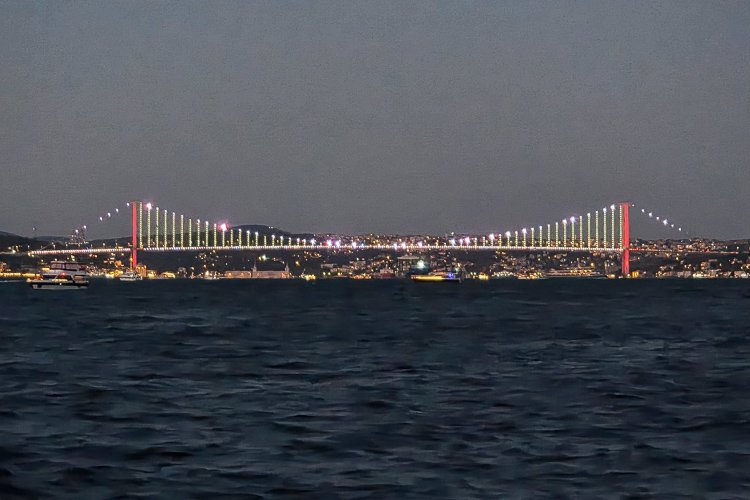
Bosphorus Bridge at Dusk
Day 5 – Sick Day
S still wasn’t feeling well, so we just stayed near the hotel today. Fortunately, we had a fairly large, comfortable room.
Day 6 – Grand Bazaar, Spice Market, Baklava
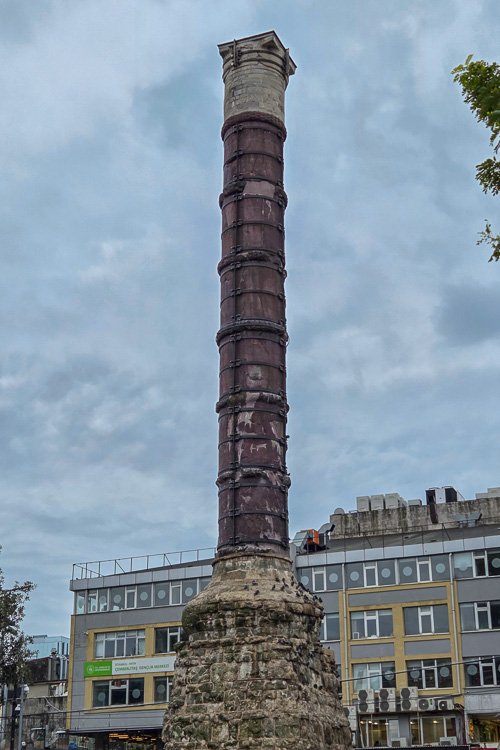
Feeling better today, we had breakfast at The Coff’s and then walked to the Grand Bazaar, passing the Column of Constantine on the way. Erected in 330 AD to celebrate the founding of Constantinople and the Byzantine Empire, it is one of Istanbul’s oldest surviving monuments. It is made from several blocks of Egyptian porphyry, a dark-purple, semi-precious stone found in southern Egypt. It has been restored many times, and at the end of the 17th century, iron hoops were used to offer additional support.
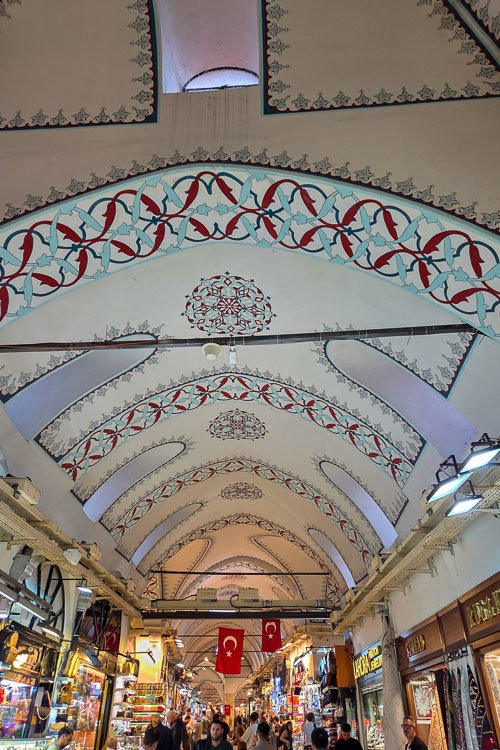
The Grand Bazaar was founded in 1455 by Sultan Mehmed II (Mehmed the Conqueror) shortly after the Ottoman conquest of Constantinople. Expanded and restored many times, it now has over 4,000 shops, 20 entrance gates and covers 30,700 square meters. It gets between 250,000 and 400,000 visitors. The bazaar’s shops are traditionally organised by trade and craft guilds, e.g. fine jewellery, handwoven carpets, ceramics, leather goods, textiles.
It was interesting that you had to pass through a security gate on entry.
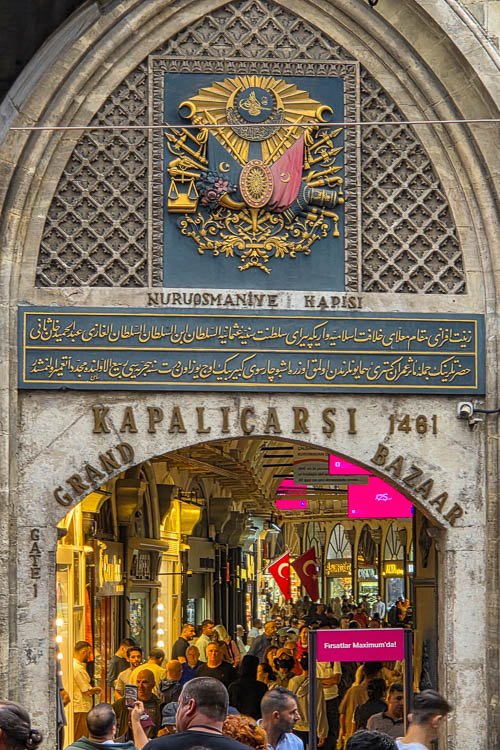
Neither of us enjoys shopping, so we weren’t tempted to buy anything or try bartering. We had also been told that the bazaar is one of the more expensive places to purchase goods in Istanbul. I find it amazing that the shops thrive, but apparently they benefit when cruise ships are in. The elaborate, vast building was worth seeing – it was very easy to get lost.
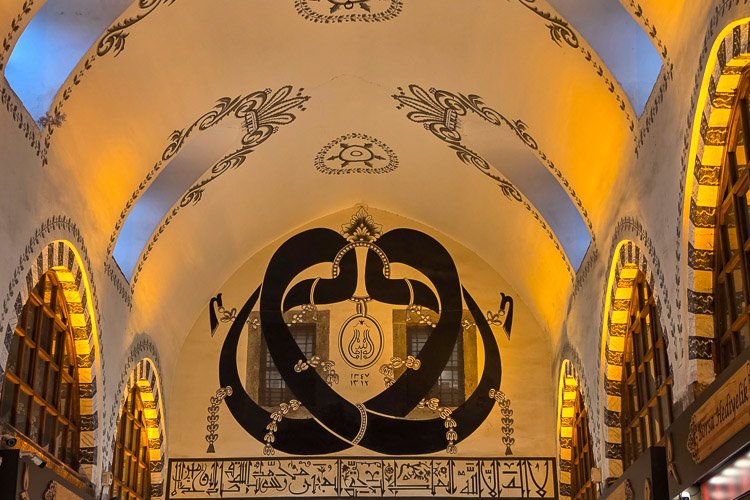
From the Grand Bazaar, we went to the Spice Bazaar, completed in 1664 as part of the New Mosque complex. It was built to fund the mosque’s upkeep. After major restoration, it now has 85 shops arranged along two legs of an L-shaped building with an impressive roof. I’ve been to a few spice bazaars before, but usually outside and in less ornate surroundings.
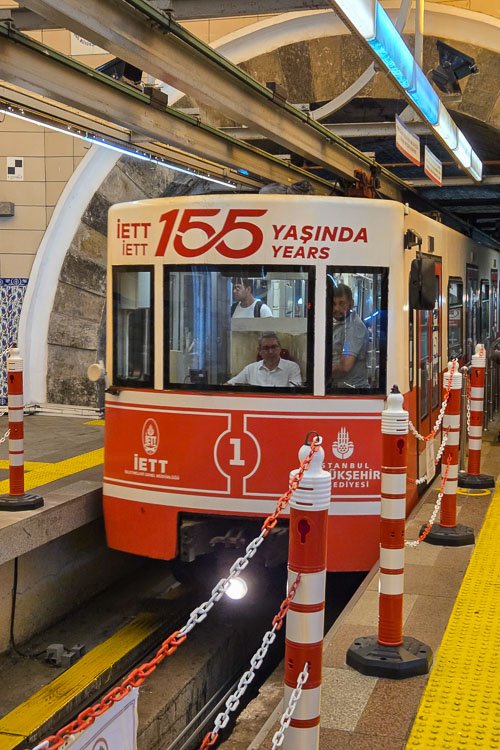
After exploring the bazaars, we went to NO:12 Coffee Sultanahmet for a fresh baguette lunch. We then walked over the Galata Bridge and took the funicular from Karaköy up to Beyoğlu to save ourselves a steep uphill climb.
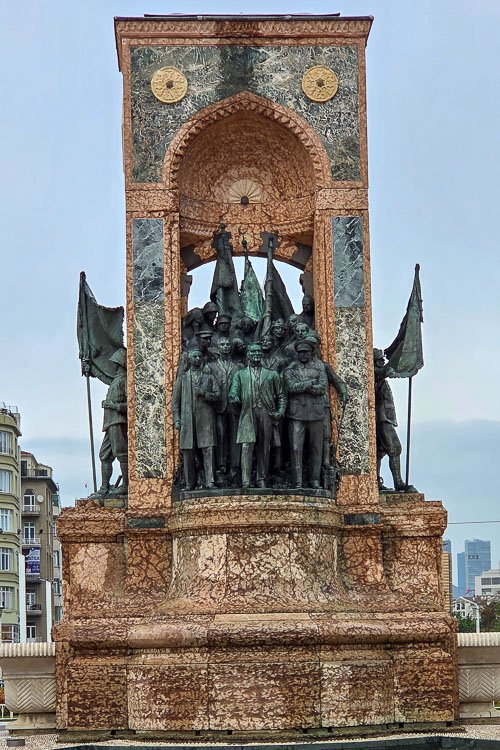
It was interesting to walk through the modern shopping district to Taksim Square. The Republic Monument (1928) in the middle of the square honours Mustafa Kemal Atatürk (the founding father of the Republic of Turkey) and the founding of the modern Turkish Republic in 1923.
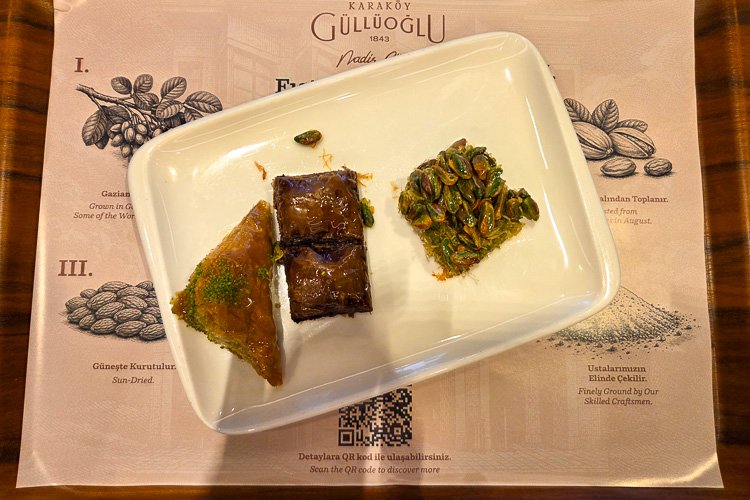
Walking down the hill to the waterfront, we decided to sample more baklava at Karaköy Güllüoğlu, since we enjoyed our initial tasting on the food tour. All the samples were delicious, but I really enjoyed the chocolate baklava, 60 TL per piece.
Catching the ferry back to the hotel, we wanted something a bit plainer for dinner, so we went to Genco’s Fish for fish and chips.
Day 7 – Golden Horn, Süleymaniye Mosque
Wanting to see more of Istanbul, we caught the ferry from Karaköy (the port on the other side of the Galata Bridge) to Eyüpsultan. It took about 40 minutes. There was no top deck, but plenty of seating inside—a pleasant journey with great views of the buildings and neighbourhoods along the river. On this trip, we were able to identify some of the seven hills of the old city:
- 1st hill: Topkapi Palace, Hagia Sophia and Sultan Ahmed (Blue) Mosque
- 2nd hill: Column of Constantine and Nuruosmaniye Mosque (which we saw when we visited the Grand Bazaar and during the free walking tour)
- 3rd hill: Süleymaniye Mosque and Istanbul University
- 4th hill: Fatih Mosque, built on the former site of the Church of the Holy Apostles. We didn’t see this one.
- 5th hill: Yavuz Sultan Selim Mosque. We didn’t see this one.
- 6th hill: Mihrimah Sultan Mosque, visible from the river
- 7th hill: From Aksaray towards the Sea of Marmara, behind the Golden Horn, around the corner from where we were, so we didn’t see it.
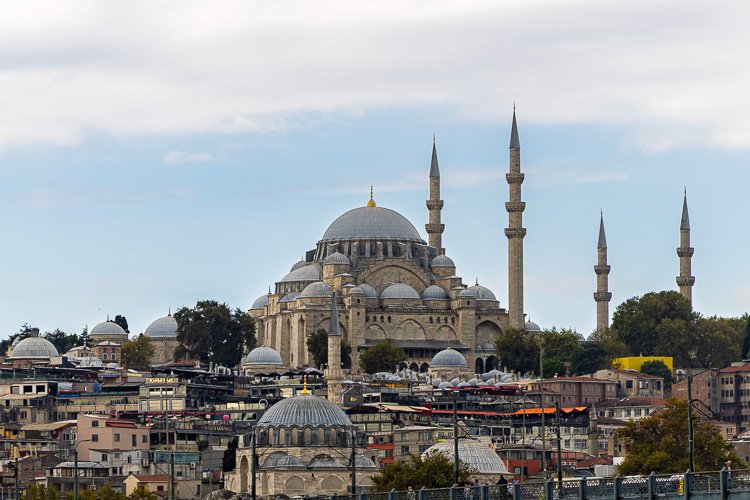
Suleymaniye Mosque from River
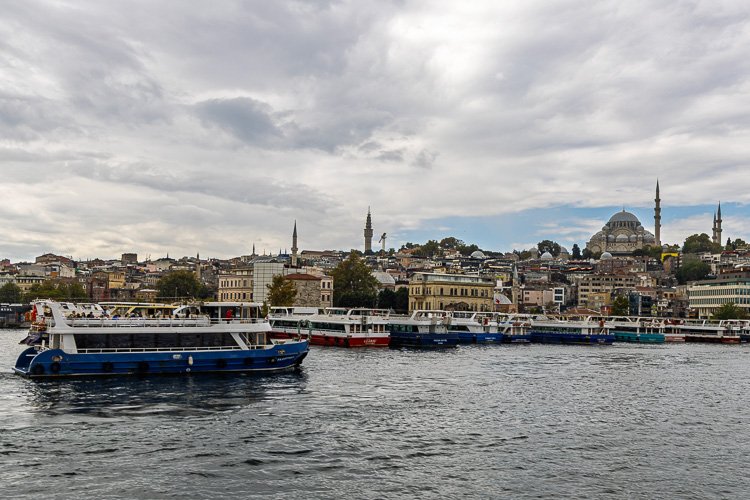
Mosques and ferries from river
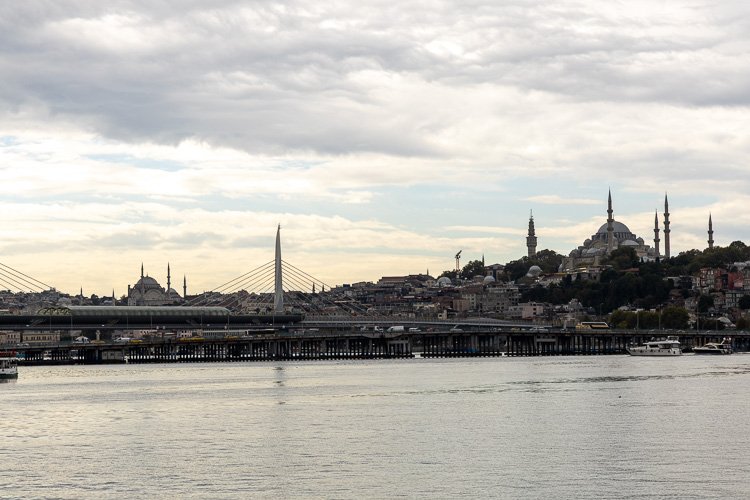
Istanbul Skyline
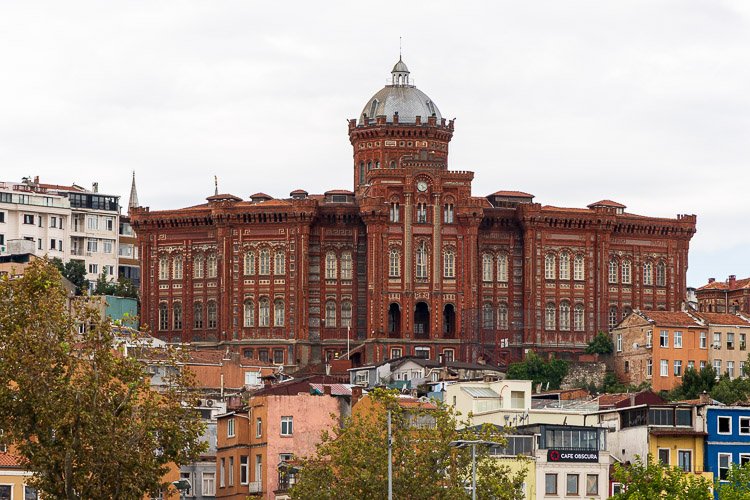
Phanar Greek Orthodox College
From Eyüpsultan, we had a short walk to the Eyüp Teleferik (cable car). We joined a short queue (it was much longer by the time we reached the front, as I think a coach had arrived) and paid with our Istanbulkart (35 TL pp). The cable car has 4 cars, each taking 8 passengers, so the queue moves quite slowly. A 3-minute ride up 550 meters was rewarded with wonderful views over Istanbul and the Pierre Loti Cafe.
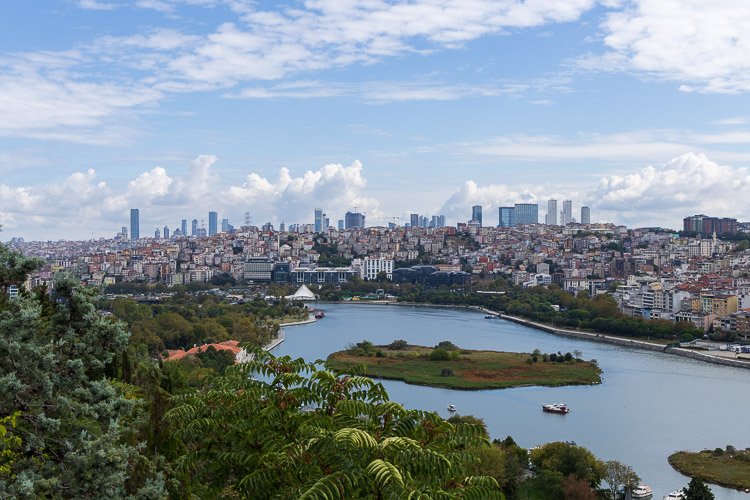
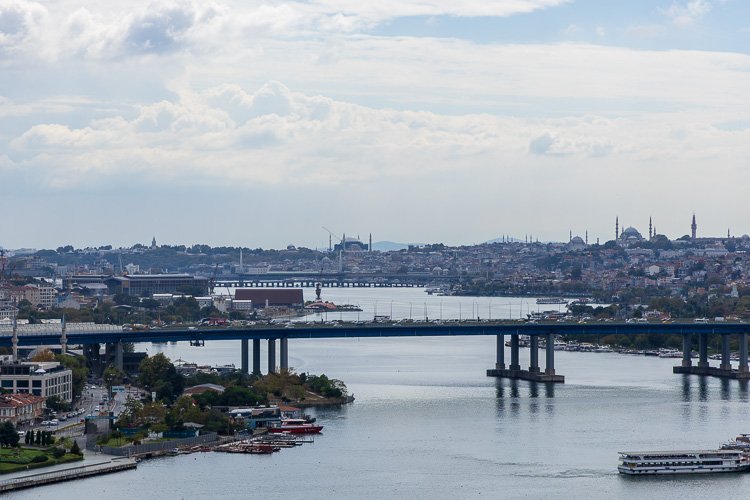
We did stop for a drink at the cafe, but it was definitely a tourist trap and not somewhere I would recommend. Once finished, we walked down the hill back to the waterside (30 mins). If the cable car queues are too long, you could walk up. Rather than waiting for the next ferry (and walking across the bridge), we took a tram back to Eminönü. From here, we walked 30 minutes to Suleymaniye Mosque.
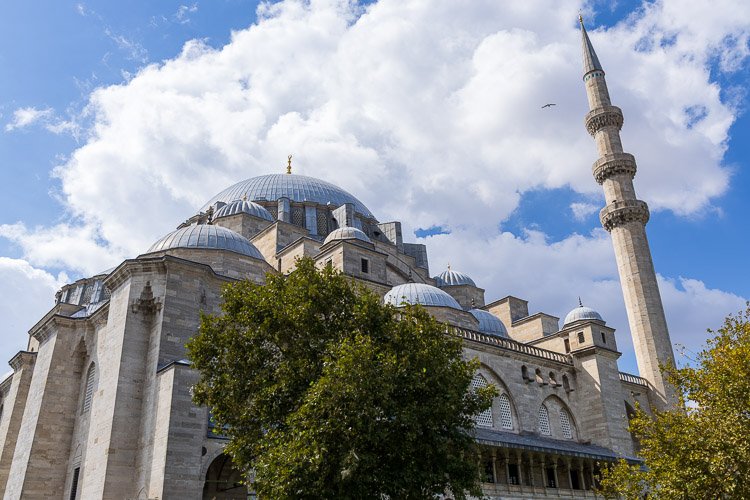
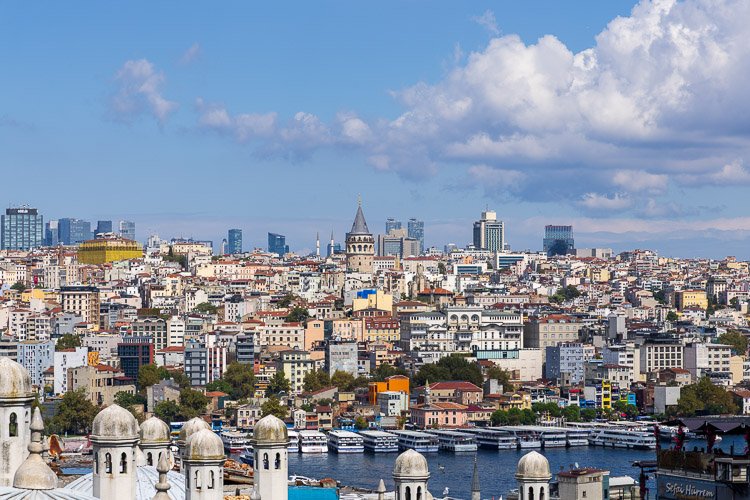
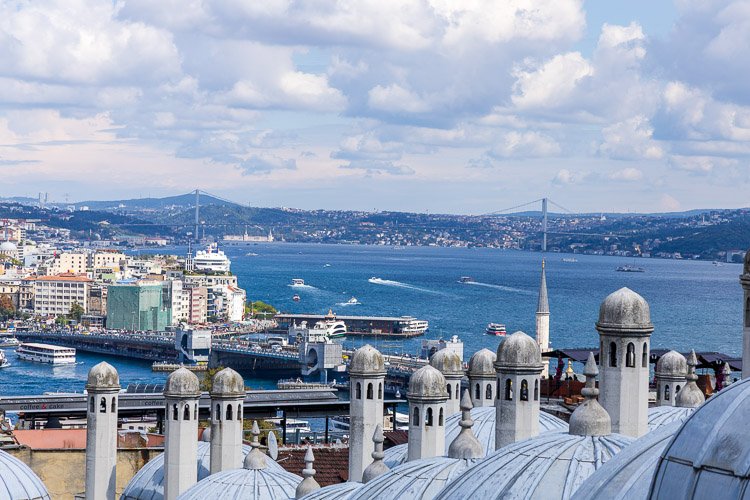
The Süleymaniye Mosque, built on Istanbul’s third hill, is prominent from the waterfront and the Galata Bridge. Commissioned by Sultan Süleyman the Magnificent, it was built between 1550 and 1557. It has four minarets with ten balconies, symbolising that Süleyman was the 10th Ottoman Sultan. It was quieter than the Blue Mosque, and the terrace had wonderful views over Galata, the Golden Horn and the Bosphorus.
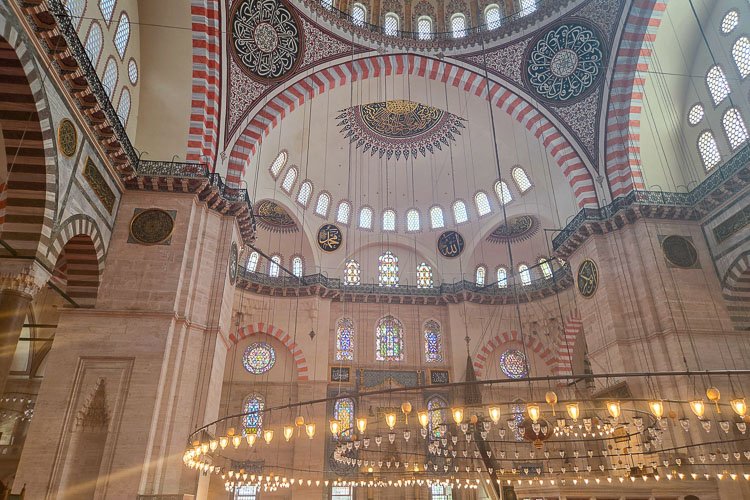
As coverups were available, we went inside (it was free to enter). It felt spacious, with a 53-meter-high and 27-meter-wide dome.
Next, we walked 15 mins to the Roman Aqueduct of Valens, built in the 4th century AD to supply Constantinople. It was originally 971 metres long (with around 921 metres surviving today) reaching a maximum height of 29 metres. I always like seeing the juxtaposition of old and modern, but it was a shame we couldn’t climb to the top as we have on aqueducts in other places.
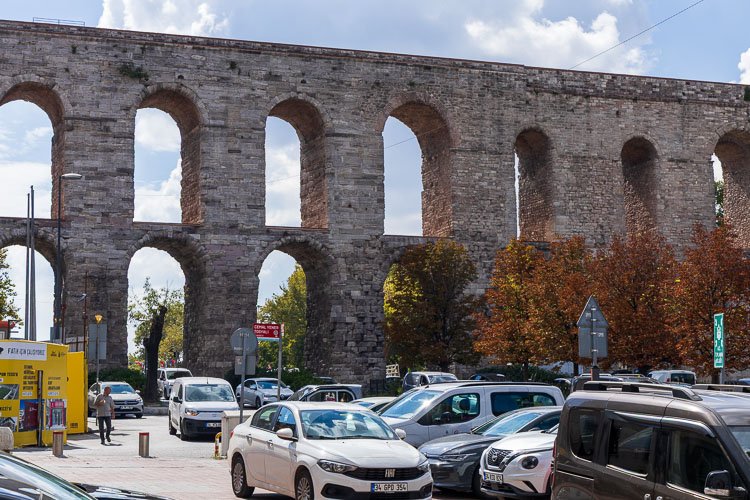
From here, we stopped for a quick, tasty falafel wrap and fries (165 TL pp) at Dönerse Bizimdir before returning to our hotel.
We went to the Old Istanbul Rooftop Bar for a sunset drink ….
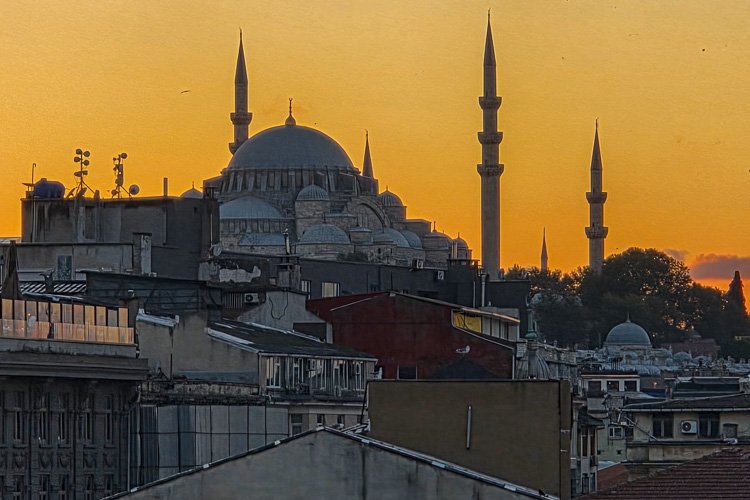
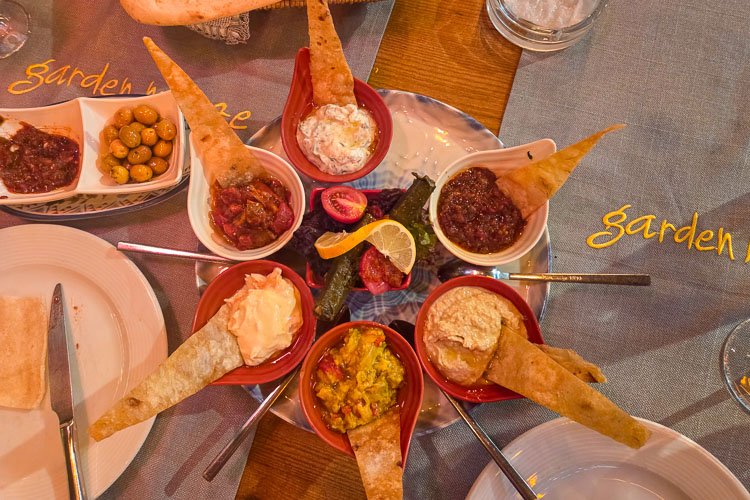
…before going to the Garden Mezze. We started with a mixed mezze of dips and bread, and then had the grilled sea bream and Urfa kebab. The food was good (though still plainer than I would normally choose), but the service was excellent and friendly. (£69 total, including beer/wine).
We walked back down to the waterfront to see the night skyline.
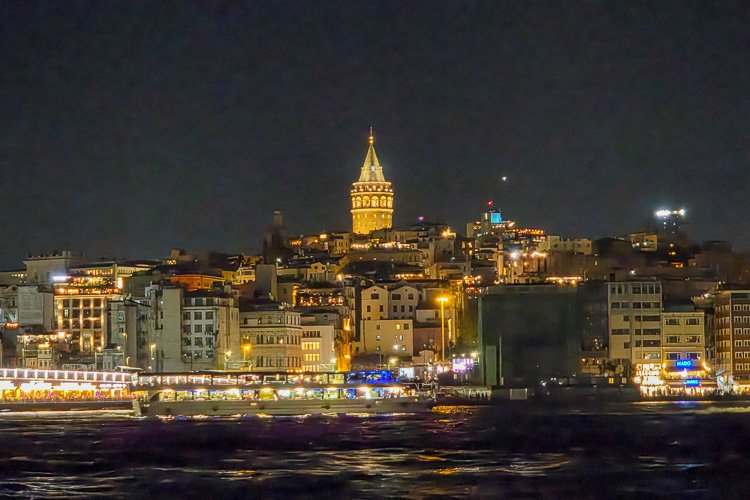
Galata
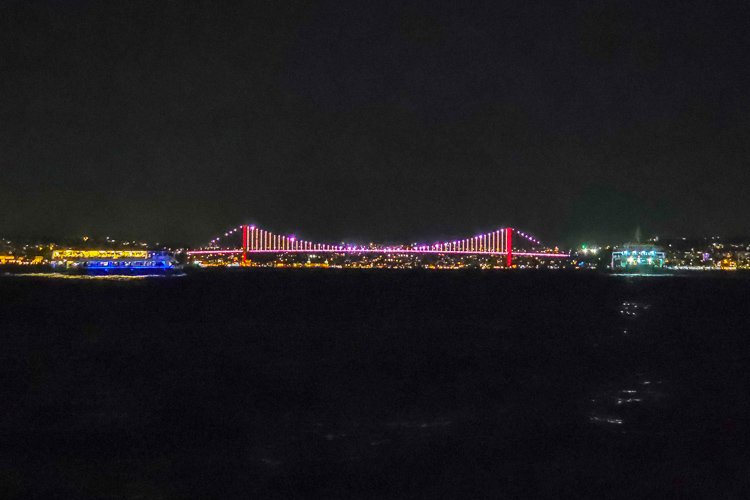
Bosphorus Bridge
Day 8 – Free Walking Tour, Rooftop Bar
Originally, we planned to take the 2-hour Bosphorus ferry tour and/or take a ferry to Princes’ Island to cycle around the island. However, we felt we had been on ferries long enough, and we weren’t sure S would have the energy for cycling.
So we decided to take advantage of one of Istanbul’s free walking tours. We chose this tour of Old Town to reinforce what we had already seen. Do note, like in many other countries, the tour is ‘free’ with a recommended tipping policy of €15 per person.
Our guide was very good, and although we revisited places we had already seen, we still learnt more about them.
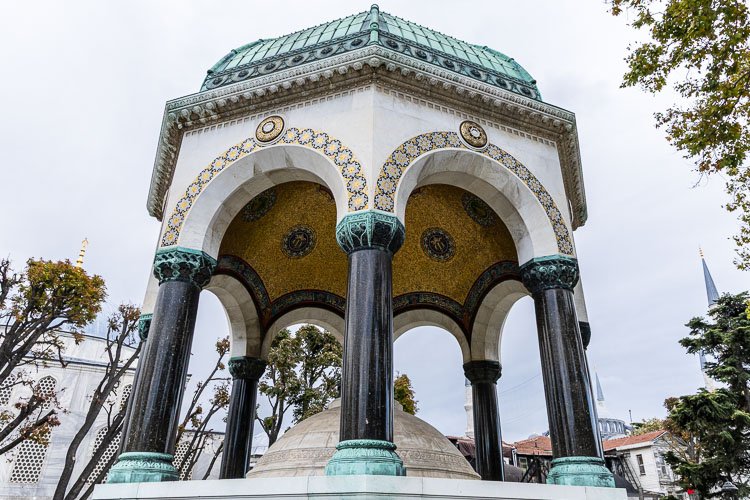
We learnt that German Emperor Wilhelm II gifted the German Fountain in the Hippodrome to Istanbul in 1901. It represents the political, economic and military ties between the German Empire and the Ottoman Empire in the late 19th and early 20th centuries – an alliance that continued when they fought together in World War I.
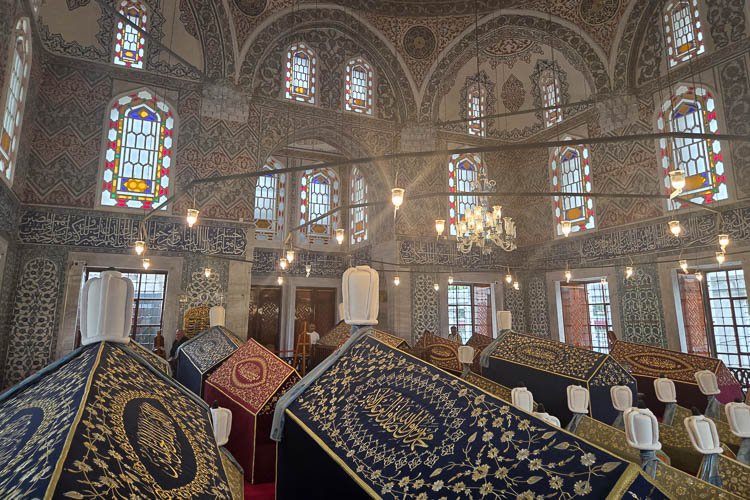
We visited the Tomb of Sultan Ahmed (14th Sultan of the Ottoman Empire), built between 1617 and 1619. Sultan Ahmed I was responsible for ending the traditional Ottoman practice of executing the new Sultan’s brothers on accession, using confinement instead.
We were also taken inside the Nuruosmaniye Mosque, where our guide shared more about Islam. He went beyond simply explaining religious beliefs and practices, happily answering questions from the group and talking openly about how he and his family interpreted their faith and chose to live as Muslims.
The tour included the Grand Bazaar, where our guide explained that Turkish people use the Bazaar only to exchange money. The shops are more expensive, but because of intense competition and high volume, the money exchange booths offer better rates than banks or tourist hubs. The shopkeepers (who pay expensive rent for a site) make their livelihoods primarily from tourists, particularly cruise ships.
At the end of the tour, it became clear that our guide actually owned the ‘Free Tours in Istanbul’ business. He took us to his shop for free tea and baklava samples and explained that he and his wife hoped to expand the business to offer more tours, including a cookery workshop. Our tour was very informative, and I’m sure they will do well.
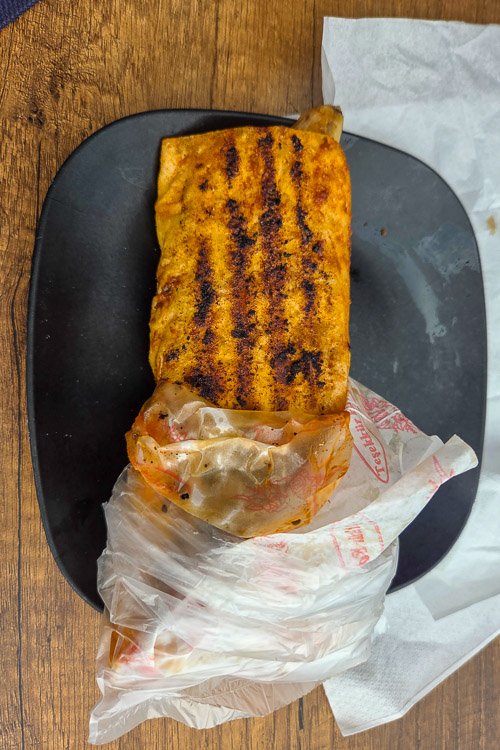
By this point, we were getting peckish and wanted to try one of the famous fish wraps (balık dürüm). We walked across the bridge to Odessa Restaurant and each ordered a wrap (300 TL). The wrap is grilled mackerel with herbs inside a flatbread. I’m glad I tried it, but I’m not sure I’d rush back for another one.
A recommended activity on this side of the river is to climb the Galata Tower for 360∘ views over the city. However, entry is €30 pp, which seems a bit steep, and it is rumoured to get very busy. Instead, we decided to spend some of the money on drinks at the rooftop bar in The Bank Hotel. Once we found the lifts for the bar (the receptionist needed to direct us), we enjoyed drinks and the view. We also enjoyed the nibbles: nuts, green peas and blueberry-infused olives. I’m not a fan of olives, but the blueberry ones were new to me and slightly better than plain.
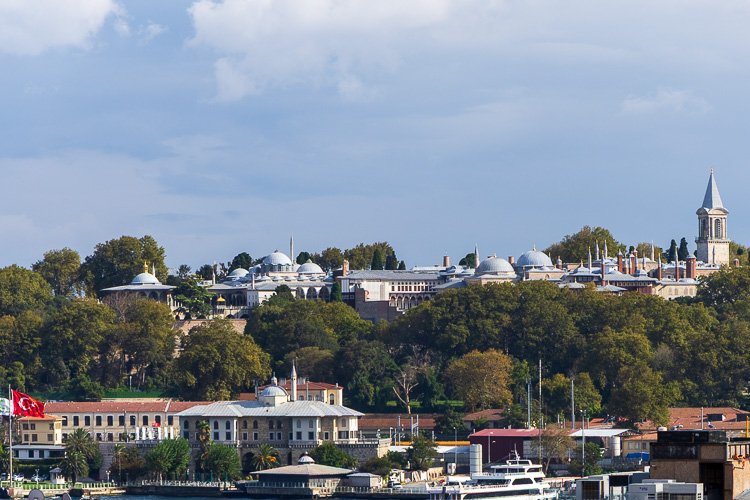
Topkapi Palace
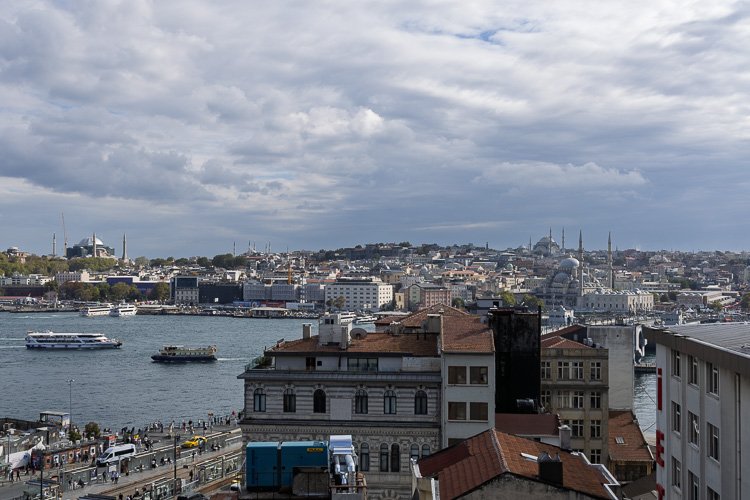
Views of Mosques across river
The rooftop bar was a nice (if expensive) place for city views, and I would imagine it would be worth booking a table for a sunset view on a nice evening. It was quite cloudy when we were there, so we didn’t stay for sunset, but returned to our hotel.
We went for Dinner at Kasap Osman. We had walked past this restaurant a few times, and it always seemed busy with both locals and tourists. It also had pictures advertising that Russell Crowe had eaten there, which amused us. I had the Doner Sarma (a doner roll) (680TL), which was OK – too much bread and not enough meat, really. S had the Kebap, which was fine.
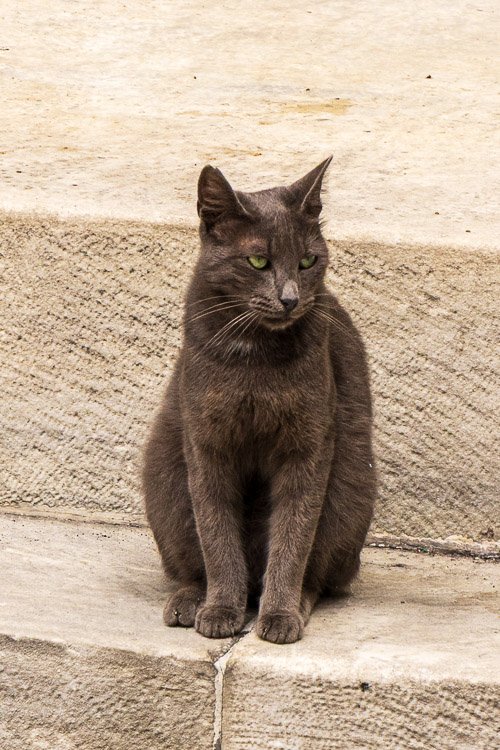
Cats
We saw so many cats during the holiday. They arrived by ship centuries ago, and the Ottoman Empire valued them as they protected wooden architecture from pests. Now shopkeepers and residents regularly leave out food (including kibble) and water for the cats, and I saw several locals in restaurants offering cats some of their food. In fact, a cat would regularly show up at the table when we were eating, looking for food. A cat tax, perhaps?
Day 9 – Home
Having checked out, we grabbed takeaway breakfast from Coff’s and took the tube to the airport. It was very easy to find our way on public transport – and much cheaper than the taxi we took on the way in.
Istanbul Airport was easy to navigate, though expensive. There were lots of signs about 100ml liquids at security, but they must be old, as we didn’t need to take liquids out of the suitcase.
We thoroughly enjoyed our week in Istanbul, although the food was a little disappointing. I expected something more along the lines of Greek or Middle Eastern cuisine, but perhaps we simply didn’t find the right places to eat. There was nothing wrong with the food we tried – it was perfectly edible and often quite tasty – but nothing really stood out or left us wanting to seek it out again.
There are several must-see sights, including the Basilica Cistern, Topkapi Palace and the Blue Mosque. It’s also well worth exploring the Grand Bazaar and Spice Bazaar and taking a ferry across to the Asian side of the city. However, I think a few days would probably be enough to get a good feel for Istanbul and experience its highlights.
Let me know if you have any questions – always happy to share.