
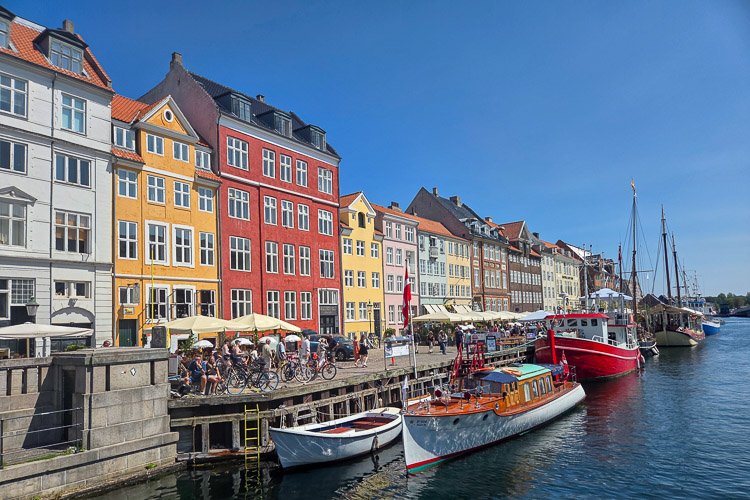
Explore our 6-day itinerary in Copenhagen
- Day 1 – Arrival and Guided Walk
- Day 2 – Canal Cruise and Tivoli Gardens
- Day 3 – Rosenborg Castle and Little Mermaid
- Day 4 – Helsingør
- Day 5 – National Museum of Denmark
- Day 6 – Church of Our Saviour and Home
Copenhagen was a place I wanted to visit for a while, but it hadn’t reached the top of our list as we were aware of its reputation for being expensive. However, with a significant birthday coming up, we decided it was a good time to book a long weekend.
It cost just under £1300 with British Airways Holidays for a 4-star hotel and flights for 5 nights in the middle of July for the two of us, which was comparable to other city breaks we have had recently.
Day 1 – Arrival and Guided Walk
After getting up at stupid o’clock to catch the 7 am flight from Heathrow, we had a relatively straightforward journey through Copenhagen airport. We only had hand luggage, so no risk of the suitcase not arriving! Immigration was quick – though apparently the EES system had me still in Luxembourg! Fortunately, the officer was able to update it there and then.
We caught the M2 metro to Nørreport and then the A/B/C train to Dybbølsbro, arriving at our Scandic Kødbyen hotel after a short 4-minute walk at 11:30 am. Check-in wasn’t until 4 pm, so we left our luggage and set out to explore Copenhagen.
Notes about public transport
We only used public transport to and from the airport (and to Helsingør), as we walked everywhere, but it appeared to be efficient and plentiful – a combination of metro, trains and buses.
Before we went, we set up the Rejsekort App attaching a credit card. To use it, you just needed to check in (by swiping the green arrow in the app to the right) before getting on and check out (swipe the green arrow to the left) when you arrive. Handily, one person could check in multiple people.
It was cheaper to check in/out across the whole journey, even if different modes of transport were used, rather than checking in/out for each mode of transport (we tried both ways).
Copenhagen is an exceptionally bicycle-friendly city with wide, separated cycle lanes alongside almost every road and pedestrian walkway. As a pedestrian, it’s important to stay out of the bike lanes as cyclists travel at high speed. The city is home to 12 kilometres of canals which are now popular for swimming, kayaking and sailing. In the 1980s, the water was too polluted for swimming, but extensive cleanup efforts have transformed the canals into clean, inviting waterways. Along much of the waterfront, decks with ladders provide easy access to the water, and we saw many people relaxing, sunbathing and enjoying a swim.
Notes about money
The currency is the Danish Kroner, which is tied to the Euro through a fixed exchange rate policy. Many shops, cafes and restaurants only accept credit cards or mobile payments – we didn’t need cash at all on our trip. It’s worth noting, though, Danish law allows merchants to pass processing surcharges for these cards directly to the customer. So even though we were using a UK credit card that doesn’t charge for foreign payments and we chose to pay in Danish Kroner, we would often pay up to 5% more than the final bill.
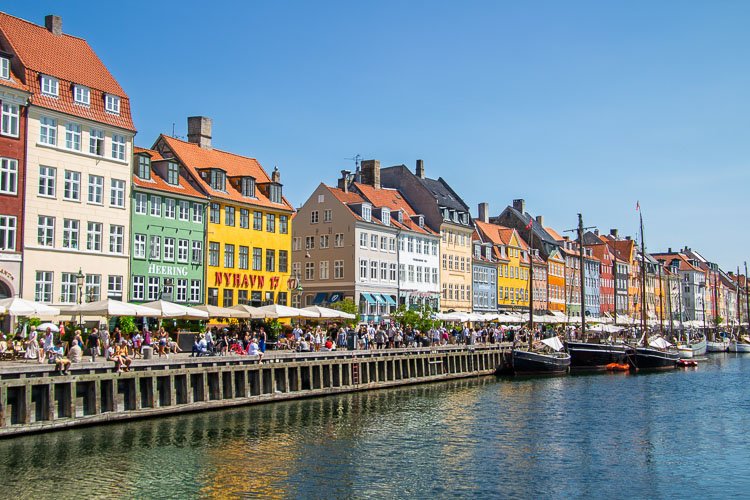
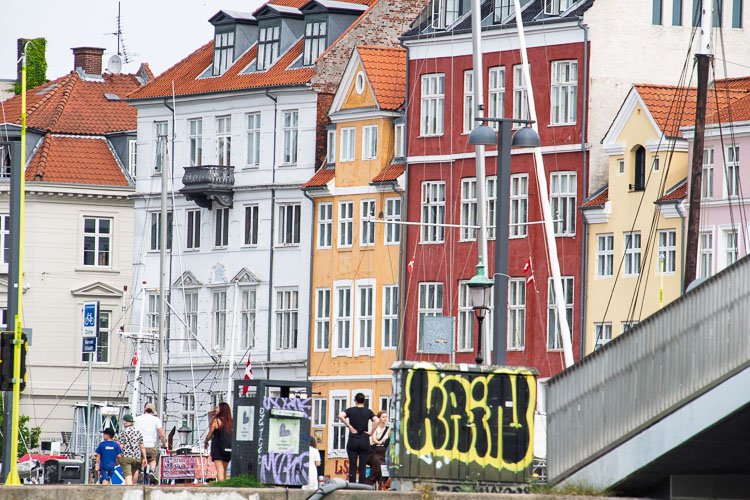
We first walked to Nyhavn, an iconic area of Copenhagen with colourful townhouses alongside the canal. It was very busy but pretty.
The canal was built between 1670 and 1673 to link the sea to the city. The townhouses were built in the late 17th and early 18th centuries. Hans Christian Anderson lived in Nyhavn between 1845 and 1864 and again between 1871 and 1875. In the 19th and early 20th centuries, it was notorious for beer, sailors and brothels. In 1980, the quay was pedestrianised and has since become a popular spot for tourists.
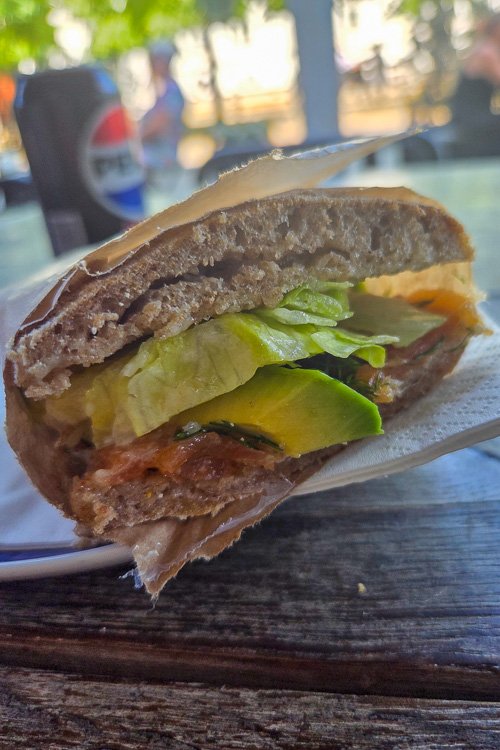
From there, we went around the corner to Chill-ee for a delicious sandwich lunch. I’d recommend the salmon and avocado (135 DKK).
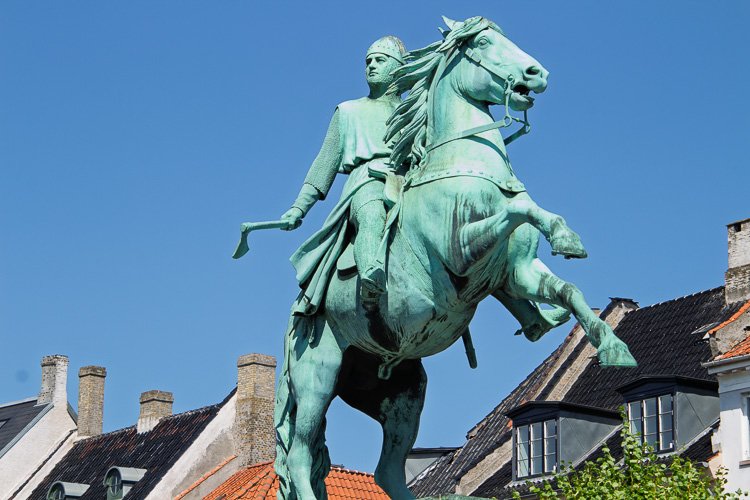
After lunch, we went to the statue of Bishop Absalon to join our free walking tour. Bishop Absalon was the foremost politician in the 2nd half of the 12th century and built the first fortification of Copenhagen.
I would highly recommend the informative 90-minute Copenhagen Free Walking Tour of Christianshavn. You need to book a place online, and the guides expect a tip in payment. We gave our guide around £15 each. We had taken cash from an ATM, but the guide was happy to accept credit cards.
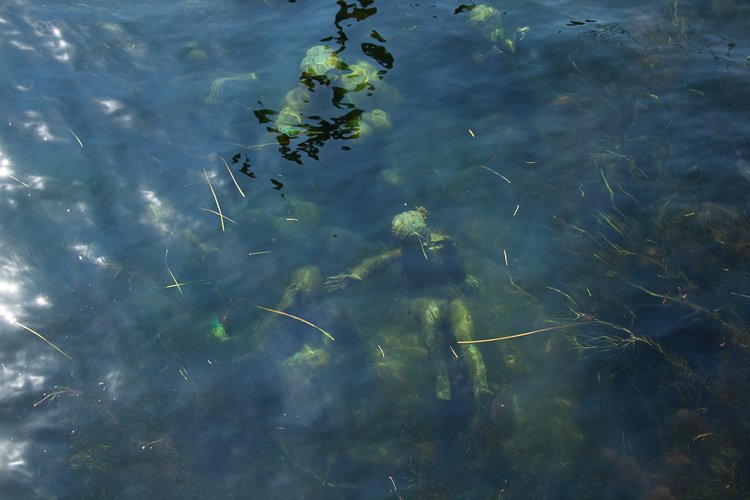
The first stop on the tour was the Agnita and Merman statues at the Slotsholmen Canal, right by the base of Højbro Bridge (near Ved Stranden 26, 1061 København). They are a group of seven submerged bronze statues depicting a merman and his seven sons.
It was created in 1992 and is based on a traditional Danish folk ballad, Agnete og Havmanden, which tells the story of a human, Agnete, who falls in love with a Merman and joins him to live under the sea, and they have seven children together. One day, she hears church bells ringing from the land and remembers her former life. She returns to the surface, leaving the Merman and her children heartbroken and reaching up towards the surface in longing for her return.
Following this rather sad tale, our guide introduced us to King Christian IV of Denmark (1577 – 1648), a significant figure in Danish history, about whom we learnt quite a bit over the weekend.
He was responsible for turning Copenhagen into a major Renaissance capital, building major structures, and establishing neighbourhoods. However, he was also responsible for disastrous wars (mainly with Sweden), leaving Denmark on the verge of bankruptcy by his death.
Our guide also explained that Denmark used to be a major power in Europe:
- As part of the Kalmar Union, Denmark was the dominant ruling power of Denmark, Sweden (including much of current-day Finland) and Norway from 1397 until the Union collapsed when Sweden rebelled and became independent in 1523
- Ruling Norway until 1814
- Ruling Iceland until 1944
- Ruling Schleswig & Holstein in Germany until 1864
- Greenland and the Faroe Islands are still autonomous territories within the Kingdom of Denmark today
The next building on our trip, Børsen (the Old Stock Exchange), was built by Christian IV as part of his plan to strengthen Copenhagen’s role as a centre for trade and commerce in Northern Europe. Unfortunately, the building was devastated by fire in 2024 and is currently being restored, so it was under plastic. The restoration is due to be complete in 2029.
Walking over the bridge, we learnt about Christianshavn, an area Christian IV founded in 1619. It was built to strengthen Copenhagen’s outer defences against threats like Sweden and to establish a secure harbour for the growing royal navy. However, the king offered free land plots to wealthy merchants on the condition that they build substantial brick and commercial houses, quickly ensuring it also became a trading hub.
Although Christianshavn was initially planned as an independent privileged city, it was soon fully incorporated into Copenhagen proper and is today a historic, canal-rich neighbourhood. However, not many changes have been made to its layout since it was planned 400 years ago.
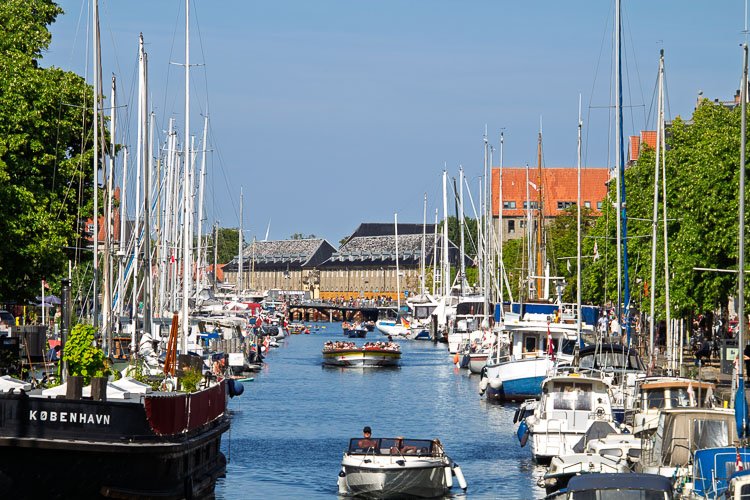
Our final stop of the tour (the 90 minutes passed in a flash) was at the Church of Our Saviour (Vor Frelsers Kirke), a short walk away from Freetown Christiania.
Our guide explained that Freetown Christiania was established in 1971 by squatters on an abandoned military base (the fortifications of which were originally built by Christian IV to protect Copenhagen from Sweden). In 2011, the residents created a foundation to collectively purchase the land from the Danish state, giving the community official legitimacy. It is now home to approximately 800 residents and is an autonomous, self-governing anarchist community. They are independent of Danish law and operate under a consensus-based democratic system, so rules and internal guidelines are made collectively through town-hall-style processes. Christiania operates without its own formal police force, with rules (e.g. bans on hard drugs, violence, weapons, etc.) relying on mutual compliance, social pressure and collective action by the residents. Our guide said that she had joined the 3,000-person waiting list for a house in Christiania – prospective new residents have to go through a rigorous selection process, but when successful are given a house for which they pay a reduced rent and become part of the community.
Up to 2024, one of the most famous aspects of Christiania had been the stalls along Pusher Street that sold all types of cannabis, which is illegal elsewhere in Denmark. This was shut down in a collaborative effort between Danish police and the inhabitants due to organised gang violence
Organised tours are no longer allowed to take tourists through Christiania as the residents understandably felt they were being treated as if they were in a zoo. Once our guided tour had finished thought, we wandered over to have a look around ourselves.
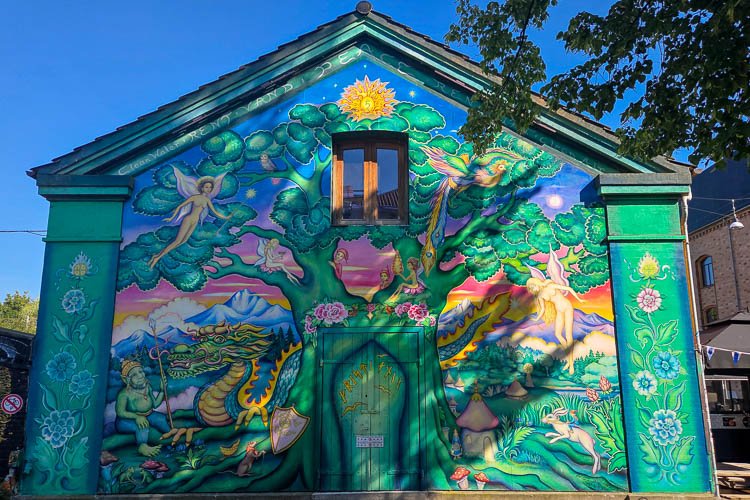
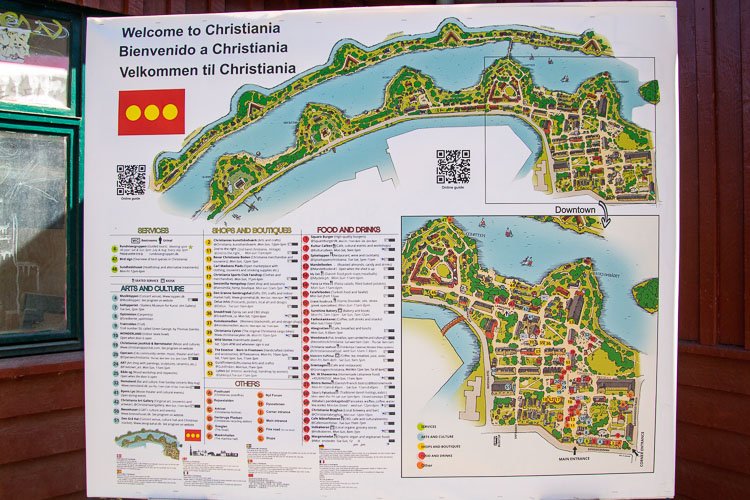
The residents are quite rightly protective of their privacy, so photos of people and houses are actively discouraged. The main street had a colourful market with clothes, jewellery and trinkets. There were also a few restaurants and music playing at Nemoland, which is a cafe and open-air concert venue. The whole area covers about 19 acres, but we stuck to the main routes. The vibe reminded me of Camden Town in the late 80s – but smaller.
After a look around, we headed back to our hotel to check in and freshen up. The hotel operated a self-check-in option which worked well – I just needed to enter a date of birth and passport number (no credit card), and the machine created the card keys. Our standard room was lovely – a good size with a large, comfy bed. There was little shelving, though, so it was difficult to unpack.
Once ready, we headed out for a pre-dinner drink. The hotel was in the historic Kødbyen Meat Packing District, which was created to process meat locally. Over the years, three districts were built: the Brown Meatpacking District (1879 to 1901), the White Meatpacking District (opened in 1934), and the Grey Meatpacking District. The names refer to the colour of the buildings that were used. Most large-scale meat operations had moved out by the 1990s, with the last traditional butchers leaving in 2005. The Brown and White districts are recognised as national industrial heritage sites, and the original tiles and benches largely remain.
In the early 2000s, a regeneration programme was launched and creative and gastronomy businesses were encouraged to set up in the empty buildings. Nowadays, the area attracts locals and tourists and has a range of pubs and restaurants.
We started with a drink at War Pigs, a very popular craft brewery. There were loads of picnic benches outside, many full of people. We found a free space on one of the benches. There were 3 individual QR codes on each bench to see the menu and order drinks (and food), or you could go inside. The first night we used the QR link, but on subsequent nights, S went in and found far more options inside – more beer taps and even a tap for a lemon verbena gin and tonic! The food available was either small plates or snacks or a sharing platter with a large portion of Texas BBQ meat and some sides. The food was very popular, but we didn’t fancy a large portion of meat, so after a drink, we explored other options.
We ended up at Hooked, an informal seafood restaurant with outdoor seating. I had a delicious fried shrimp poke bowl (145 KR), and S had the fish and chips (155 KR). Both recommended.
It was finally time for bed after a very busy day!
Day 2 – Canal Cruise and Tivoli Gardens
Our first excitement today was a canal cruise that we had previously booked (178 DKK pp). We didn’t have breakfast included at our hotel, so we purchased pastries from Holm’s Bakery to eat before the cruise. The cinnamon bun topped with cream cheese and apple (45 DKK) was particularly good!
The cruise was on a large flat-bottomed boat with small speakers on the side of each row of seats. The guide had a microphone at the front of the boat, and the talk alternated between Danish and English.
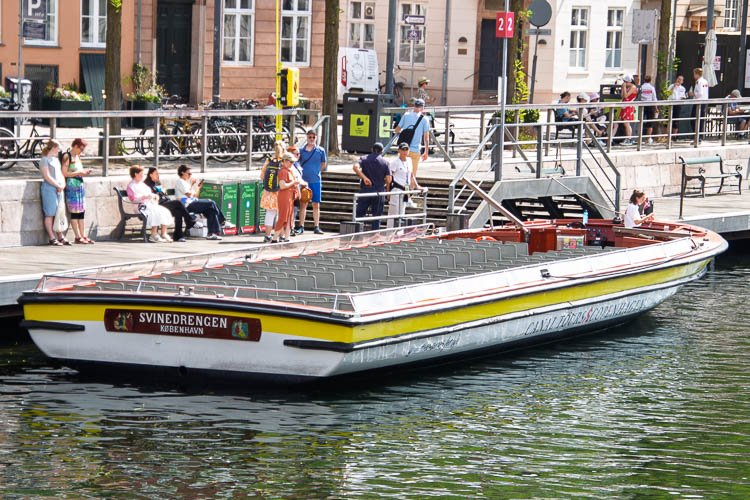
We passed around the harbour, past Nyhavn …
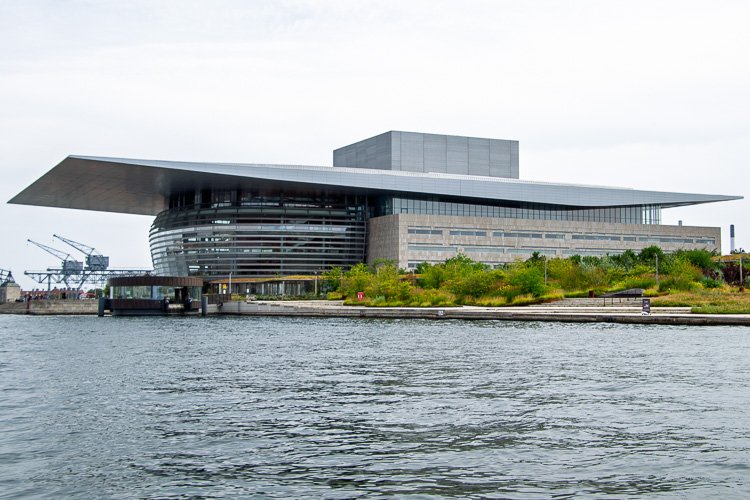
… and the Copenhagen Opera House. The Opera House, which opened in January 2005, was funded by shipping magnate Mærsk Mc-Kinney Møller’s Foundation and cost over US$500 million.
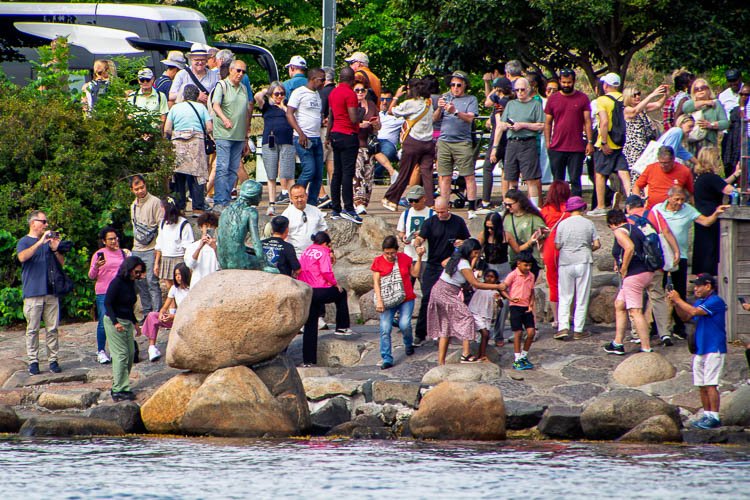
We also went past the crowds to see the Little Mermaid – we were planning to join them the next day!
We went through the canals of Christianshavn, giving us a different view from our walk yesterday. Throughout the tour, we passed through very low bridges, which I guess is part of the experience.
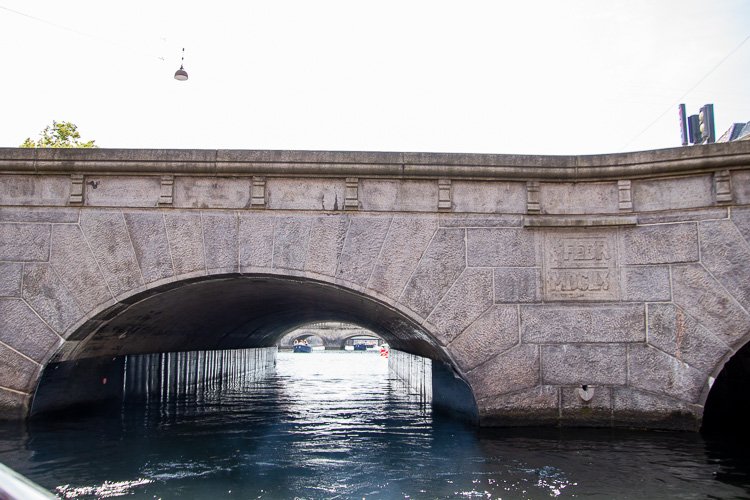
The canal tour wasn’t the best activity we did in Copenhagen, but I think it is one of the things you need to do – it was interesting to see the city from the water and how many boats were docked at the edges of the canal.
Notes about canal tour
If you take a Stromma canal tour (they run the vast majority of the tours), try to sit on the right-hand side of the boat, near the front, next to one of the speakers built into the side of the boat.
We sat on the left at the back, and it was very difficult to hear the guide over the engine noise.
Following the canal tour, we queued up to climb the Christiansborg Palace Tower.
Christiansborg Palace, originally built by Christian IV and rebuilt after fire for the third time in 1928, is the only building in the world that houses all three branches of government – the Danish Parliament (legislative), the Prime Minister’s Office (executive) and the Supreme Court (judicial), indicated by the three crowns on the top of the tower.
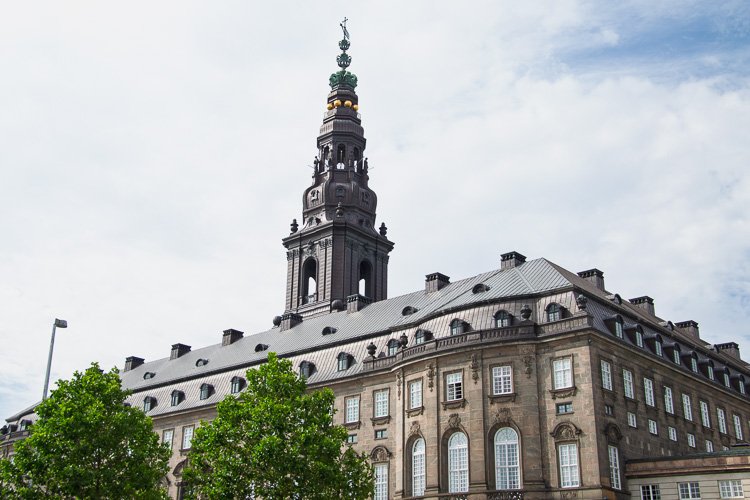
It is possible to visit the Palace for a fee (which we didn’t do), but the Tower climb is free and offers fantastic views over Copenhagen. Be aware you are likely to have to queue (we waited around 30 mins) and go through airport-style security. You actually use a lift for two stages of the ‘climb’, just climbing 40 steps in the last section. Toilets are available on the 2nd level (once you are through security).
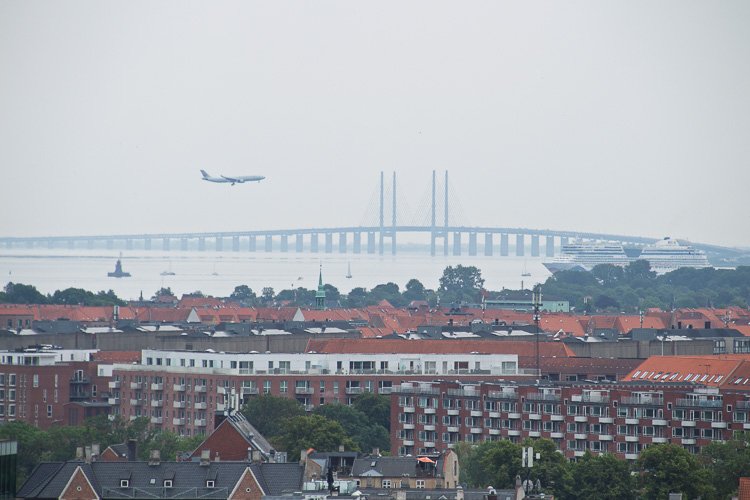
After the 2nd lift and before climbing the stairs, you pass through a room with various statues. In 2015, Eva Koch created a digital representation of pigeons that made the room their home when it was open to the sky during the construction of the third Palace (1907 – 1928). A nice touch, I thought.
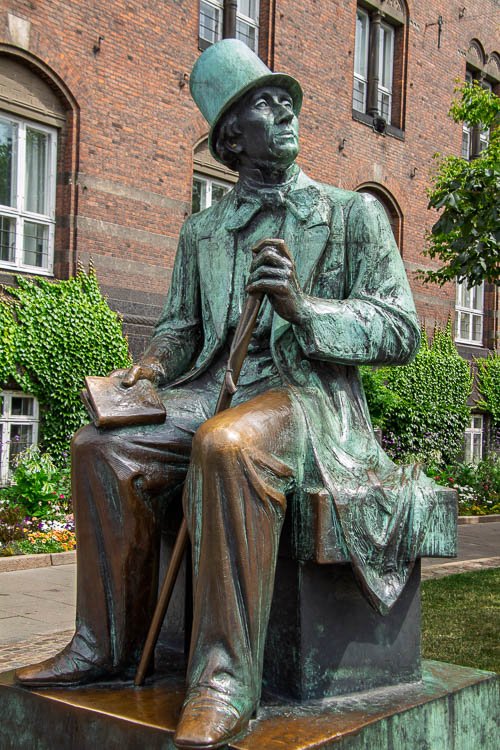
On the way back to the hotel, we went to see the statue of Hans Christian Andersen (1805 – 1875), the famous Danish author, who spent most of his life living and working in Copenhagen and wrote so many of the fairy tales that I knew when I was a child – some of which have since been turned into Disney movies.
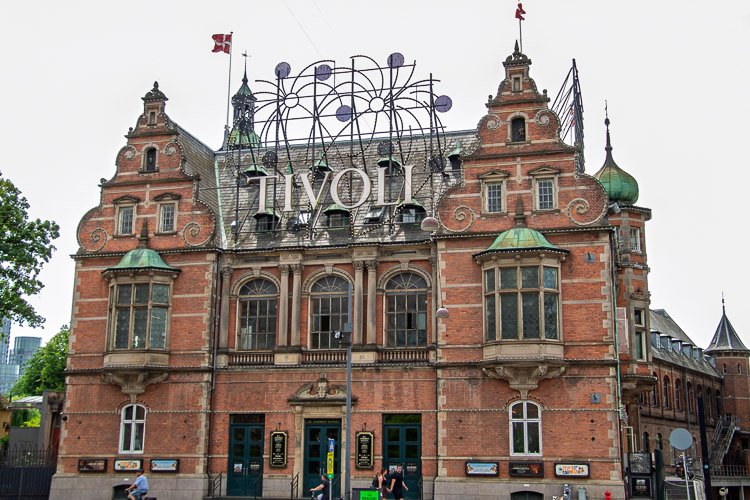
After a quick change, we headed out for an evening at Tivoli Gardens.
Tivoli Gardens is the second-oldest amusement park in the world and is situated right in Copenhagen’s city centre – we had to walk around the park to get from our hotel to the main attractions.
It opened in August 1843 and is said to have inspired Walt Disney to create Disneyland.
It has about 29 rides along with restaurants, bars and open-air stages. The rides included:
- The Flying Trunk – a whimsical ride through Hans Christian Andersen’s fairy tales (I hadn’t realised that he had written so many, or he had written all of the ones I recognised)
- The Mine – a laser shooting water ride based around a mine
- Rutschebanen, a wooden roller coaster built in 1914 that is still operated with a human onboard brakeman in the car
- Traditional Bumper Cars and other children-focused rides
- The Demon, Aquila, The Star Flyer and the Golden Tower – thrill rides that you wouldn’t catch me anywhere near.
To enter Tivoli Gardens, you need to buy an Entrance Pass, and then you can pay-as-you-go for rides or buy a Ride Pass for unlimited access. For ease, we purchased the Entrance and Ride Pass package before we went, which cost 998 DKK for the 2 of us.
From a cost point of view, it might have been better to buy the Entrance Pass (approx 380 DKK) and then pay-as-you-go for rides, as I don’t go on many rides. For example, the Flying Trunk and Mine rides would have cost 130 DKK pp.
There were a variety of restaurants in the park, but we went to the Food Hall, which can also be entered from the street without entering Tivoli. We had to get a stamp to enter from Tivoli, and it was checked on the way back in. Out of the 15 street food options, we chose Dhaba and had a tasty indian plate (garlic naan 39 DKK, Lamb Karahi 159 DKK, Butter Chicken 139 DKK).
We went to Tivoli on a Friday, and on Fridays in the summer of 2026, they had a Friday Rock event, which was an open-air concert. We saw the Danish singer Karoline Mousing earlier in the evening, and then Jessie J played a great 90-minute set at 10 pm.
We spoke to a group of ladies from Copenhagen who just bought an annual Entrance Pass and were enjoying the concerts of the bands they followed throughout the summer.
I don’t do many rides in an amusement park at the best of times, but we were queuing up for the Milky Way Express (a gentle rollercoaster) when all rides were closed due to storms in the area. We managed to shelter and enjoy some drinks (including cider) in a restaurant as the storm came over. It stopped just in time for the Jessie J concert.
Despite the storm, we had a very enjoyable time in Tivoli Gardens. It was fortunate that we went on a Friday so we could enjoy the free concert.
Day 3 – Rosenborg Castle and Little Mermaid
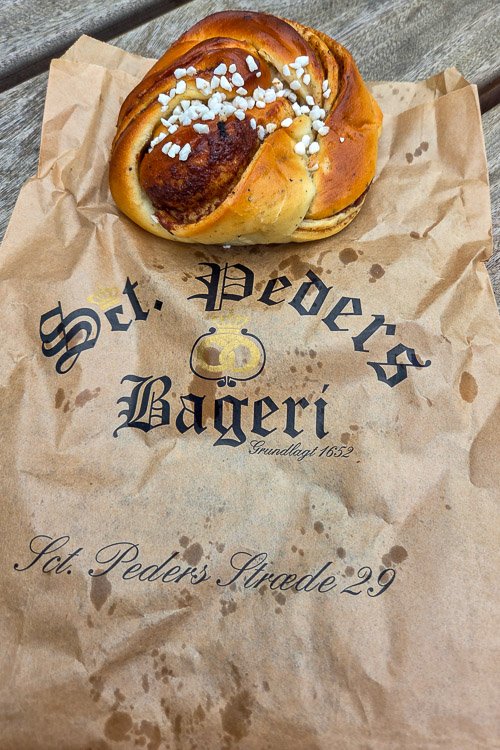
Despite the late finish, we were up early today for the 42-minute walk to the Rosenborg Castle. We had booked a guided tour at 11 am (140 DKK entry, plus 30 DKK for the tour pp), so on the way we queued for delicious cardamom and cinnamon buns (35 DKK each) at Skt. Peders Bageri (the oldest bakery in Copenhagen, which we ate in the grounds of the castle.
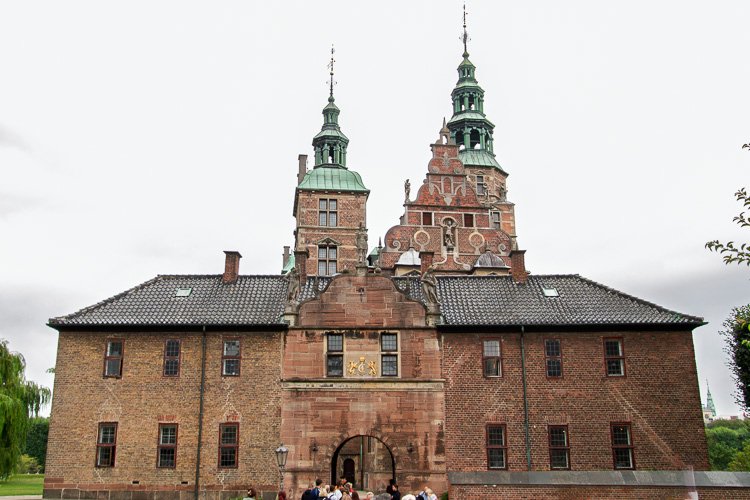
Christian IV built Rosenborg Castle between 1606 and 1634. It started as a small summer pavilion and was expanded into a Renaissance ‘pleasure palace’. The King loved it, and he died there in 1648.
The tour explained the castle’s history and guided us through the king’s private rooms, including his writing chamber where he wrote many of the 3,000 letters now preserved in the Royal Library in Copenhagen. These letters have given historians valuable insights into how he built a powerful navy, planned the city’s development and financed his wars. They also reveal details of daily life at court and offer a glimpse into his personality. We were also shown the king’s bloodstained clothing from a 1644 battle in which he personally fought and lost his right eye.
In the Marble Chamber of the castle, we were told about Christian’s son, King Frederik III, who, upset with the nobility over their refusal to pay tax, established the King’s Law in 1665, which gave the Danish monarch absolute, unchecked power, responsible to God alone. This was in place until 1849, when King Frederik VII signed the transition to a constitutional monarchy with a two-chamber parliament.
As an aside, since 1513, male monarchs have generally alternated between the names Christian and Frederik.
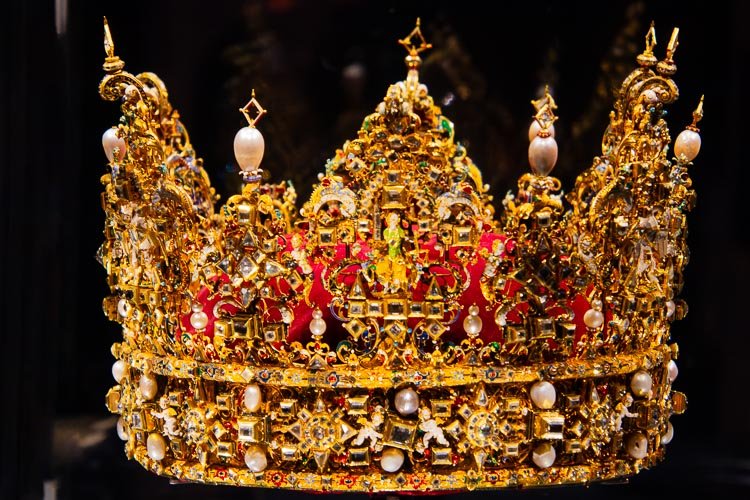
Following the informative tour, we explored the castle at our own pace, including the Treasury in the castle’s basement, which houses the Danish Crown Jewels and the crown of Christian IV. At the time, a crown was only worn once. After the king’s death, it was dismantled, its precious stones and the gold melted down for reuse.
Christian IV’s crown was an exception. In 1644, the king pawned his crown to a merchant in Hamburg to raise money for the war against Sweden. When he died in 1648, the crown was still in Hamburg, but his son, Frederik III, redeemed it for his coronation later that year. For the occasion, the coats of arms on the inside of the crown’s points were renovated, and golden arches were added, making it a closed crown (the new fashion). These additions raised the total weight to almost five kilos, making it the heaviest crown in European history.
When Christian V was crowned in 1670, he commissioned a new closed crown to symbolise the absolute monarchy. The golden arches were removed from Frederik III’s crown, and their gold and diamonds were recycled into the new design. However, Christian V chose to preserve his grandfather’s crown, allowing us to see it today.
Notes about Rosenborg Castle
We booked the Best of Rosenborg Guided Tour on the official website, which included admission for 340 DKK (for both of us). As part of the booking process, we needed to select a time for our visit. You meet the guide right at the entrance gate before entering the castle, but you can enter earlier to use the free lockers, as rucksacks are not allowed.
I really enjoyed learning about Rosenborg Castle, but we would not have understood nearly as much if we hadn’t taken the tour – it was well worth the 60 DKK for the two places.
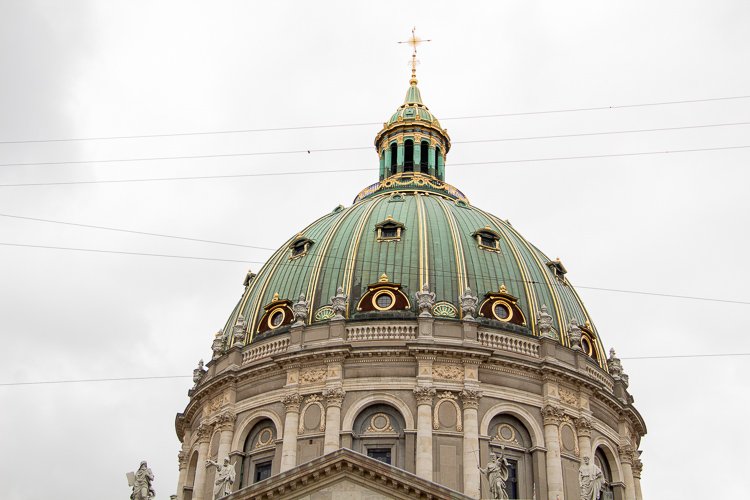
After exploring the treasury, we walked to the Little Mermaid statue via Amalienborg Palace (34 minutes). We also passed Frederick’s Church, which has the largest church dome in Scandinavia, with a span of 31 meters and was inspired by St. Peter’s Basilica in Rome.
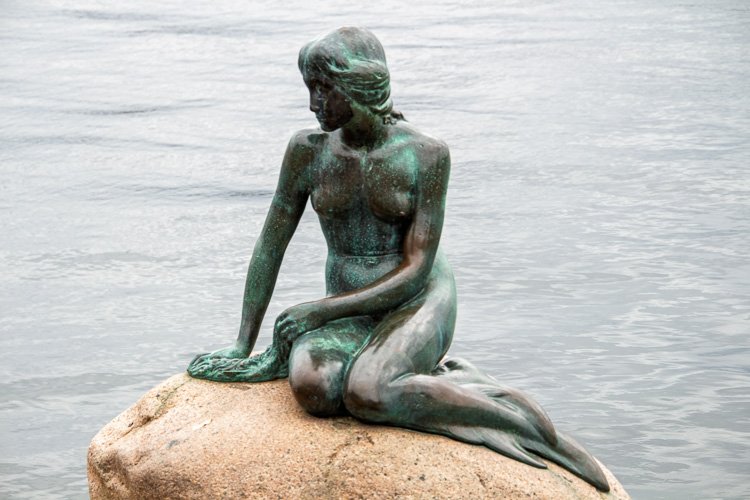
When we arrived at the Little Mermaid, I found her far more impressive than I had expected despite the many people who had warned me how small the statue was.

The bronze sculpture, created by Edward Eriksen in 1913, was commissioned by brewer Carl Jacobsen and inspired by Hans Christian Andersen’s fairy tale.
Over the years, the Little Mermaid has been the target of repeated acts of vandalism. She has been decapitated twice, had an arm sawn off, and been covered in paint. Each time, however, she has been carefully restored and remains one of Copenhagen’s most photographed and iconic landmarks, attracting millions of visitors every year. I found her quite beautiful.
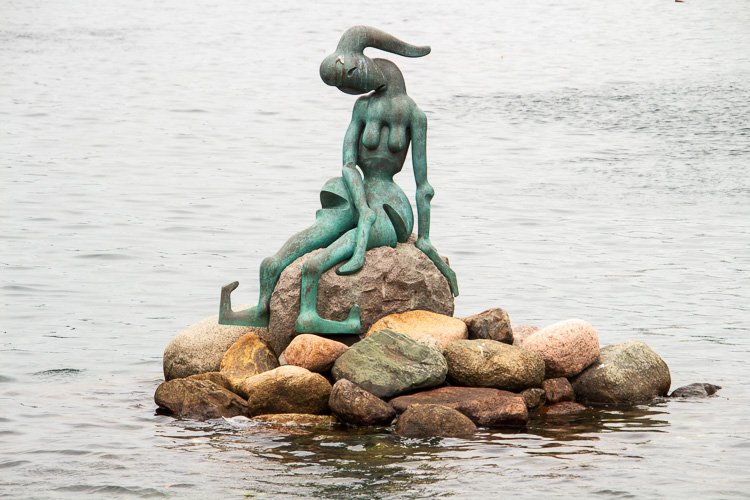
Having seen The Little Mermaid, we (I) felt we had to see ‘The Genetically Modified Little Mermaid’, which I had read about in a travel blog. A 10-minute walk away, the sculpture forms part of an art installation created by Bjørn Nørgaard in 2006.
Unlike its famous counterpart, this modern interpretation is deliberately provocative. Whilst I found it too abstract for my taste, it is intended to challenge viewers’ perceptions of beauty and identity, raising questions about biotechnology, genetic experimentation and the extent to which humans should exert control over living bodies.
A long (80 min) walk back to the hotel to get changed, and then we went for a drink at ÅBEN Kødbyen, another craft beer pub (which also sold cider  ) and then dinner at Baan Thai Isarn 2
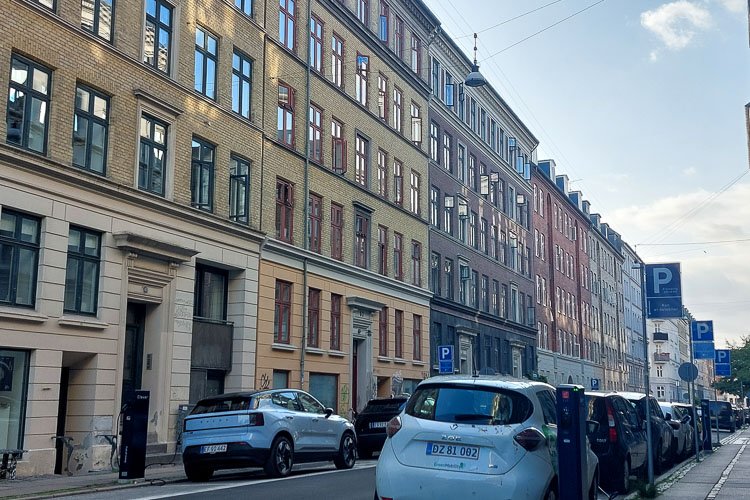
While sitting outside the restaurant, we noticed how different the blocks of flats looked from each other – and how many electric charging points were on the side of the road.
Day 4 – Helsingør
Today we walked 14 minutes to Copenhagen’s main railway station and caught a train to Helsingør, grabbing decent pastries from Lagkagehuset just inside the station. The double-decker trains run frequently and take around 50 minutes, occasionally running alongside the coast for a scenic journey (costs 108 DKK each way pp).
The big attraction of Helsingør was the UNESCO World Heritage Site of Kronborg Castle – also known as Hamlet’s Castle.
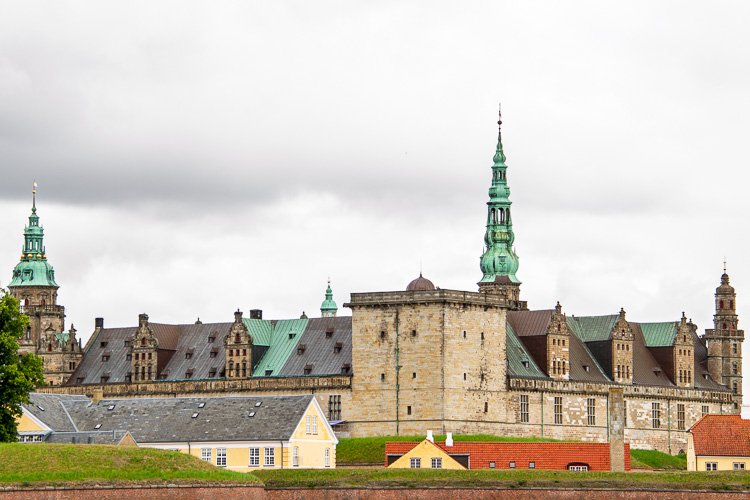
Building on the foundation of a medieval fortress, King Frederik II (Christian IV’s dad) created this beautiful Renaissance Palace between 1574 and 1585 to showcase the immense wealth and power of the Danish Kingdom. Following a devastating fire in 1629, King Christian IV rebuilt the palace, restoring its exterior to its original Renaissance appearance, but modernising the interior. The result is the magnificent castle that is seen today.
Shakespeare is believed to have set Hamlet in the castle. Anne of Denmark, the daughter of King Frederick, grew up at Helsingør before marrying James I of England. As Shakespeare’s acting company performed under the patronage of James I and Anne, scholars suggest that Shakespeare may have chosen Helsingør as the setting in recognition of the Queen’s Danish heritage. The play itself is adapted from a Scandinavian legend about a Danish prince.
We bought the tickets online for 135 DKK, which gave us access to the castle, watching scenes from Hamlet that were happening during the day and a group 15-minute ‘walkthrough of the important events and people of the castle’.
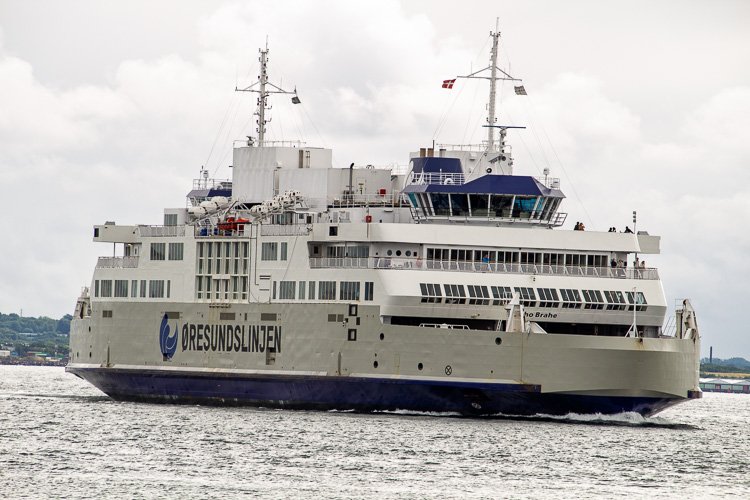
Leaving the station, the castle is a 17-minute walk around the harbour. Helsingør is only 2.5 miles across the Øresund Strait from the Swedish city of Helsingborg. The large ferry between the two cities seemed very frequent.
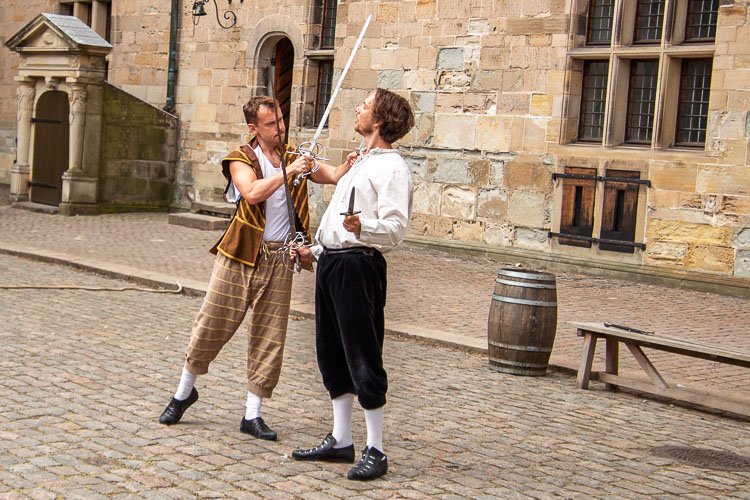
Almost as soon as we entered the castle, we saw the first Hamlet cameo – with the actors giving short interpretations of scenes from Hamlet. It certainly reemphasised the link between Shakespeare and the castle, and the short performances continued every hour or so throughout the day.
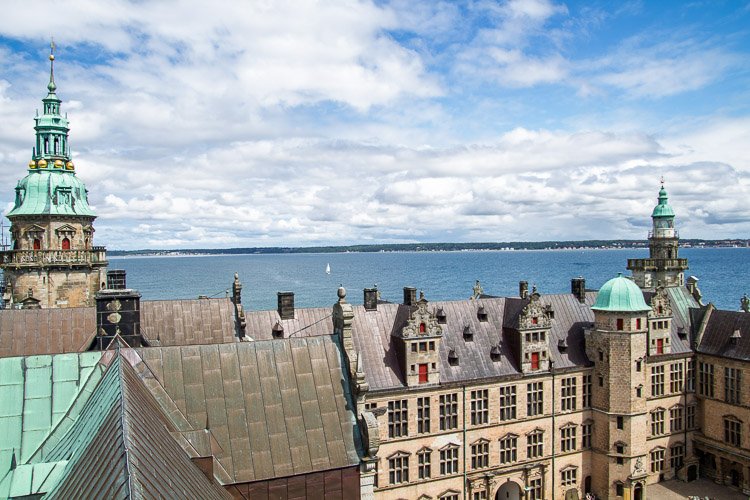
We joined the next 15-minute guided introduction to the castle, which was very informative, and then we climbed the Cannon Tower for fabulous views over North Zealand, the Øresund and Sweden.
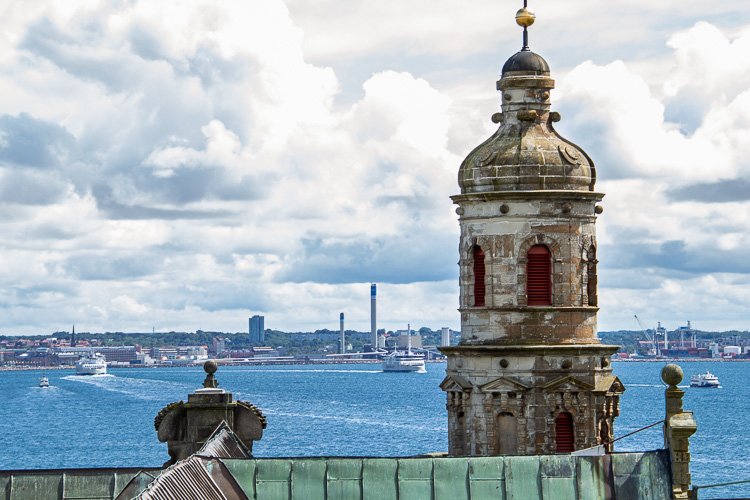
Among the other rooms in the castle, the ballroom was very impressive. Measuring 62 x 12 metres, it was the largest hall in Northern Europe when it was completed in 1582.
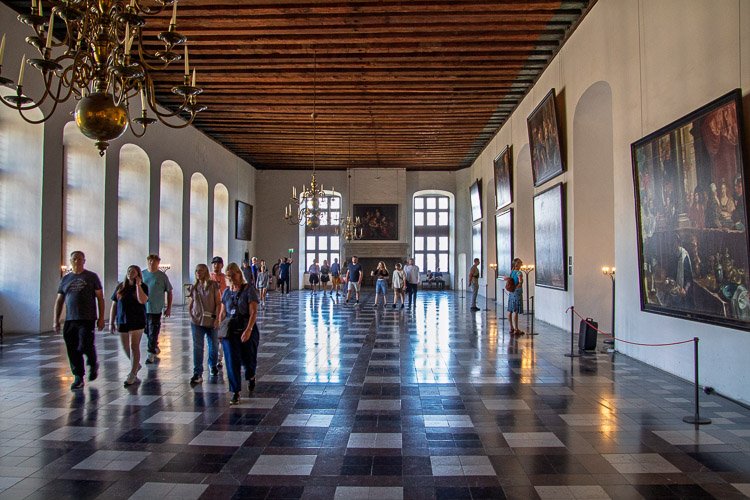
We next entered the Casements, deep, dark, underground passages. In times of war, they provided underground shelter for 350-1,000 soldiers with enough supplies to last a six-week siege. In times of peace, they were used as stables, workshops, storehouses, and a prison (from 1739 to the early 1900s).
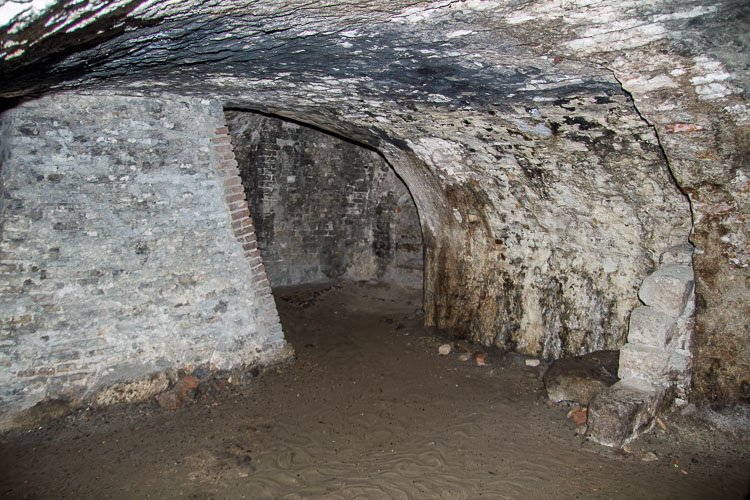
However, before reaching the casements proper (which are very dark, so ensure you have a torch or a phone light), you come across Ogier the Dane or Holger Danske!
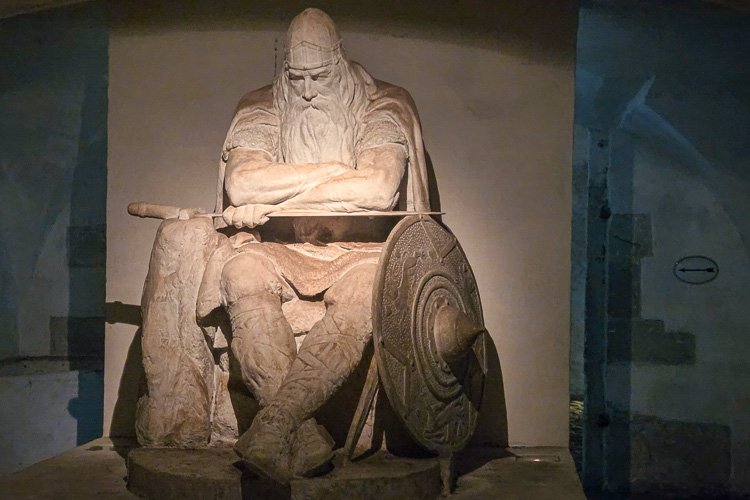
Holger the Dane has been a national symbol to the Danes for hundreds of years. According to legend, he sits asleep in the casemates of Kronborg Castle – until the day when Denmark is in trouble, and he will awaken to defend his country.
The legend can be traced back to a French poem from 1060 where Ogier le Danois is mentioned as a secondary character. He reappears as the hero of another French poem around 1200. He first appears in a Danish manuscript in the late 1400s, and from there his story expanded into legends of Holger the Dane. In 1846, Hans Christian Andersen’s fairy tale, ‘Holger Danske’, places Holger the Dane in the casemates beneath Kronborg Castle.
The statue we see today is a casting of the original bronze statue made by H. P. Pedersen-Dan in 1907.
Finally, we popped into the chapel, which hadn’t been damaged in the 1629 fire. We were told it represented how the castle’s interior would have looked when originally built by King Frederik II. When Christian IV rebuilt the castle after the fire, he restored the exterior but redecorated the rooms in newer styles (like Baroque).
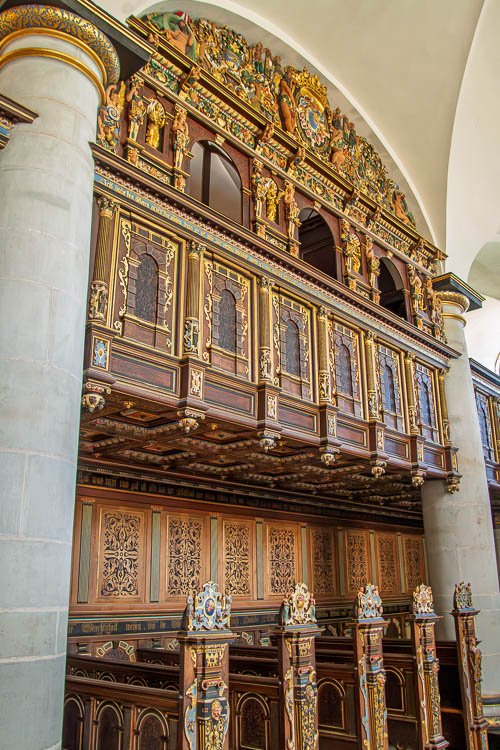
After a very enjoyable 2 hours in Kronborg Castle, we stopped for lunch on the way out at a small cafe with outdoor seating. We each had a traditional open sandwich for the first time. Very tasty, but quite small (around 100 DKK each), so you would need a few to make a ‘proper’ meal.
Following lunch, we visited the National Maritime Museum of Denmark (entry 145 DKK pp), which is just round the corner.
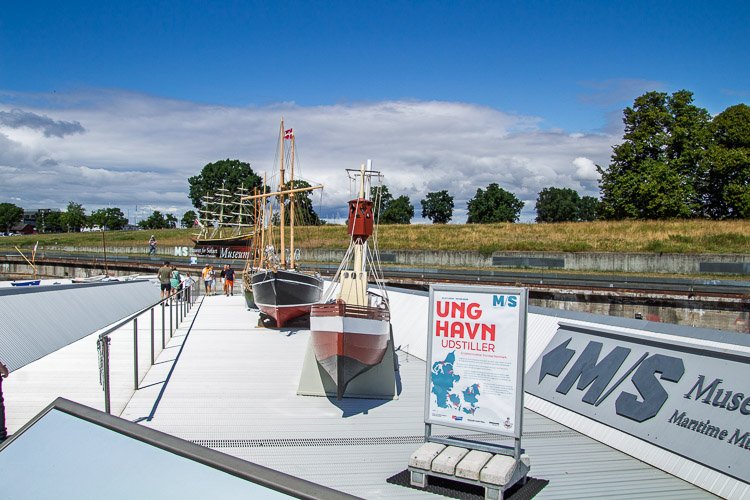
The museum was very well laid out. The main exhibition, ‘Seafarers – 400 years of Danish history’, had many artefacts to look at, but importantly had clear ‘overview’ panels explaining the story in a clear, easy-to-understand way.
1400–1500
Denmark became wealthy by charging the Sound Dues toll on ships passing through the Øresund Strait (by Kronsborg Castle), a key trade route to the Baltic Sea. Danish ships also expanded trade with the Netherlands, England and other countries.
1600
Danish shipping became more global as King Christian IV established trading companies with bases in India, Guinea and the Caribbean. Long-distance voyages brought valuable trade but were dangerous, with many ships lost and sailors dying from illness.
1700
As a neutral nation during European wars, Denmark benefited from growing demand to transport goods between the colonies and major European powers. This trade brought great wealth and helped Copenhagen develop into an important international trading city.
1800
Danish shipping reached its peak in the early 1800s, making Denmark one of the world’s leading seafaring nations. However, the Napoleonic Wars caused major losses, although the later introduction of steamship companies helped rebuild the industry.
1900
Danish shipping expanded worldwide through scheduled trade routes, with companies such as EAC, Maersk and J. Lauritzen becoming global leaders. Technological advances, including the first diesel-powered ocean liner and container shipping, strengthened Denmark’s position in world shipping.
2026
Denmark is the world’s ninth-largest shipping nation, with Danish-controlled ships carrying around 10% of global trade. Maersk (a publicly traded Danish company) is the second-largest global container shipping line.
After an informative hour (there was more to see, but we were a bit ‘museumed-out’), we walked into the town in search of ice cream. It was surprisingly difficult to find an ice cream stall, but we eventually discovered delicious ice cream at Peter Beier Chokolade, just inside a small mall. The Lemon Pie flavour was particularly good!
The historic town itself was a mix of modern shops in old buildings with offshoots of tiny streets.
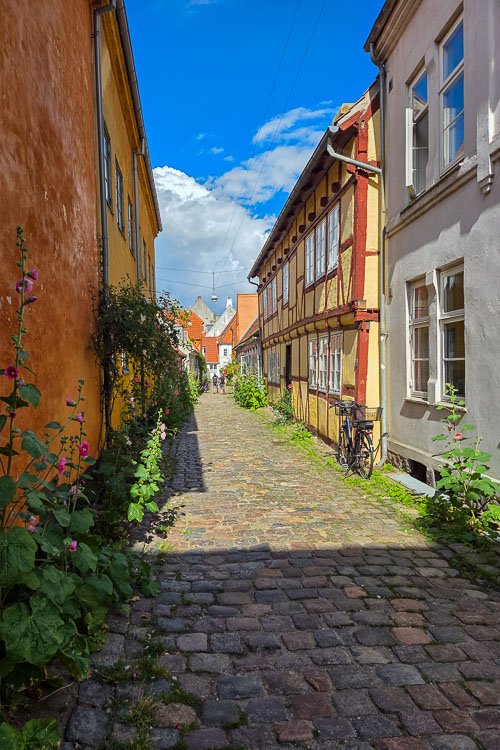
It was eventually time to catch the train back to Copenhagen and walk back to the hotel to get changed.
It was raining this evening, so we had a drink inside at Arben and went to Cafe Apropos for food (if for no other reason than there was a space, as a couple of other places we tried were full). We both had the fish and chips (199 DKK each), which was a welcome treat after a busy day.
But the day wasn’t over; we grabbed seats in the hotel bar to enjoy the World Cup Final. Most of our fellow guests appeared to be supporting Spain, but a few people who might have been friends of the Argentine bartender were also watching. There was much relief amongst most of the group when Spain scored in extra time, particularly as Argentina didn’t appear to want to play with no shots on goal until the 115th minute.
Day 5 – National Museum
After a late night, we didn’t get up too early today and found most of the bakeries on our walk to the National Museum of Denmark had run out of pastries!
We decided to grab breakfast in the museum cafe instead, which hit the spot.
Again, we bought our museum tickets online (entry 135 DKK pp). However, at no point were our tickets checked. It really summed up the whole vibe we found in Copenhagen. There seems to be an emphasis on everybody doing the right thing, helping each other out and looking after their environment – there was very little litter, for example.
We went round the Danish Prehistory exhibition on the ground floor, which, again, was very laid out. There were loads of individual artefacts, but there were also well-written summaries in each area which explained the history.
We also looked around a temporary exhibition called ‘The Prophecy of the Viking Sorceress’ about the sorceresses of the Viking Age. Unfortunately, the multimedia didn’t quite work in this section, so it was difficult to follow.
We quickly passed through some of the other exhibitions in the museum, but they didn’t seem as informative as the prehistoric section.
We were disappointed that there wasn’t more information about the Vikings – perhaps we missed it within the prehistory section. I had anticipated learning much more about the Viking Age (790 – 1050).
Maybe we should have visited the Viking Ship Museum, which is about an hour train journey from Copenhagen – another time?
By this time, it was lunchtime, and I wanted to try a hot dog. Apparently, Copenhagen is famous for hot dog stands, with the first stand arriving in 1920. We had spotted a busy stand in Rådhuspladsen the day before, so we joined the queue. The sausage is grilled, not boiled, and I had all the toppings (44 DKK).
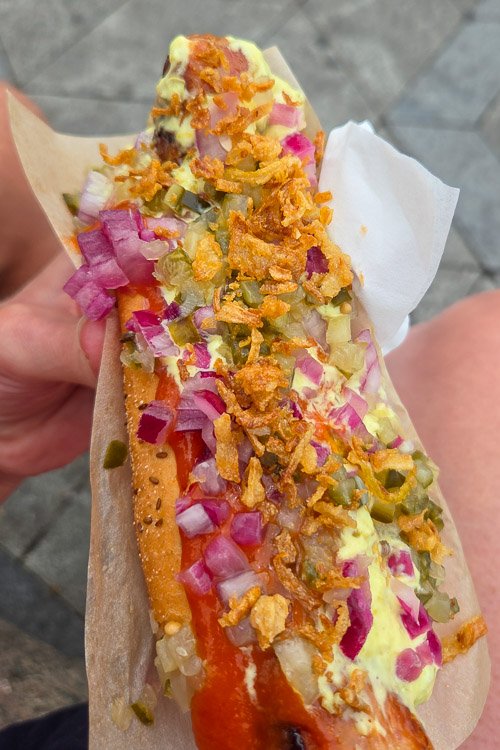
I’m glad I tried one, but to be honest, I wouldn’t rush back to repeat the experience. It was nice, but I much preferred the salmon-and-avocado sandwich I had on the first day.
After lunch, we walked around the streets, ending up at Bishop Absalon Square, where we had a drink in a cafe and people-watched for a bit before returning to the hotel.
That night, we had a tasty dinner at Tandoori Masala, a nearby indian restaurant. We had tried to go there the night before, but it had been full, so we made a reservation.
After dinner, we went to our local ice cream shop, Ismageriet Kødbyn. We actually visited this shop a couple of times over the long weekend. We had noticed a massive queue on the first night, but didn’t realise what it was until the next day. Even on Monday night at 8:40, we had to join a large queue! It is a large place with lots of servers, so the queue moved pretty quickly, but we still waited around 20 minutes.
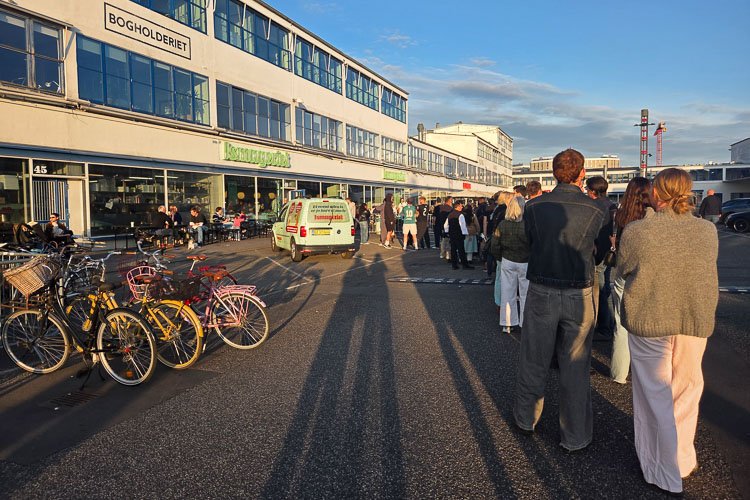
To be fair, the ice cream was very good and had lots of unusual flavours. On Monday night, I had a tub with a scoop of white chocolate and a scoop of liquorice (51 DKK), which went surprisingly well together. 
Day 6 – Church of Our Saviour and Home
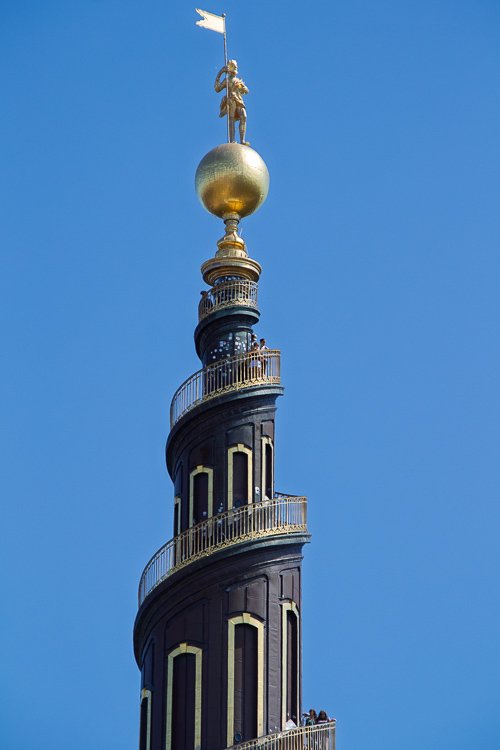
On the final morning, we climbed the outside spiral staircase at the Church of Our Saviour (Vor Frelsers Kirke) in Christianshavn, grabbing pastries at Bodenhoffs on the way.
Notes about climbing the Tower
You need to book (and pay – 70 DKK pp) for a time for your climb – you can’t just turn up and queue. Some people were booking online when they arrived, so there didn’t seem to be a problem with space when we were there, but I believe it can be busy.
The first 250 steps are up narrow, old wooden stairs inside the building. The final 150 steps wind around the outside of the tower.
There isn’t a platform at the top; you just run out of stairs. It was fairly quiet when we were there, but I can imagine it would get more tricky if crowded.
The view from the top was fantastic.
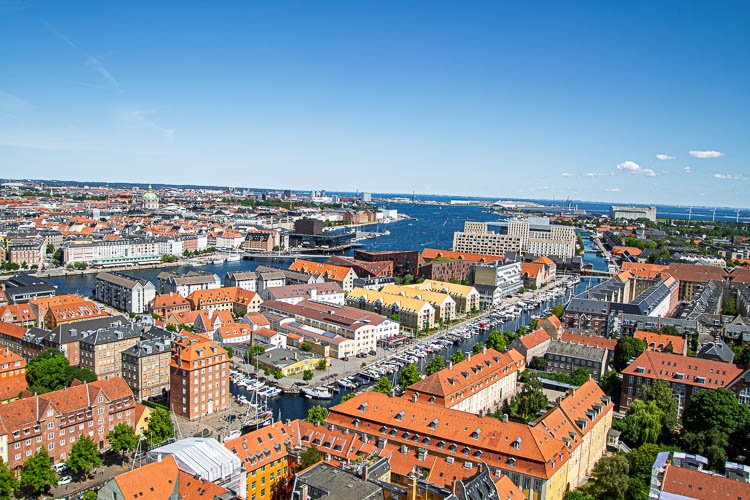
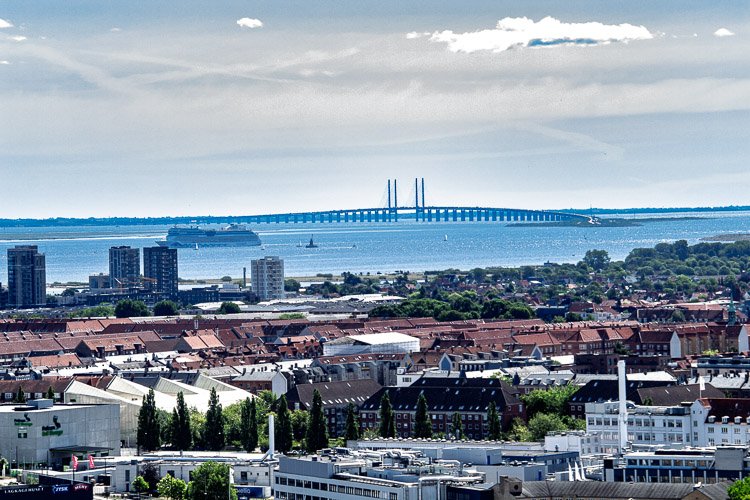
Then it was time to pick up our cases from the hotel and head to the airport. It is worth noting that Copenhagen Airport (at the time we travelled) had a 100ml liquid limit.
We really enjoyed our time in Copenhagen. It wasn’t as pretty as Luxembourg, but it had a good vibe and plenty to do for a long weekend. Would recommend.
Notes about Copenhagen Card
Many blogs and guidebooks suggest getting the Copenhagen Card, which includes free access to many attractions plus free public transport.
We looked at it but did not purchase it as a) we prefer to walk rather than use public transport and b) we wanted to spread out the attractions over the 5 days we were in the city.
In retrospect, the Copenhagen card for 120 hours would have cost 1,419 DKK pp. We would have got free entry to the Canal Tour, Tivoli Gardens (not the rides), Rosenborg Castle (not the tour), Kronborg Castle (and train), the Maritime Museum, the National Museum and one trip on the train from the airport.
The Church of Our Saviour and the return airport train were on Day 6, so wouldn’t have been included.
Individually, these attractions cost us 1,365 DKK pp, so it was close. If we had the Copenhagen card, we might have used more public transport and visited more attractions (though I don’t think we had much free time). We preferred the flexibility to choose what to visit based on the weather and how we felt.